Oxford Studies in Ancient Philosophy: Volume V book pdf download

Department : Social sciences
book quality : Excellent
Auther : Julia Annas
Number of Pages : 268
Section : Philosophy and logic
Language : English
Size of file : 13.0MB
Date of Coming : 2022-08-10

Author: Julia Annas

About the Author: Julia Annas is Regents Professor in Philosophy at the University of Arizona, and previously taught at St Hugh’s College, Oxford. She is a member of the American Academy of Arts and Sciences and the American Philosophical Society, the founder editor of *Oxford Studies in Ancient Philosophy*, former President of the Pacific Division of the American Philosophical Association and foreign member of the Norwegian and Finnish Academies. I’m very grateful to Meena for asking me to contribute to Philosop-her. First off, I’m delighted and excited to see so many younger women in philosophy, and in such a range of areas. There are more women in philosophy than when I was young, and more diversity, and philosophy itself has got a lot more interesting, and the two are connected. Of course we have far to go, but the state of philosophy is a lot healthier than it was in the sixties and seventies, when I was starting out. The only caveat that I find myself registering is the pace of development that’s expected of young philosophers – not just numbers of publications, but constant, sometimes relentless progress in the area you start out. For a variety of reasons – some good, some not – less was expected of me in my early philosophical years, and I was able to make many starts and develop in different areas. My work has only had a single focus in the second part of my career. I am amazed at the energy of younger women philosophers, and I wish that you didn’t have to use so much of it to succeed. I spent many years developing interests in many areas of ancient philosophy. There is, after all, over a thousand years of it, in which different enquiries were developed in a multitude of different ways. Early thinkers do philosophy in Homeric hexameters, Plato writes dialogues, we have Aristotle’s lecture notes, we have texts and fragments from the Stoics and Epicurus, and so on. There are many different styles of doing philosophy. By the end of antiquity philosophers who write commentaries on other philosophers in a way quite like modern academic philosophical commentators. Doing ancient philosophy is a great way of mentally loosening the constraints of the contemporary academic article and book; philosophy can be done well in plain prose examining numbered propositions, but it can be done in many other ways too. In doing ancient philosophy we have to distinguish between an analytical approach in the broad sense, which discusses the reasoned basis for philosophical claims, and a narrower sense in which context is discarded and arguments are reduced to abstract schemata. The first, broader approach is the one more likely to be fruitful, and history of philosophy is a great way to develop it. In my experience ancient philosophy has been the place I have found attitudes that are more co-operative, and less gladiatorial, than turn up in some other areas of philosophy. I don’t know how closely this is connected to the point that, at least in my intellectual lifetime, there have been more women in it than in many other areas of philosophy. I feel fortunate in not having suffered experiences as bad as those that many other women philosophers have had to put up with. We are still far from being equally represented in ancient philosophy, but I think the area does modestly better than some areas in philosophy, especially the more technical ones. For some years my interests in ancient philosophy have concentrated on ancient ethical theories, and their (almost) universal eudaimonist structure. The central concepts are those of happiness and virtue. Neither is well understood within the tradition of moral philosophy that we philosophers have inherited from the 19th and earlier 20th centuries. Because of this, the ancient theories were during that period grotesquely misunderstood by philosophers like Prichard, and it is in the last half-century that interpretations that answer to the texts have been developed in the field of ancient philosophy. At the same time (some wider Zeitgeist was at work, no doubt) contemporary moral philosophers began to rediscover eudaimonism and virtue ethics in the contemporary world. I started to find myself invited to conferences on virtue and happiness as the resident scholar to tell people what Aristotle thought, and I and others started to see how valuable cross-fertilization between ancient and contemporary ethics could be. The rediscovery (after a strange gap of nearly two centuries) of eudaimonism and virtue ethics as illuminating accounts of how we actually think ethically has been the philosophically most exciting development in my lifetime. A great deal of my intellectual life has been spent interpreting the ancients, probing to find what they thought. There has been a great widening of interest and collapsing of barriers in this field, which is far more lively and rewarding than it was when I began. I also find that in the latter years of my career I am in the middle of a new, fermenting movement which is developing on fronts unimaginable when I was beginning in my career. What more could a philosophers want? I often reflect on how fortunate I am. I’ve lived through a period when virtue ethics has gone from being a joke (among conservative ethical philosophers) to having gained respect (sometimes grudging) in the mainstream of ethics. It does not color within the lines set by conservative ethical traditions which start from duty, obligation and the ‘right-makers’ of right actions, and so is still sometimes dismissed as rudely disruptive of business as usual; this attitude can still be found among meta-ethicists who work within a tradition formed in a period when virtue had sunk to a sub-theoretical level. But this is an advantage for eudaimonism and virtue ethics; we constantly have to refine and defend our basic positions against objections and misunderstandings, and so our debates stay lively; we are not in danger of falling into academic disagreement on minor matters within an agreed framework. There have been so many ways that virtue ethics and eudaimonism have developed at dizzying speed in the last thirty years that it has taken me some time to work out what I find the most attractive and defensible version. I spent some years working up a book on virtue ethics, only to find myself stalled, until I ditched it and started again on a book on virtue, which emerged in 2011 as Intelligent Virtue. I had slowly realized that anyone needs to work out and defend a particular conception of virtue before being able to develop a virtue ethics. The conception I developed is on the lines of Aristotle’s conception of virtue as a disposition to be active in acting, reasoning and feeling in accordance with the virtues. Every aspect of that claim needs to be spelled out and developed, of course. This is independent of Aristotle’s own theory about the ‘mean’, and of other aspects of his ethics, such as his version of naturalism. I developed this conception of virtue in several ways and sketched out the relations in which it can stand to happiness or flourishing (which, is an issue in itself). Since then I have been slowly working on various issues in virtue ethics, hoping eventually to be in a position to develop a book. I have been working on the role of virtue in virtue ethics in relation to topics such as learning virtue in terms of ‘thick concepts’; action required by virtue and its relation to duty; the nature of vice and its relation to virtue; how virtue ethics accounts for heroism; and more. There are so many exciting and under-explored areas that I feel really lucky. At the same time I am finishing up a book on virtue and law in Plato’s late work the Laws. Having two such different projects keeps me going, as each is attractive when the other palls, but it’s also true that working on each means that I often feel that neither will get finished. I’d like to end by pointing out how the modern revival of interest in virtue and virtue ethics has been largely driven by the original contributions of women. Anyone talking about virtue has to mention Elizabeth Anscombe’s pathbreaking article in the 50s pointing out the deficiencies of then modern ethics. Nor can anyone pass over the work of Philippa Foot, or Rosalind Hursthouse. Different, non-Aristotelian versions of virtue and virtue ethics have been developed by Christine Swanton, Linda Zagzebski and Julia Driver. And, although they are not virtue ethicists, I should mention the work that virtue ethicists engage with in Humean studies with Rachel Cohon and Kate Abramson, and in Kantian studies with Christine Korsgaard and Barbara Herman. I am deeply grateful to all of these for their original work which has enabled progress to be made by people like me. Despite all the real bad news about women in philosophy, I am modestly optimistic for the future of women philosophers in the fields I work in, which is another thing to be grateful for.

Oxford Studies in Ancient Philosophy: Volume V book pdf download By Julia Annas

Volume 5 includes contributions by Thomas C. Brickhouse, Yahei Kanayama, Theodor Ebert, A. C. Lloyd, Gregory Vlastos, Nicholas D. Smith, P. Mitsis, R. W. Sharples, Charlotte Stough, and C. C. W. Taylor.

Download PDF of Oxford Studies in Ancient Philosophy: Volume V book pdf download By Julia Annas
-Adrian Agency Library

Download Now

Oxford Studies in Ancient Philosophy: Volume VIII book pdf download

Department : Social sciences
Language : English
Size of file : 15.4MB
Section : Philosophy and logic
Auther : Julia Annas
Number of Pages : 316
Date of Coming : 2022-08-10
book quality : Excellent

Author: Julia Annas

About the Author: Julia Annas is Regents Professor in Philosophy at the University of Arizona, and previously taught at St Hugh’s College, Oxford. She is a member of the American Academy of Arts and Sciences and the American Philosophical Society, the founder editor of *Oxford Studies in Ancient Philosophy*, former President of the Pacific Division of the American Philosophical Association and foreign member of the Norwegian and Finnish Academies. I’m very grateful to Meena for asking me to contribute to Philosop-her. First off, I’m delighted and excited to see so many younger women in philosophy, and in such a range of areas. There are more women in philosophy than when I was young, and more diversity, and philosophy itself has got a lot more interesting, and the two are connected. Of course we have far to go, but the state of philosophy is a lot healthier than it was in the sixties and seventies, when I was starting out. The only caveat that I find myself registering is the pace of development that’s expected of young philosophers – not just numbers of publications, but constant, sometimes relentless progress in the area you start out. For a variety of reasons – some good, some not – less was expected of me in my early philosophical years, and I was able to make many starts and develop in different areas. My work has only had a single focus in the second part of my career. I am amazed at the energy of younger women philosophers, and I wish that you didn’t have to use so much of it to succeed. I spent many years developing interests in many areas of ancient philosophy. There is, after all, over a thousand years of it, in which different enquiries were developed in a multitude of different ways. Early thinkers do philosophy in Homeric hexameters, Plato writes dialogues, we have Aristotle’s lecture notes, we have texts and fragments from the Stoics and Epicurus, and so on. There are many different styles of doing philosophy. By the end of antiquity philosophers who write commentaries on other philosophers in a way quite like modern academic philosophical commentators. Doing ancient philosophy is a great way of mentally loosening the constraints of the contemporary academic article and book; philosophy can be done well in plain prose examining numbered propositions, but it can be done in many other ways too. In doing ancient philosophy we have to distinguish between an analytical approach in the broad sense, which discusses the reasoned basis for philosophical claims, and a narrower sense in which context is discarded and arguments are reduced to abstract schemata. The first, broader approach is the one more likely to be fruitful, and history of philosophy is a great way to develop it. In my experience ancient philosophy has been the place I have found attitudes that are more co-operative, and less gladiatorial, than turn up in some other areas of philosophy. I don’t know how closely this is connected to the point that, at least in my intellectual lifetime, there have been more women in it than in many other areas of philosophy. I feel fortunate in not having suffered experiences as bad as those that many other women philosophers have had to put up with. We are still far from being equally represented in ancient philosophy, but I think the area does modestly better than some areas in philosophy, especially the more technical ones. For some years my interests in ancient philosophy have concentrated on ancient ethical theories, and their (almost) universal eudaimonist structure. The central concepts are those of happiness and virtue. Neither is well understood within the tradition of moral philosophy that we philosophers have inherited from the 19th and earlier 20th centuries. Because of this, the ancient theories were during that period grotesquely misunderstood by philosophers like Prichard, and it is in the last half-century that interpretations that answer to the texts have been developed in the field of ancient philosophy. At the same time (some wider Zeitgeist was at work, no doubt) contemporary moral philosophers began to rediscover eudaimonism and virtue ethics in the contemporary world. I started to find myself invited to conferences on virtue and happiness as the resident scholar to tell people what Aristotle thought, and I and others started to see how valuable cross-fertilization between ancient and contemporary ethics could be. The rediscovery (after a strange gap of nearly two centuries) of eudaimonism and virtue ethics as illuminating accounts of how we actually think ethically has been the philosophically most exciting development in my lifetime. A great deal of my intellectual life has been spent interpreting the ancients, probing to find what they thought. There has been a great widening of interest and collapsing of barriers in this field, which is far more lively and rewarding than it was when I began. I also find that in the latter years of my career I am in the middle of a new, fermenting movement which is developing on fronts unimaginable when I was beginning in my career. What more could a philosophers want? I often reflect on how fortunate I am. I’ve lived through a period when virtue ethics has gone from being a joke (among conservative ethical philosophers) to having gained respect (sometimes grudging) in the mainstream of ethics. It does not color within the lines set by conservative ethical traditions which start from duty, obligation and the ‘right-makers’ of right actions, and so is still sometimes dismissed as rudely disruptive of business as usual; this attitude can still be found among meta-ethicists who work within a tradition formed in a period when virtue had sunk to a sub-theoretical level. But this is an advantage for eudaimonism and virtue ethics; we constantly have to refine and defend our basic positions against objections and misunderstandings, and so our debates stay lively; we are not in danger of falling into academic disagreement on minor matters within an agreed framework. There have been so many ways that virtue ethics and eudaimonism have developed at dizzying speed in the last thirty years that it has taken me some time to work out what I find the most attractive and defensible version. I spent some years working up a book on virtue ethics, only to find myself stalled, until I ditched it and started again on a book on virtue, which emerged in 2011 as Intelligent Virtue. I had slowly realized that anyone needs to work out and defend a particular conception of virtue before being able to develop a virtue ethics. The conception I developed is on the lines of Aristotle’s conception of virtue as a disposition to be active in acting, reasoning and feeling in accordance with the virtues. Every aspect of that claim needs to be spelled out and developed, of course. This is independent of Aristotle’s own theory about the ‘mean’, and of other aspects of his ethics, such as his version of naturalism. I developed this conception of virtue in several ways and sketched out the relations in which it can stand to happiness or flourishing (which, is an issue in itself). Since then I have been slowly working on various issues in virtue ethics, hoping eventually to be in a position to develop a book. I have been working on the role of virtue in virtue ethics in relation to topics such as learning virtue in terms of ‘thick concepts’; action required by virtue and its relation to duty; the nature of vice and its relation to virtue; how virtue ethics accounts for heroism; and more. There are so many exciting and under-explored areas that I feel really lucky. At the same time I am finishing up a book on virtue and law in Plato’s late work the Laws. Having two such different projects keeps me going, as each is attractive when the other palls, but it’s also true that working on each means that I often feel that neither will get finished. I’d like to end by pointing out how the modern revival of interest in virtue and virtue ethics has been largely driven by the original contributions of women. Anyone talking about virtue has to mention Elizabeth Anscombe’s pathbreaking article in the 50s pointing out the deficiencies of then modern ethics. Nor can anyone pass over the work of Philippa Foot, or Rosalind Hursthouse. Different, non-Aristotelian versions of virtue and virtue ethics have been developed by Christine Swanton, Linda Zagzebski and Julia Driver. And, although they are not virtue ethicists, I should mention the work that virtue ethicists engage with in Humean studies with Rachel Cohon and Kate Abramson, and in Kantian studies with Christine Korsgaard and Barbara Herman. I am deeply grateful to all of these for their original work which has enabled progress to be made by people like me. Despite all the real bad news about women in philosophy, I am modestly optimistic for the future of women philosophers in the fields I work in, which is another thing to be grateful for.

Oxford Studies in Ancient Philosophy: Volume VIII book pdf download By Julia Annas

Oxford Studies in Ancient Philosophy is an annual publication which includes original articles, which may be of substantial length, on a wide range of topics in ancient philosophy, and review articles of major books.

Download PDF of Oxford Studies in Ancient Philosophy: Volume VIII book pdf download By Julia Annas
-Adrian Agency Library

Download Now

Oxford Studies in Ancient Philosophy: Supplementary Volume book pdf download

Number of Pages : 236
Language : English
Date of Coming : 2022-08-10
Size of file : 10.9MB
book quality : Excellent
Section : Philosophy and logic
Auther : Julia Annas
Department : Social sciences

Author: Julia Annas

About the Author: Julia Annas is Regents Professor in Philosophy at the University of Arizona, and previously taught at St Hugh’s College, Oxford. She is a member of the American Academy of Arts and Sciences and the American Philosophical Society, the founder editor of *Oxford Studies in Ancient Philosophy*, former President of the Pacific Division of the American Philosophical Association and foreign member of the Norwegian and Finnish Academies. I’m very grateful to Meena for asking me to contribute to Philosop-her. First off, I’m delighted and excited to see so many younger women in philosophy, and in such a range of areas. There are more women in philosophy than when I was young, and more diversity, and philosophy itself has got a lot more interesting, and the two are connected. Of course we have far to go, but the state of philosophy is a lot healthier than it was in the sixties and seventies, when I was starting out. The only caveat that I find myself registering is the pace of development that’s expected of young philosophers – not just numbers of publications, but constant, sometimes relentless progress in the area you start out. For a variety of reasons – some good, some not – less was expected of me in my early philosophical years, and I was able to make many starts and develop in different areas. My work has only had a single focus in the second part of my career. I am amazed at the energy of younger women philosophers, and I wish that you didn’t have to use so much of it to succeed. I spent many years developing interests in many areas of ancient philosophy. There is, after all, over a thousand years of it, in which different enquiries were developed in a multitude of different ways. Early thinkers do philosophy in Homeric hexameters, Plato writes dialogues, we have Aristotle’s lecture notes, we have texts and fragments from the Stoics and Epicurus, and so on. There are many different styles of doing philosophy. By the end of antiquity philosophers who write commentaries on other philosophers in a way quite like modern academic philosophical commentators. Doing ancient philosophy is a great way of mentally loosening the constraints of the contemporary academic article and book; philosophy can be done well in plain prose examining numbered propositions, but it can be done in many other ways too. In doing ancient philosophy we have to distinguish between an analytical approach in the broad sense, which discusses the reasoned basis for philosophical claims, and a narrower sense in which context is discarded and arguments are reduced to abstract schemata. The first, broader approach is the one more likely to be fruitful, and history of philosophy is a great way to develop it. In my experience ancient philosophy has been the place I have found attitudes that are more co-operative, and less gladiatorial, than turn up in some other areas of philosophy. I don’t know how closely this is connected to the point that, at least in my intellectual lifetime, there have been more women in it than in many other areas of philosophy. I feel fortunate in not having suffered experiences as bad as those that many other women philosophers have had to put up with. We are still far from being equally represented in ancient philosophy, but I think the area does modestly better than some areas in philosophy, especially the more technical ones. For some years my interests in ancient philosophy have concentrated on ancient ethical theories, and their (almost) universal eudaimonist structure. The central concepts are those of happiness and virtue. Neither is well understood within the tradition of moral philosophy that we philosophers have inherited from the 19th and earlier 20th centuries. Because of this, the ancient theories were during that period grotesquely misunderstood by philosophers like Prichard, and it is in the last half-century that interpretations that answer to the texts have been developed in the field of ancient philosophy. At the same time (some wider Zeitgeist was at work, no doubt) contemporary moral philosophers began to rediscover eudaimonism and virtue ethics in the contemporary world. I started to find myself invited to conferences on virtue and happiness as the resident scholar to tell people what Aristotle thought, and I and others started to see how valuable cross-fertilization between ancient and contemporary ethics could be. The rediscovery (after a strange gap of nearly two centuries) of eudaimonism and virtue ethics as illuminating accounts of how we actually think ethically has been the philosophically most exciting development in my lifetime. A great deal of my intellectual life has been spent interpreting the ancients, probing to find what they thought. There has been a great widening of interest and collapsing of barriers in this field, which is far more lively and rewarding than it was when I began. I also find that in the latter years of my career I am in the middle of a new, fermenting movement which is developing on fronts unimaginable when I was beginning in my career. What more could a philosophers want? I often reflect on how fortunate I am. I’ve lived through a period when virtue ethics has gone from being a joke (among conservative ethical philosophers) to having gained respect (sometimes grudging) in the mainstream of ethics. It does not color within the lines set by conservative ethical traditions which start from duty, obligation and the ‘right-makers’ of right actions, and so is still sometimes dismissed as rudely disruptive of business as usual; this attitude can still be found among meta-ethicists who work within a tradition formed in a period when virtue had sunk to a sub-theoretical level. But this is an advantage for eudaimonism and virtue ethics; we constantly have to refine and defend our basic positions against objections and misunderstandings, and so our debates stay lively; we are not in danger of falling into academic disagreement on minor matters within an agreed framework. There have been so many ways that virtue ethics and eudaimonism have developed at dizzying speed in the last thirty years that it has taken me some time to work out what I find the most attractive and defensible version. I spent some years working up a book on virtue ethics, only to find myself stalled, until I ditched it and started again on a book on virtue, which emerged in 2011 as Intelligent Virtue. I had slowly realized that anyone needs to work out and defend a particular conception of virtue before being able to develop a virtue ethics. The conception I developed is on the lines of Aristotle’s conception of virtue as a disposition to be active in acting, reasoning and feeling in accordance with the virtues. Every aspect of that claim needs to be spelled out and developed, of course. This is independent of Aristotle’s own theory about the ‘mean’, and of other aspects of his ethics, such as his version of naturalism. I developed this conception of virtue in several ways and sketched out the relations in which it can stand to happiness or flourishing (which, is an issue in itself). Since then I have been slowly working on various issues in virtue ethics, hoping eventually to be in a position to develop a book. I have been working on the role of virtue in virtue ethics in relation to topics such as learning virtue in terms of ‘thick concepts’; action required by virtue and its relation to duty; the nature of vice and its relation to virtue; how virtue ethics accounts for heroism; and more. There are so many exciting and under-explored areas that I feel really lucky. At the same time I am finishing up a book on virtue and law in Plato’s late work the Laws. Having two such different projects keeps me going, as each is attractive when the other palls, but it’s also true that working on each means that I often feel that neither will get finished. I’d like to end by pointing out how the modern revival of interest in virtue and virtue ethics has been largely driven by the original contributions of women. Anyone talking about virtue has to mention Elizabeth Anscombe’s pathbreaking article in the 50s pointing out the deficiencies of then modern ethics. Nor can anyone pass over the work of Philippa Foot, or Rosalind Hursthouse. Different, non-Aristotelian versions of virtue and virtue ethics have been developed by Christine Swanton, Linda Zagzebski and Julia Driver. And, although they are not virtue ethicists, I should mention the work that virtue ethicists engage with in Humean studies with Rachel Cohon and Kate Abramson, and in Kantian studies with Christine Korsgaard and Barbara Herman. I am deeply grateful to all of these for their original work which has enabled progress to be made by people like me. Despite all the real bad news about women in philosophy, I am modestly optimistic for the future of women philosophers in the fields I work in, which is another thing to be grateful for.

Oxford Studies in Ancient Philosophy: Supplementary Volume book pdf download By Julia Annas

This special supplementary volume contains the proceedings of the Colloquium on Ancient Philosophy held at Oberlin College in 1986. The contributors–including Michael Frede, Jonathan Barnes, Martha C. Nussbaum, Robert G. Turnbull, Gail Fine, Alan Code, T.H. Irwin, A.A. Long, and David Charles–address being, becoming, and intelligibility in Plato; disunity in the Aristotelian virtues; Epicurean signs; and Aristotle on political distribution.

Download PDF of Oxford Studies in Ancient Philosophy: Supplementary Volume book pdf download By Julia Annas
-Adrian Agency Library

Download Now

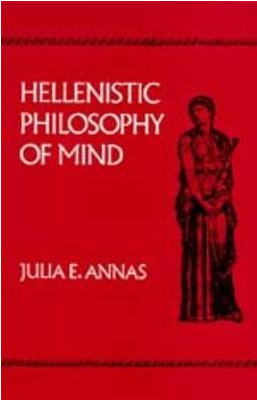
Hellenistic Philosophy of Mind book pdf download

Size of file : 0.51MB
Number of Pages : 302
book quality : Excellent
Department : Social sciences
Language : English
Date of Coming : 2022-08-10
Section : Philosophy and logic
Auther : Julia Annas

Author: Julia Annas

About the Author: Julia Annas is Regents Professor in Philosophy at the University of Arizona, and previously taught at St Hugh’s College, Oxford. She is a member of the American Academy of Arts and Sciences and the American Philosophical Society, the founder editor of *Oxford Studies in Ancient Philosophy*, former President of the Pacific Division of the American Philosophical Association and foreign member of the Norwegian and Finnish Academies. I’m very grateful to Meena for asking me to contribute to Philosop-her. First off, I’m delighted and excited to see so many younger women in philosophy, and in such a range of areas. There are more women in philosophy than when I was young, and more diversity, and philosophy itself has got a lot more interesting, and the two are connected. Of course we have far to go, but the state of philosophy is a lot healthier than it was in the sixties and seventies, when I was starting out. The only caveat that I find myself registering is the pace of development that’s expected of young philosophers – not just numbers of publications, but constant, sometimes relentless progress in the area you start out. For a variety of reasons – some good, some not – less was expected of me in my early philosophical years, and I was able to make many starts and develop in different areas. My work has only had a single focus in the second part of my career. I am amazed at the energy of younger women philosophers, and I wish that you didn’t have to use so much of it to succeed. I spent many years developing interests in many areas of ancient philosophy. There is, after all, over a thousand years of it, in which different enquiries were developed in a multitude of different ways. Early thinkers do philosophy in Homeric hexameters, Plato writes dialogues, we have Aristotle’s lecture notes, we have texts and fragments from the Stoics and Epicurus, and so on. There are many different styles of doing philosophy. By the end of antiquity philosophers who write commentaries on other philosophers in a way quite like modern academic philosophical commentators. Doing ancient philosophy is a great way of mentally loosening the constraints of the contemporary academic article and book; philosophy can be done well in plain prose examining numbered propositions, but it can be done in many other ways too. In doing ancient philosophy we have to distinguish between an analytical approach in the broad sense, which discusses the reasoned basis for philosophical claims, and a narrower sense in which context is discarded and arguments are reduced to abstract schemata. The first, broader approach is the one more likely to be fruitful, and history of philosophy is a great way to develop it. In my experience ancient philosophy has been the place I have found attitudes that are more co-operative, and less gladiatorial, than turn up in some other areas of philosophy. I don’t know how closely this is connected to the point that, at least in my intellectual lifetime, there have been more women in it than in many other areas of philosophy. I feel fortunate in not having suffered experiences as bad as those that many other women philosophers have had to put up with. We are still far from being equally represented in ancient philosophy, but I think the area does modestly better than some areas in philosophy, especially the more technical ones. For some years my interests in ancient philosophy have concentrated on ancient ethical theories, and their (almost) universal eudaimonist structure. The central concepts are those of happiness and virtue. Neither is well understood within the tradition of moral philosophy that we philosophers have inherited from the 19th and earlier 20th centuries. Because of this, the ancient theories were during that period grotesquely misunderstood by philosophers like Prichard, and it is in the last half-century that interpretations that answer to the texts have been developed in the field of ancient philosophy. At the same time (some wider Zeitgeist was at work, no doubt) contemporary moral philosophers began to rediscover eudaimonism and virtue ethics in the contemporary world. I started to find myself invited to conferences on virtue and happiness as the resident scholar to tell people what Aristotle thought, and I and others started to see how valuable cross-fertilization between ancient and contemporary ethics could be. The rediscovery (after a strange gap of nearly two centuries) of eudaimonism and virtue ethics as illuminating accounts of how we actually think ethically has been the philosophically most exciting development in my lifetime. A great deal of my intellectual life has been spent interpreting the ancients, probing to find what they thought. There has been a great widening of interest and collapsing of barriers in this field, which is far more lively and rewarding than it was when I began. I also find that in the latter years of my career I am in the middle of a new, fermenting movement which is developing on fronts unimaginable when I was beginning in my career. What more could a philosophers want? I often reflect on how fortunate I am. I’ve lived through a period when virtue ethics has gone from being a joke (among conservative ethical philosophers) to having gained respect (sometimes grudging) in the mainstream of ethics. It does not color within the lines set by conservative ethical traditions which start from duty, obligation and the ‘right-makers’ of right actions, and so is still sometimes dismissed as rudely disruptive of business as usual; this attitude can still be found among meta-ethicists who work within a tradition formed in a period when virtue had sunk to a sub-theoretical level. But this is an advantage for eudaimonism and virtue ethics; we constantly have to refine and defend our basic positions against objections and misunderstandings, and so our debates stay lively; we are not in danger of falling into academic disagreement on minor matters within an agreed framework. There have been so many ways that virtue ethics and eudaimonism have developed at dizzying speed in the last thirty years that it has taken me some time to work out what I find the most attractive and defensible version. I spent some years working up a book on virtue ethics, only to find myself stalled, until I ditched it and started again on a book on virtue, which emerged in 2011 as Intelligent Virtue. I had slowly realized that anyone needs to work out and defend a particular conception of virtue before being able to develop a virtue ethics. The conception I developed is on the lines of Aristotle’s conception of virtue as a disposition to be active in acting, reasoning and feeling in accordance with the virtues. Every aspect of that claim needs to be spelled out and developed, of course. This is independent of Aristotle’s own theory about the ‘mean’, and of other aspects of his ethics, such as his version of naturalism. I developed this conception of virtue in several ways and sketched out the relations in which it can stand to happiness or flourishing (which, is an issue in itself). Since then I have been slowly working on various issues in virtue ethics, hoping eventually to be in a position to develop a book. I have been working on the role of virtue in virtue ethics in relation to topics such as learning virtue in terms of ‘thick concepts’; action required by virtue and its relation to duty; the nature of vice and its relation to virtue; how virtue ethics accounts for heroism; and more. There are so many exciting and under-explored areas that I feel really lucky. At the same time I am finishing up a book on virtue and law in Plato’s late work the Laws. Having two such different projects keeps me going, as each is attractive when the other palls, but it’s also true that working on each means that I often feel that neither will get finished. I’d like to end by pointing out how the modern revival of interest in virtue and virtue ethics has been largely driven by the original contributions of women. Anyone talking about virtue has to mention Elizabeth Anscombe’s pathbreaking article in the 50s pointing out the deficiencies of then modern ethics. Nor can anyone pass over the work of Philippa Foot, or Rosalind Hursthouse. Different, non-Aristotelian versions of virtue and virtue ethics have been developed by Christine Swanton, Linda Zagzebski and Julia Driver. And, although they are not virtue ethicists, I should mention the work that virtue ethicists engage with in Humean studies with Rachel Cohon and Kate Abramson, and in Kantian studies with Christine Korsgaard and Barbara Herman. I am deeply grateful to all of these for their original work which has enabled progress to be made by people like me. Despite all the real bad news about women in philosophy, I am modestly optimistic for the future of women philosophers in the fields I work in, which is another thing to be grateful for.

Hellenistic Philosophy of Mind book pdf download By Julia Annas

Hellenistic Philosophy of Mind is an elegant survey of Stoic and Epicurean ideas about the soul–an introduction to two ancient schools whose belief in the soul’s physicality offer compelling parallels to modern approaches in the philosophy of mind. Annas incorporates recent thinking on Hellenistic philosophy of mind so lucidly and authoritatively that specialists and nonspecialists alike will find her book rewarding.In part, the Hellenistic epoch was a “scientific” period that broke with tradition in ways that have an affinity with the modern shift from the seventeenth and eighteenth centuries to the present day. Hellenistic philosophy of the soul, Annas argues, is in fact a philosophy of mind, especially in the treatment of such topics as perception, thought, and action.

Download PDF of Hellenistic Philosophy of Mind book pdf download By Julia Annas
-Adrian Agency Library
Download Now

The Modes of Scepticism: Ancient Texts and Modern Interpretations book pdf download

Size of file : 4.31MB
Language : English
Date of Coming : 2022-08-10
Auther : Julia Annas
Department : Social sciences
Number of Pages : 50
Section : Philosophy and logic
book quality : Excellent

Author: Julia Annas

About the Author: Julia Annas is Regents Professor in Philosophy at the University of Arizona, and previously taught at St Hugh’s College, Oxford. She is a member of the American Academy of Arts and Sciences and the American Philosophical Society, the founder editor of *Oxford Studies in Ancient Philosophy*, former President of the Pacific Division of the American Philosophical Association and foreign member of the Norwegian and Finnish Academies. I’m very grateful to Meena for asking me to contribute to Philosop-her. First off, I’m delighted and excited to see so many younger women in philosophy, and in such a range of areas. There are more women in philosophy than when I was young, and more diversity, and philosophy itself has got a lot more interesting, and the two are connected. Of course we have far to go, but the state of philosophy is a lot healthier than it was in the sixties and seventies, when I was starting out. The only caveat that I find myself registering is the pace of development that’s expected of young philosophers – not just numbers of publications, but constant, sometimes relentless progress in the area you start out. For a variety of reasons – some good, some not – less was expected of me in my early philosophical years, and I was able to make many starts and develop in different areas. My work has only had a single focus in the second part of my career. I am amazed at the energy of younger women philosophers, and I wish that you didn’t have to use so much of it to succeed. I spent many years developing interests in many areas of ancient philosophy. There is, after all, over a thousand years of it, in which different enquiries were developed in a multitude of different ways. Early thinkers do philosophy in Homeric hexameters, Plato writes dialogues, we have Aristotle’s lecture notes, we have texts and fragments from the Stoics and Epicurus, and so on. There are many different styles of doing philosophy. By the end of antiquity philosophers who write commentaries on other philosophers in a way quite like modern academic philosophical commentators. Doing ancient philosophy is a great way of mentally loosening the constraints of the contemporary academic article and book; philosophy can be done well in plain prose examining numbered propositions, but it can be done in many other ways too. In doing ancient philosophy we have to distinguish between an analytical approach in the broad sense, which discusses the reasoned basis for philosophical claims, and a narrower sense in which context is discarded and arguments are reduced to abstract schemata. The first, broader approach is the one more likely to be fruitful, and history of philosophy is a great way to develop it. In my experience ancient philosophy has been the place I have found attitudes that are more co-operative, and less gladiatorial, than turn up in some other areas of philosophy. I don’t know how closely this is connected to the point that, at least in my intellectual lifetime, there have been more women in it than in many other areas of philosophy. I feel fortunate in not having suffered experiences as bad as those that many other women philosophers have had to put up with. We are still far from being equally represented in ancient philosophy, but I think the area does modestly better than some areas in philosophy, especially the more technical ones. For some years my interests in ancient philosophy have concentrated on ancient ethical theories, and their (almost) universal eudaimonist structure. The central concepts are those of happiness and virtue. Neither is well understood within the tradition of moral philosophy that we philosophers have inherited from the 19th and earlier 20th centuries. Because of this, the ancient theories were during that period grotesquely misunderstood by philosophers like Prichard, and it is in the last half-century that interpretations that answer to the texts have been developed in the field of ancient philosophy. At the same time (some wider Zeitgeist was at work, no doubt) contemporary moral philosophers began to rediscover eudaimonism and virtue ethics in the contemporary world. I started to find myself invited to conferences on virtue and happiness as the resident scholar to tell people what Aristotle thought, and I and others started to see how valuable cross-fertilization between ancient and contemporary ethics could be. The rediscovery (after a strange gap of nearly two centuries) of eudaimonism and virtue ethics as illuminating accounts of how we actually think ethically has been the philosophically most exciting development in my lifetime. A great deal of my intellectual life has been spent interpreting the ancients, probing to find what they thought. There has been a great widening of interest and collapsing of barriers in this field, which is far more lively and rewarding than it was when I began. I also find that in the latter years of my career I am in the middle of a new, fermenting movement which is developing on fronts unimaginable when I was beginning in my career. What more could a philosophers want? I often reflect on how fortunate I am. I’ve lived through a period when virtue ethics has gone from being a joke (among conservative ethical philosophers) to having gained respect (sometimes grudging) in the mainstream of ethics. It does not color within the lines set by conservative ethical traditions which start from duty, obligation and the ‘right-makers’ of right actions, and so is still sometimes dismissed as rudely disruptive of business as usual; this attitude can still be found among meta-ethicists who work within a tradition formed in a period when virtue had sunk to a sub-theoretical level. But this is an advantage for eudaimonism and virtue ethics; we constantly have to refine and defend our basic positions against objections and misunderstandings, and so our debates stay lively; we are not in danger of falling into academic disagreement on minor matters within an agreed framework. There have been so many ways that virtue ethics and eudaimonism have developed at dizzying speed in the last thirty years that it has taken me some time to work out what I find the most attractive and defensible version. I spent some years working up a book on virtue ethics, only to find myself stalled, until I ditched it and started again on a book on virtue, which emerged in 2011 as Intelligent Virtue. I had slowly realized that anyone needs to work out and defend a particular conception of virtue before being able to develop a virtue ethics. The conception I developed is on the lines of Aristotle’s conception of virtue as a disposition to be active in acting, reasoning and feeling in accordance with the virtues. Every aspect of that claim needs to be spelled out and developed, of course. This is independent of Aristotle’s own theory about the ‘mean’, and of other aspects of his ethics, such as his version of naturalism. I developed this conception of virtue in several ways and sketched out the relations in which it can stand to happiness or flourishing (which, is an issue in itself). Since then I have been slowly working on various issues in virtue ethics, hoping eventually to be in a position to develop a book. I have been working on the role of virtue in virtue ethics in relation to topics such as learning virtue in terms of ‘thick concepts’; action required by virtue and its relation to duty; the nature of vice and its relation to virtue; how virtue ethics accounts for heroism; and more. There are so many exciting and under-explored areas that I feel really lucky. At the same time I am finishing up a book on virtue and law in Plato’s late work the Laws. Having two such different projects keeps me going, as each is attractive when the other palls, but it’s also true that working on each means that I often feel that neither will get finished. I’d like to end by pointing out how the modern revival of interest in virtue and virtue ethics has been largely driven by the original contributions of women. Anyone talking about virtue has to mention Elizabeth Anscombe’s pathbreaking article in the 50s pointing out the deficiencies of then modern ethics. Nor can anyone pass over the work of Philippa Foot, or Rosalind Hursthouse. Different, non-Aristotelian versions of virtue and virtue ethics have been developed by Christine Swanton, Linda Zagzebski and Julia Driver. And, although they are not virtue ethicists, I should mention the work that virtue ethicists engage with in Humean studies with Rachel Cohon and Kate Abramson, and in Kantian studies with Christine Korsgaard and Barbara Herman. I am deeply grateful to all of these for their original work which has enabled progress to be made by people like me. Despite all the real bad news about women in philosophy, I am modestly optimistic for the future of women philosophers in the fields I work in, which is another thing to be grateful for.

The Modes of Scepticism: Ancient Texts and Modern Interpretations book pdf download By Julia Annas

The Modes of Scepticism is one of the most important and influential of all ancient philosophical texts. The texts made an enormous impact on Western thought when they were rediscovered in the 16th century and they have shaped the whole future course of Western philosophy. Despite their importance, the Modes have been little discussed in recent times. This book translates the texts and supplies them with a discursive commentary, concentrating on philosophical issues but also including historical material. The book will be of interest to professional scholars and philosophers but its clear and non-technical style makes it intelligible to beginners and the interested layman.

Download PDF of The Modes of Scepticism: Ancient Texts and Modern Interpretations book pdf download By Julia Annas
-Adrian Agency Library

Download Now

The Morality of Happiness book pdf download

Size of file : 4.81MB
Section : Philosophy and logic
Date of Coming : 2022-08-10
Auther : Julia Annas
book quality : Excellent
Department : Social sciences
Number of Pages : 513
Language : English

Author: Julia Annas

About the Author: Julia Annas is Regents Professor in Philosophy at the University of Arizona, and previously taught at St Hugh’s College, Oxford. She is a member of the American Academy of Arts and Sciences and the American Philosophical Society, the founder editor of *Oxford Studies in Ancient Philosophy*, former President of the Pacific Division of the American Philosophical Association and foreign member of the Norwegian and Finnish Academies. I’m very grateful to Meena for asking me to contribute to Philosop-her. First off, I’m delighted and excited to see so many younger women in philosophy, and in such a range of areas. There are more women in philosophy than when I was young, and more diversity, and philosophy itself has got a lot more interesting, and the two are connected. Of course we have far to go, but the state of philosophy is a lot healthier than it was in the sixties and seventies, when I was starting out. The only caveat that I find myself registering is the pace of development that’s expected of young philosophers – not just numbers of publications, but constant, sometimes relentless progress in the area you start out. For a variety of reasons – some good, some not – less was expected of me in my early philosophical years, and I was able to make many starts and develop in different areas. My work has only had a single focus in the second part of my career. I am amazed at the energy of younger women philosophers, and I wish that you didn’t have to use so much of it to succeed. I spent many years developing interests in many areas of ancient philosophy. There is, after all, over a thousand years of it, in which different enquiries were developed in a multitude of different ways. Early thinkers do philosophy in Homeric hexameters, Plato writes dialogues, we have Aristotle’s lecture notes, we have texts and fragments from the Stoics and Epicurus, and so on. There are many different styles of doing philosophy. By the end of antiquity philosophers who write commentaries on other philosophers in a way quite like modern academic philosophical commentators. Doing ancient philosophy is a great way of mentally loosening the constraints of the contemporary academic article and book; philosophy can be done well in plain prose examining numbered propositions, but it can be done in many other ways too. In doing ancient philosophy we have to distinguish between an analytical approach in the broad sense, which discusses the reasoned basis for philosophical claims, and a narrower sense in which context is discarded and arguments are reduced to abstract schemata. The first, broader approach is the one more likely to be fruitful, and history of philosophy is a great way to develop it. In my experience ancient philosophy has been the place I have found attitudes that are more co-operative, and less gladiatorial, than turn up in some other areas of philosophy. I don’t know how closely this is connected to the point that, at least in my intellectual lifetime, there have been more women in it than in many other areas of philosophy. I feel fortunate in not having suffered experiences as bad as those that many other women philosophers have had to put up with. We are still far from being equally represented in ancient philosophy, but I think the area does modestly better than some areas in philosophy, especially the more technical ones. For some years my interests in ancient philosophy have concentrated on ancient ethical theories, and their (almost) universal eudaimonist structure. The central concepts are those of happiness and virtue. Neither is well understood within the tradition of moral philosophy that we philosophers have inherited from the 19th and earlier 20th centuries. Because of this, the ancient theories were during that period grotesquely misunderstood by philosophers like Prichard, and it is in the last half-century that interpretations that answer to the texts have been developed in the field of ancient philosophy. At the same time (some wider Zeitgeist was at work, no doubt) contemporary moral philosophers began to rediscover eudaimonism and virtue ethics in the contemporary world. I started to find myself invited to conferences on virtue and happiness as the resident scholar to tell people what Aristotle thought, and I and others started to see how valuable cross-fertilization between ancient and contemporary ethics could be. The rediscovery (after a strange gap of nearly two centuries) of eudaimonism and virtue ethics as illuminating accounts of how we actually think ethically has been the philosophically most exciting development in my lifetime. A great deal of my intellectual life has been spent interpreting the ancients, probing to find what they thought. There has been a great widening of interest and collapsing of barriers in this field, which is far more lively and rewarding than it was when I began. I also find that in the latter years of my career I am in the middle of a new, fermenting movement which is developing on fronts unimaginable when I was beginning in my career. What more could a philosophers want? I often reflect on how fortunate I am. I’ve lived through a period when virtue ethics has gone from being a joke (among conservative ethical philosophers) to having gained respect (sometimes grudging) in the mainstream of ethics. It does not color within the lines set by conservative ethical traditions which start from duty, obligation and the ‘right-makers’ of right actions, and so is still sometimes dismissed as rudely disruptive of business as usual; this attitude can still be found among meta-ethicists who work within a tradition formed in a period when virtue had sunk to a sub-theoretical level. But this is an advantage for eudaimonism and virtue ethics; we constantly have to refine and defend our basic positions against objections and misunderstandings, and so our debates stay lively; we are not in danger of falling into academic disagreement on minor matters within an agreed framework. There have been so many ways that virtue ethics and eudaimonism have developed at dizzying speed in the last thirty years that it has taken me some time to work out what I find the most attractive and defensible version. I spent some years working up a book on virtue ethics, only to find myself stalled, until I ditched it and started again on a book on virtue, which emerged in 2011 as Intelligent Virtue. I had slowly realized that anyone needs to work out and defend a particular conception of virtue before being able to develop a virtue ethics. The conception I developed is on the lines of Aristotle’s conception of virtue as a disposition to be active in acting, reasoning and feeling in accordance with the virtues. Every aspect of that claim needs to be spelled out and developed, of course. This is independent of Aristotle’s own theory about the ‘mean’, and of other aspects of his ethics, such as his version of naturalism. I developed this conception of virtue in several ways and sketched out the relations in which it can stand to happiness or flourishing (which, is an issue in itself). Since then I have been slowly working on various issues in virtue ethics, hoping eventually to be in a position to develop a book. I have been working on the role of virtue in virtue ethics in relation to topics such as learning virtue in terms of ‘thick concepts’; action required by virtue and its relation to duty; the nature of vice and its relation to virtue; how virtue ethics accounts for heroism; and more. There are so many exciting and under-explored areas that I feel really lucky. At the same time I am finishing up a book on virtue and law in Plato’s late work the Laws. Having two such different projects keeps me going, as each is attractive when the other palls, but it’s also true that working on each means that I often feel that neither will get finished. I’d like to end by pointing out how the modern revival of interest in virtue and virtue ethics has been largely driven by the original contributions of women. Anyone talking about virtue has to mention Elizabeth Anscombe’s pathbreaking article in the 50s pointing out the deficiencies of then modern ethics. Nor can anyone pass over the work of Philippa Foot, or Rosalind Hursthouse. Different, non-Aristotelian versions of virtue and virtue ethics have been developed by Christine Swanton, Linda Zagzebski and Julia Driver. And, although they are not virtue ethicists, I should mention the work that virtue ethicists engage with in Humean studies with Rachel Cohon and Kate Abramson, and in Kantian studies with Christine Korsgaard and Barbara Herman. I am deeply grateful to all of these for their original work which has enabled progress to be made by people like me. Despite all the real bad news about women in philosophy, I am modestly optimistic for the future of women philosophers in the fields I work in, which is another thing to be grateful for.

The Morality of Happiness book pdf download By Julia Annas

Ancient ethical theories, based on the notions of virtue and happiness, have struck many as an attractive alternative to modern theories. But we cannot find out whether this is true until we understand ancient ethics–and to do this we need to examine the basic structure of ancient ethical theory, not just the details of one or two theories. In this book, Annas brings together the results of a wide-ranging study of ancient ethical philosophy and presents it in a way that is easily accessible to anyone with an interest in ancient or modern ethics. She examines the fundamental notions of happiness and virtue, the role of nature in ethical justification and the relation between concern for self and concern for others. Her careful examination of the ancient debates and arguments shows that many widespread assumptions about ancient ethics are quite mistaken. Ancient ethical theories are not egoistic, and do not depend for their acceptance on metaphysical theories of a teleological kind. Most centrally, they are recognizably theories of morality, and the ancient disputes about the place of virtue in happiness can be seen as akin to modern disputes about the demands of morality.

Download PDF of The Morality of Happiness book pdf download By Julia Annas
-Adrian Agency Library
Download Now

Oxford Studies in Ancient Philosophy: Volume VI book pdf download

Section : Philosophy and logic
Date of Coming : 2022-08-10
Language : English
Auther : Julia Annas
Size of file : 14.0MB
Department : Social sciences
Number of Pages : 292
book quality : Excellent

Author: Julia Annas

About the Author: Julia Annas is Regents Professor in Philosophy at the University of Arizona, and previously taught at St Hugh’s College, Oxford. She is a member of the American Academy of Arts and Sciences and the American Philosophical Society, the founder editor of *Oxford Studies in Ancient Philosophy*, former President of the Pacific Division of the American Philosophical Association and foreign member of the Norwegian and Finnish Academies. I’m very grateful to Meena for asking me to contribute to Philosop-her. First off, I’m delighted and excited to see so many younger women in philosophy, and in such a range of areas. There are more women in philosophy than when I was young, and more diversity, and philosophy itself has got a lot more interesting, and the two are connected. Of course we have far to go, but the state of philosophy is a lot healthier than it was in the sixties and seventies, when I was starting out. The only caveat that I find myself registering is the pace of development that’s expected of young philosophers – not just numbers of publications, but constant, sometimes relentless progress in the area you start out. For a variety of reasons – some good, some not – less was expected of me in my early philosophical years, and I was able to make many starts and develop in different areas. My work has only had a single focus in the second part of my career. I am amazed at the energy of younger women philosophers, and I wish that you didn’t have to use so much of it to succeed. I spent many years developing interests in many areas of ancient philosophy. There is, after all, over a thousand years of it, in which different enquiries were developed in a multitude of different ways. Early thinkers do philosophy in Homeric hexameters, Plato writes dialogues, we have Aristotle’s lecture notes, we have texts and fragments from the Stoics and Epicurus, and so on. There are many different styles of doing philosophy. By the end of antiquity philosophers who write commentaries on other philosophers in a way quite like modern academic philosophical commentators. Doing ancient philosophy is a great way of mentally loosening the constraints of the contemporary academic article and book; philosophy can be done well in plain prose examining numbered propositions, but it can be done in many other ways too. In doing ancient philosophy we have to distinguish between an analytical approach in the broad sense, which discusses the reasoned basis for philosophical claims, and a narrower sense in which context is discarded and arguments are reduced to abstract schemata. The first, broader approach is the one more likely to be fruitful, and history of philosophy is a great way to develop it. In my experience ancient philosophy has been the place I have found attitudes that are more co-operative, and less gladiatorial, than turn up in some other areas of philosophy. I don’t know how closely this is connected to the point that, at least in my intellectual lifetime, there have been more women in it than in many other areas of philosophy. I feel fortunate in not having suffered experiences as bad as those that many other women philosophers have had to put up with. We are still far from being equally represented in ancient philosophy, but I think the area does modestly better than some areas in philosophy, especially the more technical ones. For some years my interests in ancient philosophy have concentrated on ancient ethical theories, and their (almost) universal eudaimonist structure. The central concepts are those of happiness and virtue. Neither is well understood within the tradition of moral philosophy that we philosophers have inherited from the 19th and earlier 20th centuries. Because of this, the ancient theories were during that period grotesquely misunderstood by philosophers like Prichard, and it is in the last half-century that interpretations that answer to the texts have been developed in the field of ancient philosophy. At the same time (some wider Zeitgeist was at work, no doubt) contemporary moral philosophers began to rediscover eudaimonism and virtue ethics in the contemporary world. I started to find myself invited to conferences on virtue and happiness as the resident scholar to tell people what Aristotle thought, and I and others started to see how valuable cross-fertilization between ancient and contemporary ethics could be. The rediscovery (after a strange gap of nearly two centuries) of eudaimonism and virtue ethics as illuminating accounts of how we actually think ethically has been the philosophically most exciting development in my lifetime. A great deal of my intellectual life has been spent interpreting the ancients, probing to find what they thought. There has been a great widening of interest and collapsing of barriers in this field, which is far more lively and rewarding than it was when I began. I also find that in the latter years of my career I am in the middle of a new, fermenting movement which is developing on fronts unimaginable when I was beginning in my career. What more could a philosophers want? I often reflect on how fortunate I am. I’ve lived through a period when virtue ethics has gone from being a joke (among conservative ethical philosophers) to having gained respect (sometimes grudging) in the mainstream of ethics. It does not color within the lines set by conservative ethical traditions which start from duty, obligation and the ‘right-makers’ of right actions, and so is still sometimes dismissed as rudely disruptive of business as usual; this attitude can still be found among meta-ethicists who work within a tradition formed in a period when virtue had sunk to a sub-theoretical level. But this is an advantage for eudaimonism and virtue ethics; we constantly have to refine and defend our basic positions against objections and misunderstandings, and so our debates stay lively; we are not in danger of falling into academic disagreement on minor matters within an agreed framework. There have been so many ways that virtue ethics and eudaimonism have developed at dizzying speed in the last thirty years that it has taken me some time to work out what I find the most attractive and defensible version. I spent some years working up a book on virtue ethics, only to find myself stalled, until I ditched it and started again on a book on virtue, which emerged in 2011 as Intelligent Virtue. I had slowly realized that anyone needs to work out and defend a particular conception of virtue before being able to develop a virtue ethics. The conception I developed is on the lines of Aristotle’s conception of virtue as a disposition to be active in acting, reasoning and feeling in accordance with the virtues. Every aspect of that claim needs to be spelled out and developed, of course. This is independent of Aristotle’s own theory about the ‘mean’, and of other aspects of his ethics, such as his version of naturalism. I developed this conception of virtue in several ways and sketched out the relations in which it can stand to happiness or flourishing (which, is an issue in itself). Since then I have been slowly working on various issues in virtue ethics, hoping eventually to be in a position to develop a book. I have been working on the role of virtue in virtue ethics in relation to topics such as learning virtue in terms of ‘thick concepts’; action required by virtue and its relation to duty; the nature of vice and its relation to virtue; how virtue ethics accounts for heroism; and more. There are so many exciting and under-explored areas that I feel really lucky. At the same time I am finishing up a book on virtue and law in Plato’s late work the Laws. Having two such different projects keeps me going, as each is attractive when the other palls, but it’s also true that working on each means that I often feel that neither will get finished. I’d like to end by pointing out how the modern revival of interest in virtue and virtue ethics has been largely driven by the original contributions of women. Anyone talking about virtue has to mention Elizabeth Anscombe’s pathbreaking article in the 50s pointing out the deficiencies of then modern ethics. Nor can anyone pass over the work of Philippa Foot, or Rosalind Hursthouse. Different, non-Aristotelian versions of virtue and virtue ethics have been developed by Christine Swanton, Linda Zagzebski and Julia Driver. And, although they are not virtue ethicists, I should mention the work that virtue ethicists engage with in Humean studies with Rachel Cohon and Kate Abramson, and in Kantian studies with Christine Korsgaard and Barbara Herman. I am deeply grateful to all of these for their original work which has enabled progress to be made by people like me. Despite all the real bad news about women in philosophy, I am modestly optimistic for the future of women philosophers in the fields I work in, which is another thing to be grateful for.

Oxford Studies in Ancient Philosophy: Volume VI book pdf download By Julia Annas

Contributions to this volume include Mary Margaret MacKenzie on Heraclitus, Aryeh Finkelberg on Parmenides, Christopher Shields on Aristotle, Paul Woodruff on aporetic pyrrhonism, Christopher Gill on Cicero, and Charles H. Kahn on the Gorgias and the Protagoras.

Download PDF of Oxford Studies in Ancient Philosophy: Volume VI book pdf download By Julia Annas
-Adrian Agency Library

Download Now

Intelligent Virtue book pdf download

Size of file : 0.76MB
book quality : Excellent
Number of Pages : 200
Date of Coming : 2022-08-10
Section : Philosophy and logic
Language : English
Auther : Julia Annas
Department : Social sciences

Author: Julia Annas

About the Author: Julia Annas is Regents Professor in Philosophy at the University of Arizona, and previously taught at St Hugh’s College, Oxford. She is a member of the American Academy of Arts and Sciences and the American Philosophical Society, the founder editor of *Oxford Studies in Ancient Philosophy*, former President of the Pacific Division of the American Philosophical Association and foreign member of the Norwegian and Finnish Academies. I’m very grateful to Meena for asking me to contribute to Philosop-her. First off, I’m delighted and excited to see so many younger women in philosophy, and in such a range of areas. There are more women in philosophy than when I was young, and more diversity, and philosophy itself has got a lot more interesting, and the two are connected. Of course we have far to go, but the state of philosophy is a lot healthier than it was in the sixties and seventies, when I was starting out. The only caveat that I find myself registering is the pace of development that’s expected of young philosophers – not just numbers of publications, but constant, sometimes relentless progress in the area you start out. For a variety of reasons – some good, some not – less was expected of me in my early philosophical years, and I was able to make many starts and develop in different areas. My work has only had a single focus in the second part of my career. I am amazed at the energy of younger women philosophers, and I wish that you didn’t have to use so much of it to succeed. I spent many years developing interests in many areas of ancient philosophy. There is, after all, over a thousand years of it, in which different enquiries were developed in a multitude of different ways. Early thinkers do philosophy in Homeric hexameters, Plato writes dialogues, we have Aristotle’s lecture notes, we have texts and fragments from the Stoics and Epicurus, and so on. There are many different styles of doing philosophy. By the end of antiquity philosophers who write commentaries on other philosophers in a way quite like modern academic philosophical commentators. Doing ancient philosophy is a great way of mentally loosening the constraints of the contemporary academic article and book; philosophy can be done well in plain prose examining numbered propositions, but it can be done in many other ways too. In doing ancient philosophy we have to distinguish between an analytical approach in the broad sense, which discusses the reasoned basis for philosophical claims, and a narrower sense in which context is discarded and arguments are reduced to abstract schemata. The first, broader approach is the one more likely to be fruitful, and history of philosophy is a great way to develop it. In my experience ancient philosophy has been the place I have found attitudes that are more co-operative, and less gladiatorial, than turn up in some other areas of philosophy. I don’t know how closely this is connected to the point that, at least in my intellectual lifetime, there have been more women in it than in many other areas of philosophy. I feel fortunate in not having suffered experiences as bad as those that many other women philosophers have had to put up with. We are still far from being equally represented in ancient philosophy, but I think the area does modestly better than some areas in philosophy, especially the more technical ones. For some years my interests in ancient philosophy have concentrated on ancient ethical theories, and their (almost) universal eudaimonist structure. The central concepts are those of happiness and virtue. Neither is well understood within the tradition of moral philosophy that we philosophers have inherited from the 19th and earlier 20th centuries. Because of this, the ancient theories were during that period grotesquely misunderstood by philosophers like Prichard, and it is in the last half-century that interpretations that answer to the texts have been developed in the field of ancient philosophy. At the same time (some wider Zeitgeist was at work, no doubt) contemporary moral philosophers began to rediscover eudaimonism and virtue ethics in the contemporary world. I started to find myself invited to conferences on virtue and happiness as the resident scholar to tell people what Aristotle thought, and I and others started to see how valuable cross-fertilization between ancient and contemporary ethics could be. The rediscovery (after a strange gap of nearly two centuries) of eudaimonism and virtue ethics as illuminating accounts of how we actually think ethically has been the philosophically most exciting development in my lifetime. A great deal of my intellectual life has been spent interpreting the ancients, probing to find what they thought. There has been a great widening of interest and collapsing of barriers in this field, which is far more lively and rewarding than it was when I began. I also find that in the latter years of my career I am in the middle of a new, fermenting movement which is developing on fronts unimaginable when I was beginning in my career. What more could a philosophers want? I often reflect on how fortunate I am. I’ve lived through a period when virtue ethics has gone from being a joke (among conservative ethical philosophers) to having gained respect (sometimes grudging) in the mainstream of ethics. It does not color within the lines set by conservative ethical traditions which start from duty, obligation and the ‘right-makers’ of right actions, and so is still sometimes dismissed as rudely disruptive of business as usual; this attitude can still be found among meta-ethicists who work within a tradition formed in a period when virtue had sunk to a sub-theoretical level. But this is an advantage for eudaimonism and virtue ethics; we constantly have to refine and defend our basic positions against objections and misunderstandings, and so our debates stay lively; we are not in danger of falling into academic disagreement on minor matters within an agreed framework. There have been so many ways that virtue ethics and eudaimonism have developed at dizzying speed in the last thirty years that it has taken me some time to work out what I find the most attractive and defensible version. I spent some years working up a book on virtue ethics, only to find myself stalled, until I ditched it and started again on a book on virtue, which emerged in 2011 as Intelligent Virtue. I had slowly realized that anyone needs to work out and defend a particular conception of virtue before being able to develop a virtue ethics. The conception I developed is on the lines of Aristotle’s conception of virtue as a disposition to be active in acting, reasoning and feeling in accordance with the virtues. Every aspect of that claim needs to be spelled out and developed, of course. This is independent of Aristotle’s own theory about the ‘mean’, and of other aspects of his ethics, such as his version of naturalism. I developed this conception of virtue in several ways and sketched out the relations in which it can stand to happiness or flourishing (which, is an issue in itself). Since then I have been slowly working on various issues in virtue ethics, hoping eventually to be in a position to develop a book. I have been working on the role of virtue in virtue ethics in relation to topics such as learning virtue in terms of ‘thick concepts’; action required by virtue and its relation to duty; the nature of vice and its relation to virtue; how virtue ethics accounts for heroism; and more. There are so many exciting and under-explored areas that I feel really lucky. At the same time I am finishing up a book on virtue and law in Plato’s late work the Laws. Having two such different projects keeps me going, as each is attractive when the other palls, but it’s also true that working on each means that I often feel that neither will get finished. I’d like to end by pointing out how the modern revival of interest in virtue and virtue ethics has been largely driven by the original contributions of women. Anyone talking about virtue has to mention Elizabeth Anscombe’s pathbreaking article in the 50s pointing out the deficiencies of then modern ethics. Nor can anyone pass over the work of Philippa Foot, or Rosalind Hursthouse. Different, non-Aristotelian versions of virtue and virtue ethics have been developed by Christine Swanton, Linda Zagzebski and Julia Driver. And, although they are not virtue ethicists, I should mention the work that virtue ethicists engage with in Humean studies with Rachel Cohon and Kate Abramson, and in Kantian studies with Christine Korsgaard and Barbara Herman. I am deeply grateful to all of these for their original work which has enabled progress to be made by people like me. Despite all the real bad news about women in philosophy, I am modestly optimistic for the future of women philosophers in the fields I work in, which is another thing to be grateful for.

Intelligent Virtue book pdf download By Julia Annas

Intelligent Virtue presents a distinctive new account of virtue and happiness as central ethical ideas. Annas argues that exercising a virtue involves practical reasoning of a kind which can illuminatingly be compared to the kind of reasoning we find in someone exercising a practical skill. Rather than asking at the start how virtues relate to rules, principles, maximizing, or a final end, we should look at the way in which the acquisition and exercise of virtue can be seen to be in many ways like the acquisition and exercise of more mundane activities, such as farming, building or playing the piano. This helps us to see virtue as part of an agent’s happiness or flourishing, and as constituting (wholly, or in part) that happiness. We are offered a better understanding of the relation between virtue as an ideal and virtue in everyday life, and the relation between being virtuous and doing the right thing.

Download PDF of Intelligent Virtue book pdf download By Julia Annas
-Adrian Agency Library
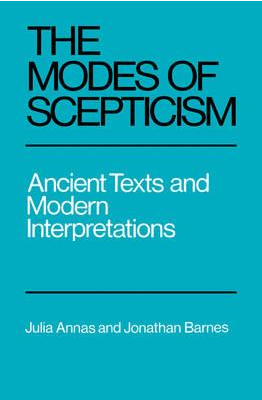
Download Now

An Introduction to Plato’s Republic book pdf download

Auther : Julia Annas
Language : English
Section : Philosophy and logic
Date of Coming : 2022-08-10
Department : Social sciences
book quality : Excellent
Size of file : 6.07MB
Number of Pages : 370

Author: Julia Annas

About the Author: Julia Annas is Regents Professor in Philosophy at the University of Arizona, and previously taught at St Hugh’s College, Oxford. She is a member of the American Academy of Arts and Sciences and the American Philosophical Society, the founder editor of *Oxford Studies in Ancient Philosophy*, former President of the Pacific Division of the American Philosophical Association and foreign member of the Norwegian and Finnish Academies. I’m very grateful to Meena for asking me to contribute to Philosop-her. First off, I’m delighted and excited to see so many younger women in philosophy, and in such a range of areas. There are more women in philosophy than when I was young, and more diversity, and philosophy itself has got a lot more interesting, and the two are connected. Of course we have far to go, but the state of philosophy is a lot healthier than it was in the sixties and seventies, when I was starting out. The only caveat that I find myself registering is the pace of development that’s expected of young philosophers – not just numbers of publications, but constant, sometimes relentless progress in the area you start out. For a variety of reasons – some good, some not – less was expected of me in my early philosophical years, and I was able to make many starts and develop in different areas. My work has only had a single focus in the second part of my career. I am amazed at the energy of younger women philosophers, and I wish that you didn’t have to use so much of it to succeed. I spent many years developing interests in many areas of ancient philosophy. There is, after all, over a thousand years of it, in which different enquiries were developed in a multitude of different ways. Early thinkers do philosophy in Homeric hexameters, Plato writes dialogues, we have Aristotle’s lecture notes, we have texts and fragments from the Stoics and Epicurus, and so on. There are many different styles of doing philosophy. By the end of antiquity philosophers who write commentaries on other philosophers in a way quite like modern academic philosophical commentators. Doing ancient philosophy is a great way of mentally loosening the constraints of the contemporary academic article and book; philosophy can be done well in plain prose examining numbered propositions, but it can be done in many other ways too. In doing ancient philosophy we have to distinguish between an analytical approach in the broad sense, which discusses the reasoned basis for philosophical claims, and a narrower sense in which context is discarded and arguments are reduced to abstract schemata. The first, broader approach is the one more likely to be fruitful, and history of philosophy is a great way to develop it. In my experience ancient philosophy has been the place I have found attitudes that are more co-operative, and less gladiatorial, than turn up in some other areas of philosophy. I don’t know how closely this is connected to the point that, at least in my intellectual lifetime, there have been more women in it than in many other areas of philosophy. I feel fortunate in not having suffered experiences as bad as those that many other women philosophers have had to put up with. We are still far from being equally represented in ancient philosophy, but I think the area does modestly better than some areas in philosophy, especially the more technical ones. For some years my interests in ancient philosophy have concentrated on ancient ethical theories, and their (almost) universal eudaimonist structure. The central concepts are those of happiness and virtue. Neither is well understood within the tradition of moral philosophy that we philosophers have inherited from the 19th and earlier 20th centuries. Because of this, the ancient theories were during that period grotesquely misunderstood by philosophers like Prichard, and it is in the last half-century that interpretations that answer to the texts have been developed in the field of ancient philosophy. At the same time (some wider Zeitgeist was at work, no doubt) contemporary moral philosophers began to rediscover eudaimonism and virtue ethics in the contemporary world. I started to find myself invited to conferences on virtue and happiness as the resident scholar to tell people what Aristotle thought, and I and others started to see how valuable cross-fertilization between ancient and contemporary ethics could be. The rediscovery (after a strange gap of nearly two centuries) of eudaimonism and virtue ethics as illuminating accounts of how we actually think ethically has been the philosophically most exciting development in my lifetime. A great deal of my intellectual life has been spent interpreting the ancients, probing to find what they thought. There has been a great widening of interest and collapsing of barriers in this field, which is far more lively and rewarding than it was when I began. I also find that in the latter years of my career I am in the middle of a new, fermenting movement which is developing on fronts unimaginable when I was beginning in my career. What more could a philosophers want? I often reflect on how fortunate I am. I’ve lived through a period when virtue ethics has gone from being a joke (among conservative ethical philosophers) to having gained respect (sometimes grudging) in the mainstream of ethics. It does not color within the lines set by conservative ethical traditions which start from duty, obligation and the ‘right-makers’ of right actions, and so is still sometimes dismissed as rudely disruptive of business as usual; this attitude can still be found among meta-ethicists who work within a tradition formed in a period when virtue had sunk to a sub-theoretical level. But this is an advantage for eudaimonism and virtue ethics; we constantly have to refine and defend our basic positions against objections and misunderstandings, and so our debates stay lively; we are not in danger of falling into academic disagreement on minor matters within an agreed framework. There have been so many ways that virtue ethics and eudaimonism have developed at dizzying speed in the last thirty years that it has taken me some time to work out what I find the most attractive and defensible version. I spent some years working up a book on virtue ethics, only to find myself stalled, until I ditched it and started again on a book on virtue, which emerged in 2011 as Intelligent Virtue. I had slowly realized that anyone needs to work out and defend a particular conception of virtue before being able to develop a virtue ethics. The conception I developed is on the lines of Aristotle’s conception of virtue as a disposition to be active in acting, reasoning and feeling in accordance with the virtues. Every aspect of that claim needs to be spelled out and developed, of course. This is independent of Aristotle’s own theory about the ‘mean’, and of other aspects of his ethics, such as his version of naturalism. I developed this conception of virtue in several ways and sketched out the relations in which it can stand to happiness or flourishing (which, is an issue in itself). Since then I have been slowly working on various issues in virtue ethics, hoping eventually to be in a position to develop a book. I have been working on the role of virtue in virtue ethics in relation to topics such as learning virtue in terms of ‘thick concepts’; action required by virtue and its relation to duty; the nature of vice and its relation to virtue; how virtue ethics accounts for heroism; and more. There are so many exciting and under-explored areas that I feel really lucky. At the same time I am finishing up a book on virtue and law in Plato’s late work the Laws. Having two such different projects keeps me going, as each is attractive when the other palls, but it’s also true that working on each means that I often feel that neither will get finished. I’d like to end by pointing out how the modern revival of interest in virtue and virtue ethics has been largely driven by the original contributions of women. Anyone talking about virtue has to mention Elizabeth Anscombe’s pathbreaking article in the 50s pointing out the deficiencies of then modern ethics. Nor can anyone pass over the work of Philippa Foot, or Rosalind Hursthouse. Different, non-Aristotelian versions of virtue and virtue ethics have been developed by Christine Swanton, Linda Zagzebski and Julia Driver. And, although they are not virtue ethicists, I should mention the work that virtue ethicists engage with in Humean studies with Rachel Cohon and Kate Abramson, and in Kantian studies with Christine Korsgaard and Barbara Herman. I am deeply grateful to all of these for their original work which has enabled progress to be made by people like me. Despite all the real bad news about women in philosophy, I am modestly optimistic for the future of women philosophers in the fields I work in, which is another thing to be grateful for.

An Introduction to Plato’s Republic book pdf download By Julia Annas

This interpretive introduction provides unique insight into Plato’s Republic. Stressing Plato’s desire to stimulate philosophical thinking in his readers, Julia Annas here demonstrates the coherence of his main moral argument on the nature of justice, and expounds related concepts of education, human motivation, knowledge and understanding. In a clear systematic fashion, this book shows that modern moral philosophy still has much to learn from Plato’s attempt to move the focus from questions of what acts the just person ought to perform to the more profound questions of what sort of person the just person ought to be.

Download PDF of An Introduction to Plato’s Republic book pdf download By Julia Annas
-Adrian Agency Library

Download Now

Interpretazione dei libri M-N della «Metafisica» di Aristotele book pdf download

Section : Philosophy and logic
Language : Italian
book quality : Excellent
Size of file : 11.8MB
Date of Coming : 2022-08-10
Number of Pages : 391
Department : Social sciences
Auther : Julia Annas

Author: Julia Annas

About the Author: Julia Annas is Regents Professor in Philosophy at the University of Arizona, and previously taught at St Hugh’s College, Oxford. She is a member of the American Academy of Arts and Sciences and the American Philosophical Society, the founder editor of *Oxford Studies in Ancient Philosophy*, former President of the Pacific Division of the American Philosophical Association and foreign member of the Norwegian and Finnish Academies. I’m very grateful to Meena for asking me to contribute to Philosop-her. First off, I’m delighted and excited to see so many younger women in philosophy, and in such a range of areas. There are more women in philosophy than when I was young, and more diversity, and philosophy itself has got a lot more interesting, and the two are connected. Of course we have far to go, but the state of philosophy is a lot healthier than it was in the sixties and seventies, when I was starting out. The only caveat that I find myself registering is the pace of development that’s expected of young philosophers – not just numbers of publications, but constant, sometimes relentless progress in the area you start out. For a variety of reasons – some good, some not – less was expected of me in my early philosophical years, and I was able to make many starts and develop in different areas. My work has only had a single focus in the second part of my career. I am amazed at the energy of younger women philosophers, and I wish that you didn’t have to use so much of it to succeed. I spent many years developing interests in many areas of ancient philosophy. There is, after all, over a thousand years of it, in which different enquiries were developed in a multitude of different ways. Early thinkers do philosophy in Homeric hexameters, Plato writes dialogues, we have Aristotle’s lecture notes, we have texts and fragments from the Stoics and Epicurus, and so on. There are many different styles of doing philosophy. By the end of antiquity philosophers who write commentaries on other philosophers in a way quite like modern academic philosophical commentators. Doing ancient philosophy is a great way of mentally loosening the constraints of the contemporary academic article and book; philosophy can be done well in plain prose examining numbered propositions, but it can be done in many other ways too. In doing ancient philosophy we have to distinguish between an analytical approach in the broad sense, which discusses the reasoned basis for philosophical claims, and a narrower sense in which context is discarded and arguments are reduced to abstract schemata. The first, broader approach is the one more likely to be fruitful, and history of philosophy is a great way to develop it. In my experience ancient philosophy has been the place I have found attitudes that are more co-operative, and less gladiatorial, than turn up in some other areas of philosophy. I don’t know how closely this is connected to the point that, at least in my intellectual lifetime, there have been more women in it than in many other areas of philosophy. I feel fortunate in not having suffered experiences as bad as those that many other women philosophers have had to put up with. We are still far from being equally represented in ancient philosophy, but I think the area does modestly better than some areas in philosophy, especially the more technical ones. For some years my interests in ancient philosophy have concentrated on ancient ethical theories, and their (almost) universal eudaimonist structure. The central concepts are those of happiness and virtue. Neither is well understood within the tradition of moral philosophy that we philosophers have inherited from the 19th and earlier 20th centuries. Because of this, the ancient theories were during that period grotesquely misunderstood by philosophers like Prichard, and it is in the last half-century that interpretations that answer to the texts have been developed in the field of ancient philosophy. At the same time (some wider Zeitgeist was at work, no doubt) contemporary moral philosophers began to rediscover eudaimonism and virtue ethics in the contemporary world. I started to find myself invited to conferences on virtue and happiness as the resident scholar to tell people what Aristotle thought, and I and others started to see how valuable cross-fertilization between ancient and contemporary ethics could be. The rediscovery (after a strange gap of nearly two centuries) of eudaimonism and virtue ethics as illuminating accounts of how we actually think ethically has been the philosophically most exciting development in my lifetime. A great deal of my intellectual life has been spent interpreting the ancients, probing to find what they thought. There has been a great widening of interest and collapsing of barriers in this field, which is far more lively and rewarding than it was when I began. I also find that in the latter years of my career I am in the middle of a new, fermenting movement which is developing on fronts unimaginable when I was beginning in my career. What more could a philosophers want? I often reflect on how fortunate I am. I’ve lived through a period when virtue ethics has gone from being a joke (among conservative ethical philosophers) to having gained respect (sometimes grudging) in the mainstream of ethics. It does not color within the lines set by conservative ethical traditions which start from duty, obligation and the ‘right-makers’ of right actions, and so is still sometimes dismissed as rudely disruptive of business as usual; this attitude can still be found among meta-ethicists who work within a tradition formed in a period when virtue had sunk to a sub-theoretical level. But this is an advantage for eudaimonism and virtue ethics; we constantly have to refine and defend our basic positions against objections and misunderstandings, and so our debates stay lively; we are not in danger of falling into academic disagreement on minor matters within an agreed framework. There have been so many ways that virtue ethics and eudaimonism have developed at dizzying speed in the last thirty years that it has taken me some time to work out what I find the most attractive and defensible version. I spent some years working up a book on virtue ethics, only to find myself stalled, until I ditched it and started again on a book on virtue, which emerged in 2011 as Intelligent Virtue. I had slowly realized that anyone needs to work out and defend a particular conception of virtue before being able to develop a virtue ethics. The conception I developed is on the lines of Aristotle’s conception of virtue as a disposition to be active in acting, reasoning and feeling in accordance with the virtues. Every aspect of that claim needs to be spelled out and developed, of course. This is independent of Aristotle’s own theory about the ‘mean’, and of other aspects of his ethics, such as his version of naturalism. I developed this conception of virtue in several ways and sketched out the relations in which it can stand to happiness or flourishing (which, is an issue in itself). Since then I have been slowly working on various issues in virtue ethics, hoping eventually to be in a position to develop a book. I have been working on the role of virtue in virtue ethics in relation to topics such as learning virtue in terms of ‘thick concepts’; action required by virtue and its relation to duty; the nature of vice and its relation to virtue; how virtue ethics accounts for heroism; and more. There are so many exciting and under-explored areas that I feel really lucky. At the same time I am finishing up a book on virtue and law in Plato’s late work the Laws. Having two such different projects keeps me going, as each is attractive when the other palls, but it’s also true that working on each means that I often feel that neither will get finished. I’d like to end by pointing out how the modern revival of interest in virtue and virtue ethics has been largely driven by the original contributions of women. Anyone talking about virtue has to mention Elizabeth Anscombe’s pathbreaking article in the 50s pointing out the deficiencies of then modern ethics. Nor can anyone pass over the work of Philippa Foot, or Rosalind Hursthouse. Different, non-Aristotelian versions of virtue and virtue ethics have been developed by Christine Swanton, Linda Zagzebski and Julia Driver. And, although they are not virtue ethicists, I should mention the work that virtue ethicists engage with in Humean studies with Rachel Cohon and Kate Abramson, and in Kantian studies with Christine Korsgaard and Barbara Herman. I am deeply grateful to all of these for their original work which has enabled progress to be made by people like me. Despite all the real bad news about women in philosophy, I am modestly optimistic for the future of women philosophers in the fields I work in, which is another thing to be grateful for.

Interpretazione dei libri M-N della «Metafisica» di Aristotele book pdf download By Julia Annas

La Annas dimostra molto bene che, lungi dall’essere un insieme di discussioni cavillose su oscuri nonsensi, i libri M-N presentano “un’acuta trattazione di problemi filosoficamente vivi”. L’edizione italiana arricchisce quella inglese, oltre che con l’introduzione di G. Reale e una bibliografia completa di J. E. Annas, con una Appendice al Saggio introduttivo (un articolo in cui l’autrice riassume molto chiaramente e approfondisce la sua interpretazione della filosofia della matematica di Aristotele) e altresì con il testo greco messo a fronte della traduzione dei libri M-N. La traduzione qui riprodotta di questi libri è quella di G. Reale, ma rivista dalla Annas (con alcuni ritocchi terminologici e con qualche modifica sulla base di differenti letture sul testo), in modo che si accordi nella migliore maniera con la sua esegesi e con il suo commentario.

Download PDF of Interpretazione dei libri M-N della «Metafisica» di Aristotele book pdf download By Julia Annas
-Adrian Agency Library

Download Now