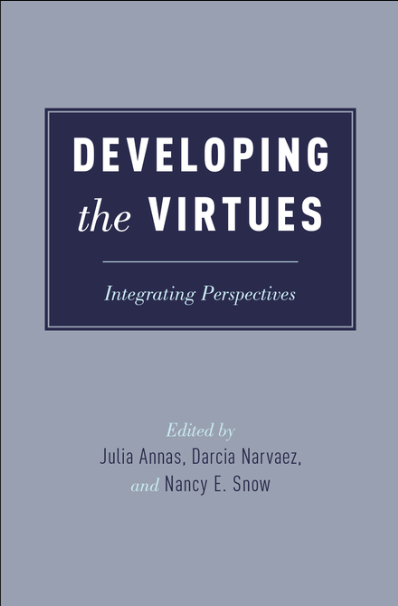
Developing the virtues: integrating perspectives book pdf download

Department : Social sciences
Section : Philosophy and logic
Size of file : 2.51MB
Number of Pages : 329
book quality : Excellent
Auther : Julia Annas
Language : English
Date of Coming : 2022-08-10

Author: Julia Annas

About the Author: Julia Annas is Regents Professor in Philosophy at the University of Arizona, and previously taught at St Hugh’s College, Oxford. She is a member of the American Academy of Arts and Sciences and the American Philosophical Society, the founder editor of *Oxford Studies in Ancient Philosophy*, former President of the Pacific Division of the American Philosophical Association and foreign member of the Norwegian and Finnish Academies. I’m very grateful to Meena for asking me to contribute to Philosop-her. First off, I’m delighted and excited to see so many younger women in philosophy, and in such a range of areas. There are more women in philosophy than when I was young, and more diversity, and philosophy itself has got a lot more interesting, and the two are connected. Of course we have far to go, but the state of philosophy is a lot healthier than it was in the sixties and seventies, when I was starting out. The only caveat that I find myself registering is the pace of development that’s expected of young philosophers – not just numbers of publications, but constant, sometimes relentless progress in the area you start out. For a variety of reasons – some good, some not – less was expected of me in my early philosophical years, and I was able to make many starts and develop in different areas. My work has only had a single focus in the second part of my career. I am amazed at the energy of younger women philosophers, and I wish that you didn’t have to use so much of it to succeed. I spent many years developing interests in many areas of ancient philosophy. There is, after all, over a thousand years of it, in which different enquiries were developed in a multitude of different ways. Early thinkers do philosophy in Homeric hexameters, Plato writes dialogues, we have Aristotle’s lecture notes, we have texts and fragments from the Stoics and Epicurus, and so on. There are many different styles of doing philosophy. By the end of antiquity philosophers who write commentaries on other philosophers in a way quite like modern academic philosophical commentators. Doing ancient philosophy is a great way of mentally loosening the constraints of the contemporary academic article and book; philosophy can be done well in plain prose examining numbered propositions, but it can be done in many other ways too. In doing ancient philosophy we have to distinguish between an analytical approach in the broad sense, which discusses the reasoned basis for philosophical claims, and a narrower sense in which context is discarded and arguments are reduced to abstract schemata. The first, broader approach is the one more likely to be fruitful, and history of philosophy is a great way to develop it. In my experience ancient philosophy has been the place I have found attitudes that are more co-operative, and less gladiatorial, than turn up in some other areas of philosophy. I don’t know how closely this is connected to the point that, at least in my intellectual lifetime, there have been more women in it than in many other areas of philosophy. I feel fortunate in not having suffered experiences as bad as those that many other women philosophers have had to put up with. We are still far from being equally represented in ancient philosophy, but I think the area does modestly better than some areas in philosophy, especially the more technical ones. For some years my interests in ancient philosophy have concentrated on ancient ethical theories, and their (almost) universal eudaimonist structure. The central concepts are those of happiness and virtue. Neither is well understood within the tradition of moral philosophy that we philosophers have inherited from the 19th and earlier 20th centuries. Because of this, the ancient theories were during that period grotesquely misunderstood by philosophers like Prichard, and it is in the last half-century that interpretations that answer to the texts have been developed in the field of ancient philosophy. At the same time (some wider Zeitgeist was at work, no doubt) contemporary moral philosophers began to rediscover eudaimonism and virtue ethics in the contemporary world. I started to find myself invited to conferences on virtue and happiness as the resident scholar to tell people what Aristotle thought, and I and others started to see how valuable cross-fertilization between ancient and contemporary ethics could be. The rediscovery (after a strange gap of nearly two centuries) of eudaimonism and virtue ethics as illuminating accounts of how we actually think ethically has been the philosophically most exciting development in my lifetime. A great deal of my intellectual life has been spent interpreting the ancients, probing to find what they thought. There has been a great widening of interest and collapsing of barriers in this field, which is far more lively and rewarding than it was when I began. I also find that in the latter years of my career I am in the middle of a new, fermenting movement which is developing on fronts unimaginable when I was beginning in my career. What more could a philosophers want? I often reflect on how fortunate I am. I’ve lived through a period when virtue ethics has gone from being a joke (among conservative ethical philosophers) to having gained respect (sometimes grudging) in the mainstream of ethics. It does not color within the lines set by conservative ethical traditions which start from duty, obligation and the ‘right-makers’ of right actions, and so is still sometimes dismissed as rudely disruptive of business as usual; this attitude can still be found among meta-ethicists who work within a tradition formed in a period when virtue had sunk to a sub-theoretical level. But this is an advantage for eudaimonism and virtue ethics; we constantly have to refine and defend our basic positions against objections and misunderstandings, and so our debates stay lively; we are not in danger of falling into academic disagreement on minor matters within an agreed framework. There have been so many ways that virtue ethics and eudaimonism have developed at dizzying speed in the last thirty years that it has taken me some time to work out what I find the most attractive and defensible version. I spent some years working up a book on virtue ethics, only to find myself stalled, until I ditched it and started again on a book on virtue, which emerged in 2011 as Intelligent Virtue. I had slowly realized that anyone needs to work out and defend a particular conception of virtue before being able to develop a virtue ethics. The conception I developed is on the lines of Aristotle’s conception of virtue as a disposition to be active in acting, reasoning and feeling in accordance with the virtues. Every aspect of that claim needs to be spelled out and developed, of course. This is independent of Aristotle’s own theory about the ‘mean’, and of other aspects of his ethics, such as his version of naturalism. I developed this conception of virtue in several ways and sketched out the relations in which it can stand to happiness or flourishing (which, is an issue in itself). Since then I have been slowly working on various issues in virtue ethics, hoping eventually to be in a position to develop a book. I have been working on the role of virtue in virtue ethics in relation to topics such as learning virtue in terms of ‘thick concepts’; action required by virtue and its relation to duty; the nature of vice and its relation to virtue; how virtue ethics accounts for heroism; and more. There are so many exciting and under-explored areas that I feel really lucky. At the same time I am finishing up a book on virtue and law in Plato’s late work the Laws. Having two such different projects keeps me going, as each is attractive when the other palls, but it’s also true that working on each means that I often feel that neither will get finished. I’d like to end by pointing out how the modern revival of interest in virtue and virtue ethics has been largely driven by the original contributions of women. Anyone talking about virtue has to mention Elizabeth Anscombe’s pathbreaking article in the 50s pointing out the deficiencies of then modern ethics. Nor can anyone pass over the work of Philippa Foot, or Rosalind Hursthouse. Different, non-Aristotelian versions of virtue and virtue ethics have been developed by Christine Swanton, Linda Zagzebski and Julia Driver. And, although they are not virtue ethicists, I should mention the work that virtue ethicists engage with in Humean studies with Rachel Cohon and Kate Abramson, and in Kantian studies with Christine Korsgaard and Barbara Herman. I am deeply grateful to all of these for their original work which has enabled progress to be made by people like me. Despite all the real bad news about women in philosophy, I am modestly optimistic for the future of women philosophers in the fields I work in, which is another thing to be grateful for.

Developing the virtues: integrating perspectives book pdf download By Julia Annas

Ethicists and psychologists have become increasingly interested in the development of virtue in recent years, approaching the topic from the perspectives of virtue ethics and developmental psychology respectively. Such interest in virtue development has spread beyond academia, as teachers and parents have increasingly striven to cultivate virtue as part of education and child-rearing. Looking at these parallel Read more… Abstract: Ethicists and psychologists have become increasingly interested in the development of virtue in recent years, approaching the topic from the perspectives of virtue ethics and developmental psychology respectively. Such interest in virtue development has spread beyond academia, as teachers and parents have increasingly striven to cultivate virtue as part of education and child-rearing. Looking at these parallel trends in the study and practice of virtue development, the essays in this volume explore such questions as: How can philosophical work on virtue development inform psychological work on it, and vice versa? How should we understand virtue as a dimension of human personality? What is the developmental foundation of virtue? What are the evolutionary aspects of virtue and its development? How is virtue fostered?

Download PDF of Developing the virtues: integrating perspectives book pdf download By Julia Annas
-Adrian Agency Library

Download Now

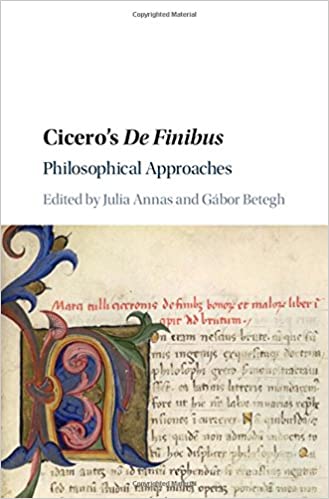
Cicero’s De Finibus: Philosophical Approaches book pdf download

Language : English
Department : Social sciences
book quality : Excellent
Section : Philosophy and logic
Date of Coming : 2022-08-10
Auther : Julia Annas
Size of file : 1.20MB
Number of Pages : 548

Author: Julia Annas

About the Author: Julia Annas is Regents Professor in Philosophy at the University of Arizona, and previously taught at St Hugh’s College, Oxford. She is a member of the American Academy of Arts and Sciences and the American Philosophical Society, the founder editor of *Oxford Studies in Ancient Philosophy*, former President of the Pacific Division of the American Philosophical Association and foreign member of the Norwegian and Finnish Academies. I’m very grateful to Meena for asking me to contribute to Philosop-her. First off, I’m delighted and excited to see so many younger women in philosophy, and in such a range of areas. There are more women in philosophy than when I was young, and more diversity, and philosophy itself has got a lot more interesting, and the two are connected. Of course we have far to go, but the state of philosophy is a lot healthier than it was in the sixties and seventies, when I was starting out. The only caveat that I find myself registering is the pace of development that’s expected of young philosophers – not just numbers of publications, but constant, sometimes relentless progress in the area you start out. For a variety of reasons – some good, some not – less was expected of me in my early philosophical years, and I was able to make many starts and develop in different areas. My work has only had a single focus in the second part of my career. I am amazed at the energy of younger women philosophers, and I wish that you didn’t have to use so much of it to succeed. I spent many years developing interests in many areas of ancient philosophy. There is, after all, over a thousand years of it, in which different enquiries were developed in a multitude of different ways. Early thinkers do philosophy in Homeric hexameters, Plato writes dialogues, we have Aristotle’s lecture notes, we have texts and fragments from the Stoics and Epicurus, and so on. There are many different styles of doing philosophy. By the end of antiquity philosophers who write commentaries on other philosophers in a way quite like modern academic philosophical commentators. Doing ancient philosophy is a great way of mentally loosening the constraints of the contemporary academic article and book; philosophy can be done well in plain prose examining numbered propositions, but it can be done in many other ways too. In doing ancient philosophy we have to distinguish between an analytical approach in the broad sense, which discusses the reasoned basis for philosophical claims, and a narrower sense in which context is discarded and arguments are reduced to abstract schemata. The first, broader approach is the one more likely to be fruitful, and history of philosophy is a great way to develop it. In my experience ancient philosophy has been the place I have found attitudes that are more co-operative, and less gladiatorial, than turn up in some other areas of philosophy. I don’t know how closely this is connected to the point that, at least in my intellectual lifetime, there have been more women in it than in many other areas of philosophy. I feel fortunate in not having suffered experiences as bad as those that many other women philosophers have had to put up with. We are still far from being equally represented in ancient philosophy, but I think the area does modestly better than some areas in philosophy, especially the more technical ones. For some years my interests in ancient philosophy have concentrated on ancient ethical theories, and their (almost) universal eudaimonist structure. The central concepts are those of happiness and virtue. Neither is well understood within the tradition of moral philosophy that we philosophers have inherited from the 19th and earlier 20th centuries. Because of this, the ancient theories were during that period grotesquely misunderstood by philosophers like Prichard, and it is in the last half-century that interpretations that answer to the texts have been developed in the field of ancient philosophy. At the same time (some wider Zeitgeist was at work, no doubt) contemporary moral philosophers began to rediscover eudaimonism and virtue ethics in the contemporary world. I started to find myself invited to conferences on virtue and happiness as the resident scholar to tell people what Aristotle thought, and I and others started to see how valuable cross-fertilization between ancient and contemporary ethics could be. The rediscovery (after a strange gap of nearly two centuries) of eudaimonism and virtue ethics as illuminating accounts of how we actually think ethically has been the philosophically most exciting development in my lifetime. A great deal of my intellectual life has been spent interpreting the ancients, probing to find what they thought. There has been a great widening of interest and collapsing of barriers in this field, which is far more lively and rewarding than it was when I began. I also find that in the latter years of my career I am in the middle of a new, fermenting movement which is developing on fronts unimaginable when I was beginning in my career. What more could a philosophers want? I often reflect on how fortunate I am. I’ve lived through a period when virtue ethics has gone from being a joke (among conservative ethical philosophers) to having gained respect (sometimes grudging) in the mainstream of ethics. It does not color within the lines set by conservative ethical traditions which start from duty, obligation and the ‘right-makers’ of right actions, and so is still sometimes dismissed as rudely disruptive of business as usual; this attitude can still be found among meta-ethicists who work within a tradition formed in a period when virtue had sunk to a sub-theoretical level. But this is an advantage for eudaimonism and virtue ethics; we constantly have to refine and defend our basic positions against objections and misunderstandings, and so our debates stay lively; we are not in danger of falling into academic disagreement on minor matters within an agreed framework. There have been so many ways that virtue ethics and eudaimonism have developed at dizzying speed in the last thirty years that it has taken me some time to work out what I find the most attractive and defensible version. I spent some years working up a book on virtue ethics, only to find myself stalled, until I ditched it and started again on a book on virtue, which emerged in 2011 as Intelligent Virtue. I had slowly realized that anyone needs to work out and defend a particular conception of virtue before being able to develop a virtue ethics. The conception I developed is on the lines of Aristotle’s conception of virtue as a disposition to be active in acting, reasoning and feeling in accordance with the virtues. Every aspect of that claim needs to be spelled out and developed, of course. This is independent of Aristotle’s own theory about the ‘mean’, and of other aspects of his ethics, such as his version of naturalism. I developed this conception of virtue in several ways and sketched out the relations in which it can stand to happiness or flourishing (which, is an issue in itself). Since then I have been slowly working on various issues in virtue ethics, hoping eventually to be in a position to develop a book. I have been working on the role of virtue in virtue ethics in relation to topics such as learning virtue in terms of ‘thick concepts’; action required by virtue and its relation to duty; the nature of vice and its relation to virtue; how virtue ethics accounts for heroism; and more. There are so many exciting and under-explored areas that I feel really lucky. At the same time I am finishing up a book on virtue and law in Plato’s late work the Laws. Having two such different projects keeps me going, as each is attractive when the other palls, but it’s also true that working on each means that I often feel that neither will get finished. I’d like to end by pointing out how the modern revival of interest in virtue and virtue ethics has been largely driven by the original contributions of women. Anyone talking about virtue has to mention Elizabeth Anscombe’s pathbreaking article in the 50s pointing out the deficiencies of then modern ethics. Nor can anyone pass over the work of Philippa Foot, or Rosalind Hursthouse. Different, non-Aristotelian versions of virtue and virtue ethics have been developed by Christine Swanton, Linda Zagzebski and Julia Driver. And, although they are not virtue ethicists, I should mention the work that virtue ethicists engage with in Humean studies with Rachel Cohon and Kate Abramson, and in Kantian studies with Christine Korsgaard and Barbara Herman. I am deeply grateful to all of these for their original work which has enabled progress to be made by people like me. Despite all the real bad news about women in philosophy, I am modestly optimistic for the future of women philosophers in the fields I work in, which is another thing to be grateful for.

Cicero’s De Finibus: Philosophical Approaches book pdf download By Julia Annas

Cicero is increasingly recognised as a highly intelligent contributor to the ongoing ethical debates between Epicureans, Stoics and other schools. In this work on the fundamentals of ethics his learning as a scholar, his skill as a lawyer and his own passion for the truth result in a work which dazzles us in its presentation of the debates and at the same time exhibits the detachment of the ancient sceptic. Many kinds of reader will find themselves engaged with Cicero as well as with the ethical theories he presents. This collection takes the reader further into the debates, opening up new avenues for exploring this fascinating work.

Download PDF of Cicero’s De Finibus: Philosophical Approaches book pdf download By Julia Annas
-Adrian Agency Library
Download Now

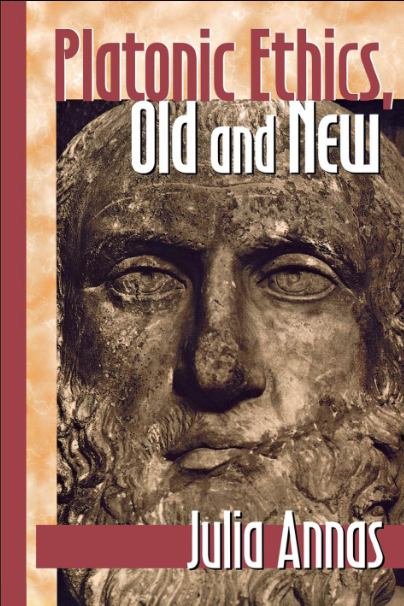
Platonic Ethics, Old and New book pdf download

Date of Coming : 2022-08-10
Auther : Julia Annas
Section : Philosophy and logic
Size of file : 12.7MB
Language : English
Number of Pages : 207
Department : Social sciences
book quality : Excellent

Author: Julia Annas

About the Author: Julia Annas is Regents Professor in Philosophy at the University of Arizona, and previously taught at St Hugh’s College, Oxford. She is a member of the American Academy of Arts and Sciences and the American Philosophical Society, the founder editor of *Oxford Studies in Ancient Philosophy*, former President of the Pacific Division of the American Philosophical Association and foreign member of the Norwegian and Finnish Academies. I’m very grateful to Meena for asking me to contribute to Philosop-her. First off, I’m delighted and excited to see so many younger women in philosophy, and in such a range of areas. There are more women in philosophy than when I was young, and more diversity, and philosophy itself has got a lot more interesting, and the two are connected. Of course we have far to go, but the state of philosophy is a lot healthier than it was in the sixties and seventies, when I was starting out. The only caveat that I find myself registering is the pace of development that’s expected of young philosophers – not just numbers of publications, but constant, sometimes relentless progress in the area you start out. For a variety of reasons – some good, some not – less was expected of me in my early philosophical years, and I was able to make many starts and develop in different areas. My work has only had a single focus in the second part of my career. I am amazed at the energy of younger women philosophers, and I wish that you didn’t have to use so much of it to succeed. I spent many years developing interests in many areas of ancient philosophy. There is, after all, over a thousand years of it, in which different enquiries were developed in a multitude of different ways. Early thinkers do philosophy in Homeric hexameters, Plato writes dialogues, we have Aristotle’s lecture notes, we have texts and fragments from the Stoics and Epicurus, and so on. There are many different styles of doing philosophy. By the end of antiquity philosophers who write commentaries on other philosophers in a way quite like modern academic philosophical commentators. Doing ancient philosophy is a great way of mentally loosening the constraints of the contemporary academic article and book; philosophy can be done well in plain prose examining numbered propositions, but it can be done in many other ways too. In doing ancient philosophy we have to distinguish between an analytical approach in the broad sense, which discusses the reasoned basis for philosophical claims, and a narrower sense in which context is discarded and arguments are reduced to abstract schemata. The first, broader approach is the one more likely to be fruitful, and history of philosophy is a great way to develop it. In my experience ancient philosophy has been the place I have found attitudes that are more co-operative, and less gladiatorial, than turn up in some other areas of philosophy. I don’t know how closely this is connected to the point that, at least in my intellectual lifetime, there have been more women in it than in many other areas of philosophy. I feel fortunate in not having suffered experiences as bad as those that many other women philosophers have had to put up with. We are still far from being equally represented in ancient philosophy, but I think the area does modestly better than some areas in philosophy, especially the more technical ones. For some years my interests in ancient philosophy have concentrated on ancient ethical theories, and their (almost) universal eudaimonist structure. The central concepts are those of happiness and virtue. Neither is well understood within the tradition of moral philosophy that we philosophers have inherited from the 19th and earlier 20th centuries. Because of this, the ancient theories were during that period grotesquely misunderstood by philosophers like Prichard, and it is in the last half-century that interpretations that answer to the texts have been developed in the field of ancient philosophy. At the same time (some wider Zeitgeist was at work, no doubt) contemporary moral philosophers began to rediscover eudaimonism and virtue ethics in the contemporary world. I started to find myself invited to conferences on virtue and happiness as the resident scholar to tell people what Aristotle thought, and I and others started to see how valuable cross-fertilization between ancient and contemporary ethics could be. The rediscovery (after a strange gap of nearly two centuries) of eudaimonism and virtue ethics as illuminating accounts of how we actually think ethically has been the philosophically most exciting development in my lifetime. A great deal of my intellectual life has been spent interpreting the ancients, probing to find what they thought. There has been a great widening of interest and collapsing of barriers in this field, which is far more lively and rewarding than it was when I began. I also find that in the latter years of my career I am in the middle of a new, fermenting movement which is developing on fronts unimaginable when I was beginning in my career. What more could a philosophers want? I often reflect on how fortunate I am. I’ve lived through a period when virtue ethics has gone from being a joke (among conservative ethical philosophers) to having gained respect (sometimes grudging) in the mainstream of ethics. It does not color within the lines set by conservative ethical traditions which start from duty, obligation and the ‘right-makers’ of right actions, and so is still sometimes dismissed as rudely disruptive of business as usual; this attitude can still be found among meta-ethicists who work within a tradition formed in a period when virtue had sunk to a sub-theoretical level. But this is an advantage for eudaimonism and virtue ethics; we constantly have to refine and defend our basic positions against objections and misunderstandings, and so our debates stay lively; we are not in danger of falling into academic disagreement on minor matters within an agreed framework. There have been so many ways that virtue ethics and eudaimonism have developed at dizzying speed in the last thirty years that it has taken me some time to work out what I find the most attractive and defensible version. I spent some years working up a book on virtue ethics, only to find myself stalled, until I ditched it and started again on a book on virtue, which emerged in 2011 as Intelligent Virtue. I had slowly realized that anyone needs to work out and defend a particular conception of virtue before being able to develop a virtue ethics. The conception I developed is on the lines of Aristotle’s conception of virtue as a disposition to be active in acting, reasoning and feeling in accordance with the virtues. Every aspect of that claim needs to be spelled out and developed, of course. This is independent of Aristotle’s own theory about the ‘mean’, and of other aspects of his ethics, such as his version of naturalism. I developed this conception of virtue in several ways and sketched out the relations in which it can stand to happiness or flourishing (which, is an issue in itself). Since then I have been slowly working on various issues in virtue ethics, hoping eventually to be in a position to develop a book. I have been working on the role of virtue in virtue ethics in relation to topics such as learning virtue in terms of ‘thick concepts’; action required by virtue and its relation to duty; the nature of vice and its relation to virtue; how virtue ethics accounts for heroism; and more. There are so many exciting and under-explored areas that I feel really lucky. At the same time I am finishing up a book on virtue and law in Plato’s late work the Laws. Having two such different projects keeps me going, as each is attractive when the other palls, but it’s also true that working on each means that I often feel that neither will get finished. I’d like to end by pointing out how the modern revival of interest in virtue and virtue ethics has been largely driven by the original contributions of women. Anyone talking about virtue has to mention Elizabeth Anscombe’s pathbreaking article in the 50s pointing out the deficiencies of then modern ethics. Nor can anyone pass over the work of Philippa Foot, or Rosalind Hursthouse. Different, non-Aristotelian versions of virtue and virtue ethics have been developed by Christine Swanton, Linda Zagzebski and Julia Driver. And, although they are not virtue ethicists, I should mention the work that virtue ethicists engage with in Humean studies with Rachel Cohon and Kate Abramson, and in Kantian studies with Christine Korsgaard and Barbara Herman. I am deeply grateful to all of these for their original work which has enabled progress to be made by people like me. Despite all the real bad news about women in philosophy, I am modestly optimistic for the future of women philosophers in the fields I work in, which is another thing to be grateful for.

Platonic Ethics, Old and New book pdf download By Julia Annas

The Townsend Lectures Julia Annas here offers a fundamental reexamination of Plato’s ethical thought by investigating the Middle Platonist perspective, which emerged at the end of Plato’s own school, the Academy. She highlights the differences between ancient and modern assumptions about Plato’s ethics—and stresses the need to be more critical about our own. One of these modern assumptions is the notion that the dialogues record the development of Plato’s thought. Annas shows how the Middle Platonists, by contrast, viewed the dialogues as multiple presentations of a single Platonic ethical philosophy, differing in form and purpose but ultimately coherent. They also read Plato’s ethics as consistently defending the view that virtue is sufficient for happiness, and see it as converging in its main points with the ethics of the Stoics. Annas goes on to explore the Platonic idea that humankind’s final end is “becoming like God”—an idea that is well known among the ancients but virtually ignored in modern interpretations. She also maintains that modern interpretations, beginning in the nineteenth century, have placed undue emphasis on the Republic, and have treated it too much as a political work, whereas the ancients rightly saw it as a continuation of Plato’s ethical writings.

Download PDF of Platonic Ethics, Old and New book pdf download By Julia Annas
-Adrian Agency Library

Download Now

Virtue and law in Plato and beyond book pdf download

Size of file : 1.38MB
Date of Coming : 2022-08-10
Department : Social sciences
Number of Pages : 243
Section : Philosophy and logic
Auther : Julia Annas
Language : English
book quality : Excellent

Author: Julia Annas

About the Author: Julia Annas is Regents Professor in Philosophy at the University of Arizona, and previously taught at St Hugh’s College, Oxford. She is a member of the American Academy of Arts and Sciences and the American Philosophical Society, the founder editor of *Oxford Studies in Ancient Philosophy*, former President of the Pacific Division of the American Philosophical Association and foreign member of the Norwegian and Finnish Academies. I’m very grateful to Meena for asking me to contribute to Philosop-her. First off, I’m delighted and excited to see so many younger women in philosophy, and in such a range of areas. There are more women in philosophy than when I was young, and more diversity, and philosophy itself has got a lot more interesting, and the two are connected. Of course we have far to go, but the state of philosophy is a lot healthier than it was in the sixties and seventies, when I was starting out. The only caveat that I find myself registering is the pace of development that’s expected of young philosophers – not just numbers of publications, but constant, sometimes relentless progress in the area you start out. For a variety of reasons – some good, some not – less was expected of me in my early philosophical years, and I was able to make many starts and develop in different areas. My work has only had a single focus in the second part of my career. I am amazed at the energy of younger women philosophers, and I wish that you didn’t have to use so much of it to succeed. I spent many years developing interests in many areas of ancient philosophy. There is, after all, over a thousand years of it, in which different enquiries were developed in a multitude of different ways. Early thinkers do philosophy in Homeric hexameters, Plato writes dialogues, we have Aristotle’s lecture notes, we have texts and fragments from the Stoics and Epicurus, and so on. There are many different styles of doing philosophy. By the end of antiquity philosophers who write commentaries on other philosophers in a way quite like modern academic philosophical commentators. Doing ancient philosophy is a great way of mentally loosening the constraints of the contemporary academic article and book; philosophy can be done well in plain prose examining numbered propositions, but it can be done in many other ways too. In doing ancient philosophy we have to distinguish between an analytical approach in the broad sense, which discusses the reasoned basis for philosophical claims, and a narrower sense in which context is discarded and arguments are reduced to abstract schemata. The first, broader approach is the one more likely to be fruitful, and history of philosophy is a great way to develop it. In my experience ancient philosophy has been the place I have found attitudes that are more co-operative, and less gladiatorial, than turn up in some other areas of philosophy. I don’t know how closely this is connected to the point that, at least in my intellectual lifetime, there have been more women in it than in many other areas of philosophy. I feel fortunate in not having suffered experiences as bad as those that many other women philosophers have had to put up with. We are still far from being equally represented in ancient philosophy, but I think the area does modestly better than some areas in philosophy, especially the more technical ones. For some years my interests in ancient philosophy have concentrated on ancient ethical theories, and their (almost) universal eudaimonist structure. The central concepts are those of happiness and virtue. Neither is well understood within the tradition of moral philosophy that we philosophers have inherited from the 19th and earlier 20th centuries. Because of this, the ancient theories were during that period grotesquely misunderstood by philosophers like Prichard, and it is in the last half-century that interpretations that answer to the texts have been developed in the field of ancient philosophy. At the same time (some wider Zeitgeist was at work, no doubt) contemporary moral philosophers began to rediscover eudaimonism and virtue ethics in the contemporary world. I started to find myself invited to conferences on virtue and happiness as the resident scholar to tell people what Aristotle thought, and I and others started to see how valuable cross-fertilization between ancient and contemporary ethics could be. The rediscovery (after a strange gap of nearly two centuries) of eudaimonism and virtue ethics as illuminating accounts of how we actually think ethically has been the philosophically most exciting development in my lifetime. A great deal of my intellectual life has been spent interpreting the ancients, probing to find what they thought. There has been a great widening of interest and collapsing of barriers in this field, which is far more lively and rewarding than it was when I began. I also find that in the latter years of my career I am in the middle of a new, fermenting movement which is developing on fronts unimaginable when I was beginning in my career. What more could a philosophers want? I often reflect on how fortunate I am. I’ve lived through a period when virtue ethics has gone from being a joke (among conservative ethical philosophers) to having gained respect (sometimes grudging) in the mainstream of ethics. It does not color within the lines set by conservative ethical traditions which start from duty, obligation and the ‘right-makers’ of right actions, and so is still sometimes dismissed as rudely disruptive of business as usual; this attitude can still be found among meta-ethicists who work within a tradition formed in a period when virtue had sunk to a sub-theoretical level. But this is an advantage for eudaimonism and virtue ethics; we constantly have to refine and defend our basic positions against objections and misunderstandings, and so our debates stay lively; we are not in danger of falling into academic disagreement on minor matters within an agreed framework. There have been so many ways that virtue ethics and eudaimonism have developed at dizzying speed in the last thirty years that it has taken me some time to work out what I find the most attractive and defensible version. I spent some years working up a book on virtue ethics, only to find myself stalled, until I ditched it and started again on a book on virtue, which emerged in 2011 as Intelligent Virtue. I had slowly realized that anyone needs to work out and defend a particular conception of virtue before being able to develop a virtue ethics. The conception I developed is on the lines of Aristotle’s conception of virtue as a disposition to be active in acting, reasoning and feeling in accordance with the virtues. Every aspect of that claim needs to be spelled out and developed, of course. This is independent of Aristotle’s own theory about the ‘mean’, and of other aspects of his ethics, such as his version of naturalism. I developed this conception of virtue in several ways and sketched out the relations in which it can stand to happiness or flourishing (which, is an issue in itself). Since then I have been slowly working on various issues in virtue ethics, hoping eventually to be in a position to develop a book. I have been working on the role of virtue in virtue ethics in relation to topics such as learning virtue in terms of ‘thick concepts’; action required by virtue and its relation to duty; the nature of vice and its relation to virtue; how virtue ethics accounts for heroism; and more. There are so many exciting and under-explored areas that I feel really lucky. At the same time I am finishing up a book on virtue and law in Plato’s late work the Laws. Having two such different projects keeps me going, as each is attractive when the other palls, but it’s also true that working on each means that I often feel that neither will get finished. I’d like to end by pointing out how the modern revival of interest in virtue and virtue ethics has been largely driven by the original contributions of women. Anyone talking about virtue has to mention Elizabeth Anscombe’s pathbreaking article in the 50s pointing out the deficiencies of then modern ethics. Nor can anyone pass over the work of Philippa Foot, or Rosalind Hursthouse. Different, non-Aristotelian versions of virtue and virtue ethics have been developed by Christine Swanton, Linda Zagzebski and Julia Driver. And, although they are not virtue ethicists, I should mention the work that virtue ethicists engage with in Humean studies with Rachel Cohon and Kate Abramson, and in Kantian studies with Christine Korsgaard and Barbara Herman. I am deeply grateful to all of these for their original work which has enabled progress to be made by people like me. Despite all the real bad news about women in philosophy, I am modestly optimistic for the future of women philosophers in the fields I work in, which is another thing to be grateful for.

Virtue and law in Plato and beyond book pdf download By Julia Annas

Julia Annas presents a study of Plato’s account of the relation of virtue to law: how it developed from the Republic to the Laws, and how his ideas were taken up by Cicero and by Philo of Alexandria. Annas shows that, rather than rejecting the approach to an ideal society in the Republic (as generally thought), Plato is in both dialogues concerned with the relation of virtue to law, and obedience to law, and presents, in the Laws, a more careful and sophisticated account of that relation. His approach in the Laws differs from his earlier one, because he now tries to build from the political cultures of actual societies (and their histories) instead of producing a theoretical thought-experiment. Plato develops an original project in which obedience to law is linked with education to promote understanding of the laws and of the virtues which obedience to them promote. Annas also explores how this project appeals independently to the very different later writers Cicero and Philo of Alexandria.

Download PDF of Virtue and law in Plato and beyond book pdf download By Julia Annas
-Adrian Agency Library
Download Now

Antik Felsefe book pdf download

book quality : Excellent
Number of Pages : 184
Size of file : 7.51MB
Date of Coming : 2022-08-10
Auther : Julia Annas
Department : Social sciences
Section : Philosophy and logic
Language : Turkish

Author: Julia Annas

About the Author: Julia Annas is Regents Professor in Philosophy at the University of Arizona, and previously taught at St Hugh’s College, Oxford. She is a member of the American Academy of Arts and Sciences and the American Philosophical Society, the founder editor of *Oxford Studies in Ancient Philosophy*, former President of the Pacific Division of the American Philosophical Association and foreign member of the Norwegian and Finnish Academies. I’m very grateful to Meena for asking me to contribute to Philosop-her. First off, I’m delighted and excited to see so many younger women in philosophy, and in such a range of areas. There are more women in philosophy than when I was young, and more diversity, and philosophy itself has got a lot more interesting, and the two are connected. Of course we have far to go, but the state of philosophy is a lot healthier than it was in the sixties and seventies, when I was starting out. The only caveat that I find myself registering is the pace of development that’s expected of young philosophers – not just numbers of publications, but constant, sometimes relentless progress in the area you start out. For a variety of reasons – some good, some not – less was expected of me in my early philosophical years, and I was able to make many starts and develop in different areas. My work has only had a single focus in the second part of my career. I am amazed at the energy of younger women philosophers, and I wish that you didn’t have to use so much of it to succeed. I spent many years developing interests in many areas of ancient philosophy. There is, after all, over a thousand years of it, in which different enquiries were developed in a multitude of different ways. Early thinkers do philosophy in Homeric hexameters, Plato writes dialogues, we have Aristotle’s lecture notes, we have texts and fragments from the Stoics and Epicurus, and so on. There are many different styles of doing philosophy. By the end of antiquity philosophers who write commentaries on other philosophers in a way quite like modern academic philosophical commentators. Doing ancient philosophy is a great way of mentally loosening the constraints of the contemporary academic article and book; philosophy can be done well in plain prose examining numbered propositions, but it can be done in many other ways too. In doing ancient philosophy we have to distinguish between an analytical approach in the broad sense, which discusses the reasoned basis for philosophical claims, and a narrower sense in which context is discarded and arguments are reduced to abstract schemata. The first, broader approach is the one more likely to be fruitful, and history of philosophy is a great way to develop it. In my experience ancient philosophy has been the place I have found attitudes that are more co-operative, and less gladiatorial, than turn up in some other areas of philosophy. I don’t know how closely this is connected to the point that, at least in my intellectual lifetime, there have been more women in it than in many other areas of philosophy. I feel fortunate in not having suffered experiences as bad as those that many other women philosophers have had to put up with. We are still far from being equally represented in ancient philosophy, but I think the area does modestly better than some areas in philosophy, especially the more technical ones. For some years my interests in ancient philosophy have concentrated on ancient ethical theories, and their (almost) universal eudaimonist structure. The central concepts are those of happiness and virtue. Neither is well understood within the tradition of moral philosophy that we philosophers have inherited from the 19th and earlier 20th centuries. Because of this, the ancient theories were during that period grotesquely misunderstood by philosophers like Prichard, and it is in the last half-century that interpretations that answer to the texts have been developed in the field of ancient philosophy. At the same time (some wider Zeitgeist was at work, no doubt) contemporary moral philosophers began to rediscover eudaimonism and virtue ethics in the contemporary world. I started to find myself invited to conferences on virtue and happiness as the resident scholar to tell people what Aristotle thought, and I and others started to see how valuable cross-fertilization between ancient and contemporary ethics could be. The rediscovery (after a strange gap of nearly two centuries) of eudaimonism and virtue ethics as illuminating accounts of how we actually think ethically has been the philosophically most exciting development in my lifetime. A great deal of my intellectual life has been spent interpreting the ancients, probing to find what they thought. There has been a great widening of interest and collapsing of barriers in this field, which is far more lively and rewarding than it was when I began. I also find that in the latter years of my career I am in the middle of a new, fermenting movement which is developing on fronts unimaginable when I was beginning in my career. What more could a philosophers want? I often reflect on how fortunate I am. I’ve lived through a period when virtue ethics has gone from being a joke (among conservative ethical philosophers) to having gained respect (sometimes grudging) in the mainstream of ethics. It does not color within the lines set by conservative ethical traditions which start from duty, obligation and the ‘right-makers’ of right actions, and so is still sometimes dismissed as rudely disruptive of business as usual; this attitude can still be found among meta-ethicists who work within a tradition formed in a period when virtue had sunk to a sub-theoretical level. But this is an advantage for eudaimonism and virtue ethics; we constantly have to refine and defend our basic positions against objections and misunderstandings, and so our debates stay lively; we are not in danger of falling into academic disagreement on minor matters within an agreed framework. There have been so many ways that virtue ethics and eudaimonism have developed at dizzying speed in the last thirty years that it has taken me some time to work out what I find the most attractive and defensible version. I spent some years working up a book on virtue ethics, only to find myself stalled, until I ditched it and started again on a book on virtue, which emerged in 2011 as Intelligent Virtue. I had slowly realized that anyone needs to work out and defend a particular conception of virtue before being able to develop a virtue ethics. The conception I developed is on the lines of Aristotle’s conception of virtue as a disposition to be active in acting, reasoning and feeling in accordance with the virtues. Every aspect of that claim needs to be spelled out and developed, of course. This is independent of Aristotle’s own theory about the ‘mean’, and of other aspects of his ethics, such as his version of naturalism. I developed this conception of virtue in several ways and sketched out the relations in which it can stand to happiness or flourishing (which, is an issue in itself). Since then I have been slowly working on various issues in virtue ethics, hoping eventually to be in a position to develop a book. I have been working on the role of virtue in virtue ethics in relation to topics such as learning virtue in terms of ‘thick concepts’; action required by virtue and its relation to duty; the nature of vice and its relation to virtue; how virtue ethics accounts for heroism; and more. There are so many exciting and under-explored areas that I feel really lucky. At the same time I am finishing up a book on virtue and law in Plato’s late work the Laws. Having two such different projects keeps me going, as each is attractive when the other palls, but it’s also true that working on each means that I often feel that neither will get finished. I’d like to end by pointing out how the modern revival of interest in virtue and virtue ethics has been largely driven by the original contributions of women. Anyone talking about virtue has to mention Elizabeth Anscombe’s pathbreaking article in the 50s pointing out the deficiencies of then modern ethics. Nor can anyone pass over the work of Philippa Foot, or Rosalind Hursthouse. Different, non-Aristotelian versions of virtue and virtue ethics have been developed by Christine Swanton, Linda Zagzebski and Julia Driver. And, although they are not virtue ethicists, I should mention the work that virtue ethicists engage with in Humean studies with Rachel Cohon and Kate Abramson, and in Kantian studies with Christine Korsgaard and Barbara Herman. I am deeply grateful to all of these for their original work which has enabled progress to be made by people like me. Despite all the real bad news about women in philosophy, I am modestly optimistic for the future of women philosophers in the fields I work in, which is another thing to be grateful for.

Antik Felsefe book pdf download By Julia Annas

Antik felsefe gibi köklü ve etkileri bugün de hissedilen bir geleneğin tek ve standart bir tarifinin olamayacağı açıktır. Elinizdeki kitap, esas olarak, antik felsefe başlığı altında incelenen temel önemdeki felsefi tema, tartışma ve önermeleri bir bütün halinde ele almayı hedefliyor. Sadece bugünün büyük düşünürlerini besleyen ve esinleyen bir kaynak olarak değil, tazeliğini ve ilham verici özünü bugün de koruyan kadim bir düşünce geleneği olarak betimliyor antik felsefeyi. Yunan ve Roma felsefelerini artık bir özelliği kalmayan yerleşmiş kronolojik özetler halinde düzenleyen çalışmaların aksine, antik felsefenin tüm bir düşünme çabasıyla iç içe geçmiş insani ve hayat dolu içeriğini anlaşılır ve hissedilir kılıyor.

Download PDF of Antik Felsefe book pdf download By Julia Annas
-Adrian Agency Library

Download Now

Contra natura book pdf download

Department : Social sciences
Date of Coming : 2022-08-10
Size of file : 3.94MB
Auther : Philip Ball
Number of Pages : 475
Language : Spanish
Section : Philosophy and logic
book quality : Excellent

Author: Philip Ball

About the Author: Philip Ball is a freelance science writer. He worked previously at Nature for over 20 years, first as an editor for physical sciences (for which his brief extended from biochemistry to quantum physics and materials science) and then as a Consultant Editor. His writings on science for the popular press have covered topical issues ranging from cosmology to the future of molecular biology. Philip is the author of many popular books on science, including works on the nature of water, pattern formation in the natural world, colour in art, the science of social and political philosophy, the cognition of music, and physics in Nazi Germany. He has written widely on the interactions between art and science, and has delivered lectures to scientific and general audiences at venues ranging from the Victoria and Albert Museum (London) to the NASA Ames Research Center, London’s National Theatre and the London School of Economics. Philip continues to write regularly for Nature. He has contributed to publications ranging from New Scientist to the New York Times, the Guardian, the Financial Times and New Statesman. He is a contributing editor of Prospect magazine (for which he writes a science blog), and also a columnist for Chemistry World, Nature Materials, and the Italian science magazine Sapere. He has broadcast on many occasions on radio and TV, and is a presenter of “Science Stories” on BBC Radio 4. He is a Fellow of the Royal Society of Chemistry, sits on the editorial board of Chemistry World and Interdiscipinary Science Reviews, and is a board member of the RESOLV network on solvation science at the Ruhr University of Bochum. Philip has a BA in Chemistry from the University of Oxford and a PhD in Physics from the University of Bristol. Philip Ball is a writer. Most of his books are concerned with science in some form or another: its history, its interactions with the arts and society, its achievements, delights and detours. He is a regular columnist for several magazines and an occasional radio presenter and broadcaster. He was an editor of Nature for many years, and long ago, a chemist and physicist of sorts.

Contra natura book pdf download By Philip Ball

Si una cena o una reunión languidecen, hay un tema de conversación que nunca falla: la concepción “no natural” de seres humanos. ¿Qué opináis de la congelación de embriones? ¿Conocéis a alguien que haya recurrido a una madre de alquiler? ¿Será ya posible clonar a personas? ¿Y esto de las células madre…? El asunto despierta opiniones encendidas, no siempre bien informadas pero muy sentidas y viscerales. Opiniones que mezclan sentimientos, prejuicios, mitos, ética e ideología. El asunto de crear seres humanos nos ha fascinado en la literatura desde Frankenstein o el Golem, ha animado miles de relatos de ciencia ficción, ha sido el terror o la esperanza secreta de los científicos y se remonta en la historia hasta la antigüedad. “Contra natura” une historia, divulgación, información de primera mano y narración de intriga para analizar de forma seria y amena las implicaciones bioéticas y los sesgos culturales de un tema que habla de la vida, de la creatividad, de la tecnología… y también del alma.

Download PDF of Contra natura book pdf download By Philip Ball
-Adrian Agency Library
Download Now

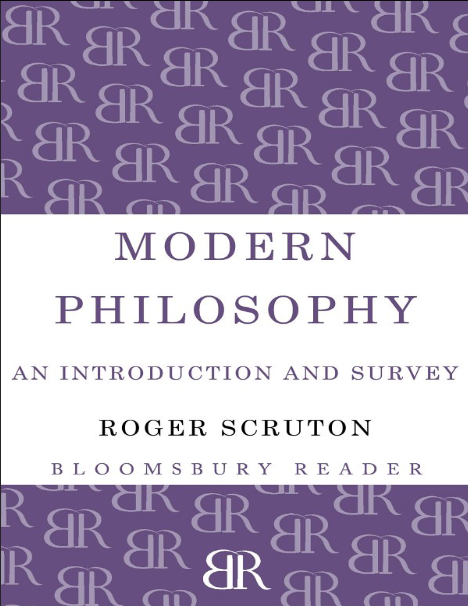
Modern Philosophy: An Introduction and Survey book pdf download

book quality : Excellent
Section : Philosophy and logic
Size of file : 3.03MB
Date of Coming : 2022-08-10
Number of Pages : 656
Auther : Roger Scruton
Department : Social sciences
Language : English

Author: Roger Scruton

About the Author: Roger Scruton who has died of lung cancer aged 75, was a philosopher and a controversial public intellectual. Active in the fields of aesthetics, art, music, political philosophy and architecture, both inside and outside the academic world, he dedicated himself to nurturing beauty, “re-enchanting the world” and giving intellectual rigour to conservatism. He wrote more than 50 books, including perceptive works on Spinoza, Kant, Wittgenstein and the history of philosophy, and four novels, as well as columns on wine, hunting and current affairs, and was a talented pianist and composer. A member of the traditionalist-conservative Salisbury Group, he helped found the Salisbury Review, which he edited from 1982 to 2001. This quarterly, which was circulated in the Soviet bloc, often in samizdat form, was criticised in Britain for having retrograde attitudes. In 1984 it defended Ray Honeyford, the Bradford headteacher who had disputed the value of multicultural education. Consequent hostility from colleagues prompted Scruton to abandon in 1992 his professorship in aesthetics at what is now Birkbeck, University of London, where he had started as a lecturer in 1971. Though he felt this had scuppered his academic career, in the event it freed him for activities and adventures on a wider stage.

Modern Philosophy: An Introduction and Survey book pdf download By Roger Scruton

Philosopher Roger Scruton offers a wide-ranging perspective on philosophy, from logic to aesthetics, written in a lively and engaging way that is sure to stimulate debate. Rather than producing a survey of an academic discipline, Scruton reclaims philosophy for worldly concerns.

Download PDF of Modern Philosophy: An Introduction and Survey book pdf download By Roger Scruton
-Adrian Agency Library

Download Now

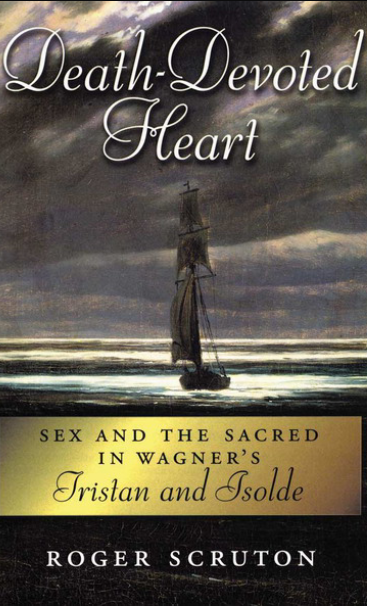
Death-Devoted Heart book pdf download

Language : English
Auther : Roger Scruton
book quality : Excellent
Department : Social sciences
Size of file : 8.40MB
Number of Pages : 247
Date of Coming : 2022-08-10
Section : Philosophy and logic

Author: Roger Scruton

About the Author: Roger Scruton who has died of lung cancer aged 75, was a philosopher and a controversial public intellectual. Active in the fields of aesthetics, art, music, political philosophy and architecture, both inside and outside the academic world, he dedicated himself to nurturing beauty, “re-enchanting the world” and giving intellectual rigour to conservatism. He wrote more than 50 books, including perceptive works on Spinoza, Kant, Wittgenstein and the history of philosophy, and four novels, as well as columns on wine, hunting and current affairs, and was a talented pianist and composer. A member of the traditionalist-conservative Salisbury Group, he helped found the Salisbury Review, which he edited from 1982 to 2001. This quarterly, which was circulated in the Soviet bloc, often in samizdat form, was criticised in Britain for having retrograde attitudes. In 1984 it defended Ray Honeyford, the Bradford headteacher who had disputed the value of multicultural education. Consequent hostility from colleagues prompted Scruton to abandon in 1992 his professorship in aesthetics at what is now Birkbeck, University of London, where he had started as a lecturer in 1971. Though he felt this had scuppered his academic career, in the event it freed him for activities and adventures on a wider stage.

Death-Devoted Heart book pdf download By Roger Scruton

A tale of forbidden love and inevitable death, the medieval legend of Tristan and Isolde recounts the story of two lovers unknowingly drinking a magic potion and ultimately dying in one another’s arms. While critics have lauded Wagner’s Tristan and Isolde for the originality and subtlety of the music, they have denounced the drama as a mere trifle–a rendering of Wagner’s forbidden love for Matilde Wesendonck, the wife of a banker who supported him during his exile in Switzerland. Death-Devoted Heart explodes this established interpretation, proving the drama to be more than just a sublimation of the composer’s love for Wesendonck or a wistful romantic dream. Scruton boldly attests that Tristan and Isolde has profound religious meaning and remains as relevant today as it was to Wagner’s contemporaries. He also offers keen insight into the nature of erotic love, the sacred qualities of human passion, and the peculiar place of the erotic in our culture. His argument touches on the nature of tragedy, the significance of ritual sacrifice, and the meaning of redemption, providing a fresh interpretation of Wagner’s masterpiece. Roger Scruton has written an original and provocative account of Wagner’s music drama, which blends philosophy, criticism, and musicology in order to show the work’s importance in the twenty-first century.

Download PDF of Death-Devoted Heart book pdf download By Roger Scruton
-Adrian Agency Library
Download Now

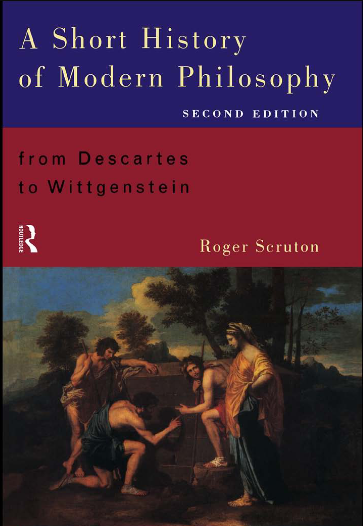
A Short History of Modern Philosophy: From Descartes to Wittgenstein book pdf download

Auther : Roger Scruton
book quality : Excellent
Number of Pages : 315
Department : Social sciences
Language : English
Date of Coming : 2022-08-10
Size of file : 0.77MB
Section : Philosophy and logic

Author: Roger Scruton

About the Author: Roger Scruton who has died of lung cancer aged 75, was a philosopher and a controversial public intellectual. Active in the fields of aesthetics, art, music, political philosophy and architecture, both inside and outside the academic world, he dedicated himself to nurturing beauty, “re-enchanting the world” and giving intellectual rigour to conservatism. He wrote more than 50 books, including perceptive works on Spinoza, Kant, Wittgenstein and the history of philosophy, and four novels, as well as columns on wine, hunting and current affairs, and was a talented pianist and composer. A member of the traditionalist-conservative Salisbury Group, he helped found the Salisbury Review, which he edited from 1982 to 2001. This quarterly, which was circulated in the Soviet bloc, often in samizdat form, was criticised in Britain for having retrograde attitudes. In 1984 it defended Ray Honeyford, the Bradford headteacher who had disputed the value of multicultural education. Consequent hostility from colleagues prompted Scruton to abandon in 1992 his professorship in aesthetics at what is now Birkbeck, University of London, where he had started as a lecturer in 1971. Though he felt this had scuppered his academic career, in the event it freed him for activities and adventures on a wider stage.

A Short History of Modern Philosophy: From Descartes to Wittgenstein book pdf download By Roger Scruton

Philosophy surveys tend either to ignore important nuances and therefore become just plain wrong, or pay attention to those details and therefore become impossible to read. This book, however, manages to provide a robust introduction to each major philosopher of the modern period, along with some pieces of what came before it, in a very short, readable way. Scruton walks you through each philosopher’s most important arguments, how those arguments come together into conclusive philosophies, and where those philosophies fit into the broader scheme of the whole history of philosophy. His clarity and brevity make this book accessible to any interested beginner, and his attention to important details in the flow of philosophy gives this book an audience within the ranks of the previously initiated. To put it succinctly: He both rigorously understands his subject and communicates very smoothly, which makes this book the absolutely perfect introduction. I recommend this book to anyone who wants to learn a whole lot about philosophy, and to any undergraduate who wants to ace his philosophy classes.

Download PDF of A Short History of Modern Philosophy: From Descartes to Wittgenstein book pdf download By Roger Scruton
-Adrian Agency Library

Download Now

The Palgrave Macmillan Dictionary of Political Thought book pdf download

book quality : Excellent
Language : English
Department : Social sciences
Size of file : 2.78MB
Section : Philosophy and logic
Date of Coming : 2022-08-10
Auther : Roger Scruton
Number of Pages : 759

Author: Roger Scruton

About the Author: Roger Scruton who has died of lung cancer aged 75, was a philosopher and a controversial public intellectual. Active in the fields of aesthetics, art, music, political philosophy and architecture, both inside and outside the academic world, he dedicated himself to nurturing beauty, “re-enchanting the world” and giving intellectual rigour to conservatism. He wrote more than 50 books, including perceptive works on Spinoza, Kant, Wittgenstein and the history of philosophy, and four novels, as well as columns on wine, hunting and current affairs, and was a talented pianist and composer. A member of the traditionalist-conservative Salisbury Group, he helped found the Salisbury Review, which he edited from 1982 to 2001. This quarterly, which was circulated in the Soviet bloc, often in samizdat form, was criticised in Britain for having retrograde attitudes. In 1984 it defended Ray Honeyford, the Bradford headteacher who had disputed the value of multicultural education. Consequent hostility from colleagues prompted Scruton to abandon in 1992 his professorship in aesthetics at what is now Birkbeck, University of London, where he had started as a lecturer in 1971. Though he felt this had scuppered his academic career, in the event it freed him for activities and adventures on a wider stage.

The Palgrave Macmillan Dictionary of Political Thought book pdf download By Roger Scruton

Roger Scruton’s Dictionary of Political Thought has been widely acclaimed as a profound and incisive guide to political ideas. This new edition takes stock of the revolutionary political changes that have taken place since the dictionary was first published in 1982, bringing the dictionary right up to date. Some 1790 entries cover every aspect of political thought, defining concepts and ideologies, surveying the arguments on issues, giving capsule histories of political institutions, and summarizing (with newly expanded treatment) the thought of major political theorists. The dictionary provides a readable and impartial survey of political thought, of immense value to students of political science, government, philosophy and jurisprudence as well as to the general reader with an interest in ideas.

Download PDF of The Palgrave Macmillan Dictionary of Political Thought book pdf download By Roger Scruton
-Adrian Agency Library

Download Now