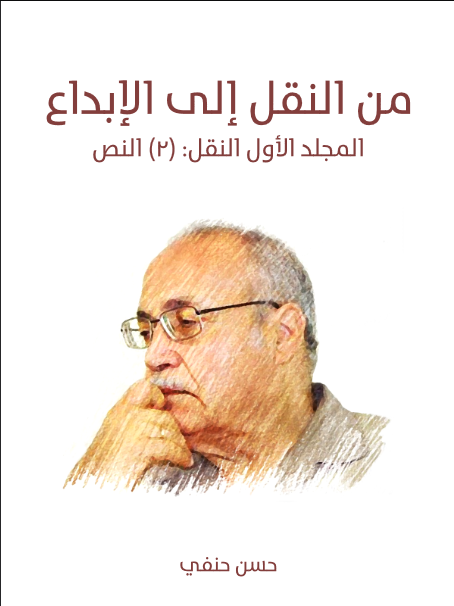
من النقل إلى الإبداع (المجلد الأول النقل): (٢) النص book pdf download

Number of Pages : 372
book quality : Excellent
Size of file : 4.79MB
Language : English
Auther : Hassan Hanafi
Date of Coming : 2022-08-10
Section : Philosophy and logic
Department : Social sciences

Author: Hassan Hanafi

About the Author: Hassan Hanafi (1935 – ) is an Egyptian thinker, residing in Cairo, and working as a university professor. One of the theoreticians of the Islamic Left Movement, the Occidental Science Movement, and one of the contemporary Arab thinkers of Arab intellectual projects. He taught in a number of Arab universities and headed the Department of Philosophy at Cairo University. He has a number of books on the thought of Arab-Islamic civilization. He received a PhD in Philosophy from the Sorbonne University with two doctoral theses, which he translated into Arabic and published in 2006 under the title: “The Interpretation of Phenomenology” and “The Phenomenology of Interpretation”, and spent ten years preparing them at the Sorbonne. He worked as a scientific advisor at the United Nations University in Tokyo during the period (1985-1987). He is also Vice-President of the Arab Philosophical Society, and Secretary-General of the Egyptian Philosophical Society.

من النقل إلى الإبداع (المجلد الأول النقل): (٢) النص book pdf download By Hassan Hanafi

«أصبح السُّريان بعد الفتح الإسلامي جزءًا من الأمة، فنقلوا ثقافتهم السُّريانية بما في ذلك ترجماتهم عن اليونانية، خدمةً للثقافة العربية الجديدة التي كان ولاؤهم لها كمحيطٍ ثقافيٍّ أوسط قَدْر ولائهم للثقافة السُّريانية الأقل انتشارًا.» في هذا الجزء من سلسلة «من النقل إلى الإبداع» يتناول الدكتور «حسن حنفي» مفهوم «النص» الذي يتضمن الترجمة بأنواعها؛ الحرفية التي تُطابق النص الأصلي المُترجم عنه، على حساب المعنى، والمعنوية التي تُعيد إنتاج النص الأصلي، كأنها مؤلفة من جديد، بِلُغة أكثر سلاسةً وسهولة. ثم ينتقل للحديث عن المصطلح الفلسفي، كأهم عنصر من عناصر النقل، لكونه عصب الفكر ويقع فيه كل الإشكال، ويُنهي هذا الجزء بالحديث عن التعليق، ويقصد به التعليق على النص المُترجم؛ وسائله، وطُرقه، ومستوياته، ومادته، وهو بداية الخروج على النقل المعنوي إلى التأليف وإعادة إنتاج النص المنقول والاستقلال عنه وبداية القراءة. تُمثِّل سلسلة «من النقل إلى الإبداع» المرحلةَ الثانية من المشروع الفكري الضخم للدكتور «حسن حنفي» المُعنوَن ﺑ «التراث والتجديد». وتشمل هذه السلسلة ثلاثةَ عناوين كُبرى، يضم كلٌّ منها ثلاثةً أخرى فرعية؛ الأول «النقل»، ويحوي «التدوين» و«النص» و«الشرح»؛ والثاني «التحوُّل»، ويحوي «العرض» و«التأليف» و«التراكم»؛ والثالث «الإبداع»، ويحوي «تكوين الحكمة» و«الحكمة النظرية» و«الحكمة العملية».

Download PDF of من النقل إلى الإبداع (المجلد الأول النقل): (٢) النص book pdf download By Hassan Hanafi
-Adrian Agency Library

Download Now

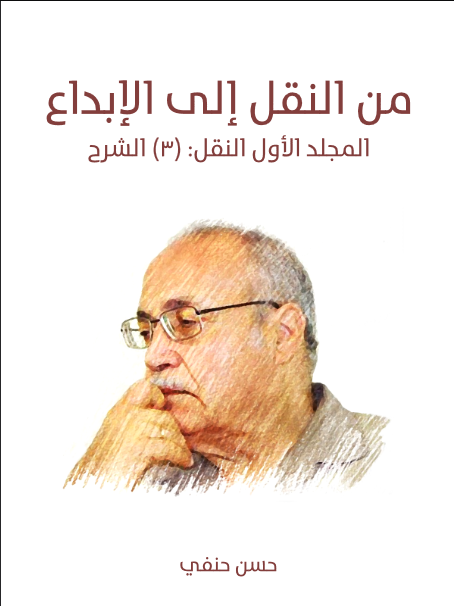
من النقل إلى الإبداع (المجلد الأول النقل): (٣) الشرح book pdf download

Number of Pages : 406
Date of Coming : 2022-08-10
Section : Philosophy and logic
Language : English
Auther : Hassan Hanafi
Department : Social sciences
Size of file : 4.87MB
book quality : Excellent

Author: Hassan Hanafi

About the Author: Hassan Hanafi (1935 – ) is an Egyptian thinker, residing in Cairo, and working as a university professor. One of the theoreticians of the Islamic Left Movement, the Occidental Science Movement, and one of the contemporary Arab thinkers of Arab intellectual projects. He taught in a number of Arab universities and headed the Department of Philosophy at Cairo University. He has a number of books on the thought of Arab-Islamic civilization. He received a PhD in Philosophy from the Sorbonne University with two doctoral theses, which he translated into Arabic and published in 2006 under the title: “The Interpretation of Phenomenology” and “The Phenomenology of Interpretation”, and spent ten years preparing them at the Sorbonne. He worked as a scientific advisor at the United Nations University in Tokyo during the period (1985-1987). He is also Vice-President of the Arab Philosophical Society, and Secretary-General of the Egyptian Philosophical Society.

من النقل إلى الإبداع (المجلد الأول النقل): (٣) الشرح book pdf download By Hassan Hanafi

«مهمة الشرح ابتلاع الموروث كليةً داخل الوافد حتى يَتجدَّد دمُ الموروث، ويَتحوَّل إلى حضارةٍ جديدةٍ وارثةٍ للحضارات السابقة، حتى يَقضي على إرهاب الوافد وإحساس الموروث بالنقص أمامه، ويَقضي على ازدواجية الثقافة بين الوافد والموروث.» في هذه الحلقة من سلسلة «من النقل إلى الإبداع» يُكمِل الدكتور «حسن حنفي» ما بدأه بالحديث عن «الشرح»، الذي يَتضمَّن ثلاثة مصطلحات، أو كما سمَّاها «الأنواع الأدبية الثلاثة» وهي: «التفسير» و«التلخيص» و«الجوامع». وبالرغم من الجهد الكبير من المؤلِّف في التفريق بين الأنواع الثلاثة، فإنه عاد وأكَّد على صعوبة التمييز بينها، وأنه لا توجد أمثلةٌ واضحةٌ من كل نوع، مُرجِعًا السبب إلى أنها مُتداخِلة المهام؛ في كلٍّ منها تعميمٌ وتخصيص، وتحليلٌ وتركيب، وفكٌّ وإدغام، وحذفٌ وإضافة، فما يفعله الشرح مع الترجمة، يفعله التلخيص مع الشرح، وتفعله الجوامع مع التلخيص. تُمثِّل سلسلة «من النقل إلى الإبداع» المرحلةَ الثانية من المشروع الفكري الضخم للدكتور «حسن حنفي» المُعنون ﺑ «التراث والتجديد». وتشمل هذه السلسلة ثلاثةَ عناوين كُبرى، يضم كلٌّ منها ثلاثةً أخرى فرعية؛ الأول «النقل» ويحوي «التدوين» و«النص» و«الشرح»؛ والثاني «التحوُّل» ويحوي «العرض» و«التأليف» و«التراكم»؛ والثالث «الإبداع» ويحوي «تكوين الحكمة» و«الحكمة النظرية» و«الحكمة العملية».

Download PDF of من النقل إلى الإبداع (المجلد الأول النقل): (٣) الشرح book pdf download By Hassan Hanafi
-Adrian Agency Library

Download Now

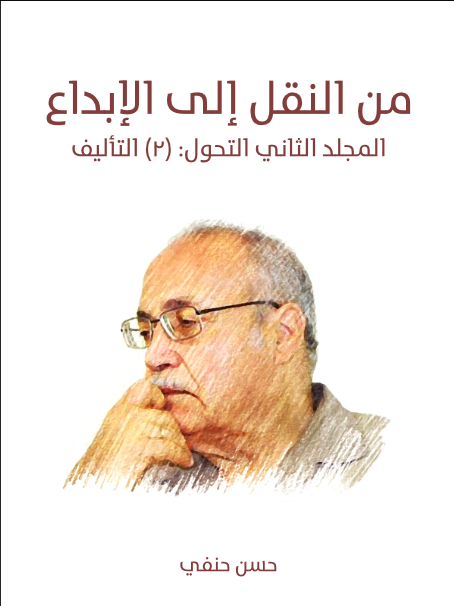
من النقل إلى الإبداع (المجلد الثاني التحول): (٢) التأليف book pdf download

Language : English
book quality : Excellent
Section : Philosophy and logic
Number of Pages : 320
Size of file : 4.54MB
Department : Social sciences
Auther : Hassan Hanafi
Date of Coming : 2022-08-10

Author: Hassan Hanafi

About the Author: Hassan Hanafi (1935 – ) is an Egyptian thinker, residing in Cairo, and working as a university professor. One of the theoreticians of the Islamic Left Movement, the Occidental Science Movement, and one of the contemporary Arab thinkers of Arab intellectual projects. He taught in a number of Arab universities and headed the Department of Philosophy at Cairo University. He has a number of books on the thought of Arab-Islamic civilization. He received a PhD in Philosophy from the Sorbonne University with two doctoral theses, which he translated into Arabic and published in 2006 under the title: “The Interpretation of Phenomenology” and “The Phenomenology of Interpretation”, and spent ten years preparing them at the Sorbonne. He worked as a scientific advisor at the United Nations University in Tokyo during the period (1985-1987). He is also Vice-President of the Arab Philosophical Society, and Secretary-General of the Egyptian Philosophical Society.

من النقل إلى الإبداع (المجلد الثاني التحول): (٢) التأليف book pdf download By Hassan Hanafi

«يبدو موقف أرسطو مُتفقًا مع الفطرة الإسلامية؛ أي الفكر الطبيعي الذي يجعل الطبيعة قيمة. ويبدأ بالبسملة … وينتهي بالدعوة إلى الله بالتوفيق للصواب.» انتهى المُؤلِّفون الإسلاميُّون من عَرض الوافد واستيعابه، وبدأَت عمليةُ «التأليف». ويُمكِن حصرُها في ثلاثة أنماط يَتنازع فيها الوافدُ والموروثُ السيادةَ داخل عقلية النص التراثي الإسلامي؛ فتبدأ بسيادة الوافد وسيطرته على النص وتَمثُّله تمثلًا تامًّا ومُنفرِدًا داخل النص، ثم يَظهرُ الموروث على استحياء مُتفاعِلًا مع الوافد، ولكنه مُتأخِّر عنه من حيث الكم والكيف، إلى أن يَتعادل تأثيرُ كلٍّ منهما في النص في حالةٍ من التَوازُن. وقد استمرَّ تمثُّل الوافد في النصوص التراثية تاريخيًّا، ابتداءً من القرن الثالث وحتى القرن السابع الميلادي، بنِسَب متفاوتة داخلَ نصوص التراث، بحيث لا يُمكِننا أن نقول إن فترةً زمنيةً مُعيَّنة هي الحدُّ الفاصل لكل مرحلة. تُمثِّل سلسلة «من النقل إلى الإبداع» المرحلةَ الثانية من المشروع الفكري الضخم للدكتور «حسن حنفي» المُعنون ﺑ «التراث والتجديد». وتشمل هذه السلسلة ثلاثةَ عناوين كُبرى، يضم كلٌّ منها ثلاثةً أخرى فرعية؛ الأول «النقل» ويحوي «التدوين» و«النص» و«الشرح»؛ والثاني «التحوُّل» ويحوي «العرض» و«التأليف» و«التراكم»؛ والثالث «الإبداع» ويحوي «تكوين الحكمة» و«الحكمة النظرية» و«الحكمة العملية».

Download PDF of من النقل إلى الإبداع (المجلد الثاني التحول): (٢) التأليف book pdf download By Hassan Hanafi
-Adrian Agency Library

Download Now

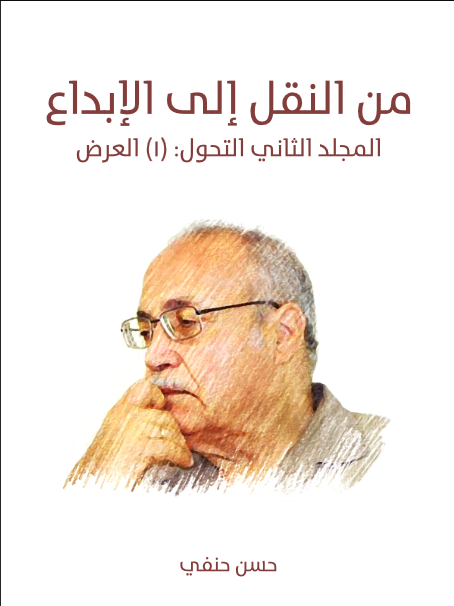
من النقل إلى الإبداع (المجلد الثاني التحول): (١) العرض book pdf download

Section : Philosophy and logic
Size of file : 4.81MB
book quality : Excellent
Auther : Hassan Hanafi
Date of Coming : 2022-08-10
Department : Social sciences
Language : English
Number of Pages : 382

Author: Hassan Hanafi

About the Author: Hassan Hanafi (1935 – ) is an Egyptian thinker, residing in Cairo, and working as a university professor. One of the theoreticians of the Islamic Left Movement, the Occidental Science Movement, and one of the contemporary Arab thinkers of Arab intellectual projects. He taught in a number of Arab universities and headed the Department of Philosophy at Cairo University. He has a number of books on the thought of Arab-Islamic civilization. He received a PhD in Philosophy from the Sorbonne University with two doctoral theses, which he translated into Arabic and published in 2006 under the title: “The Interpretation of Phenomenology” and “The Phenomenology of Interpretation”, and spent ten years preparing them at the Sorbonne. He worked as a scientific advisor at the United Nations University in Tokyo during the period (1985-1987). He is also Vice-President of the Arab Philosophical Society, and Secretary-General of the Egyptian Philosophical Society.

من النقل إلى الإبداع (المجلد الثاني التحول): (١) العرض book pdf download By Hassan Hanafi

«كما يَقبل الله الثورةَ على الأنبياء ونقدَهم احترامًا لاختيار الإنسان الحر وتصديقًا للنبي، كما أوحى الله لبعض الأنبياء وحدةَ الدِّين والعقل والعلم؛ أي الوحي والعقل والطبيعة. واختيار العقل وحده يَرفع الدِّين والعلم، ويكون بلا وحيٍ وبلا طبيعة، بلا ضَمان وبلا موضوع.» انتهَت مرحلة الترجمة وما فيها من شرحٍ وتلخيصٍ وجمع، وبدأ العالَم الإسلامي في محاوَلةِ استيعابِ ما نقَله إلى اللغة العربية، وهي المرحلة التي أطلق عليها الدكتور «حسن حنفي» «مرحلة التحوُّل»، وتبدأ ﺑ «العرض». يُمكِن التمييز بين ثلاثة أنواع من «العرض»: النوع الأول يُسمَّى «العرض الكلي والجزئي» للأفكار الفلسفية الوافدة؛ حيث يعرض الفيلسوف ما استوعبه في ثلاثِ مراحلَ تصاعُدية، تبدأ بتناولِه أحدَ المواضيع الفلسفية لإيضاح الغرض منه، ثم يَنتقل إلى العرض الكُلي لمذهب أحد الفلاسفة، وأخيرًا ينتهي بالتوفيق بين مذهبَين كمذهبَي «أرسطو» و«أفلاطون» مثلًا. أما النوع الثاني فهو «العرض النسقي» الذي اتَّجه فيه العقل الإسلامي إلى تأليف الوافد، كما فعل «إخوان الصفا» و«ابن سينا». ويُقابله النوعُ الثالث المسمَّى ﺑ «العرض الأدبي» الذي يَعمد فيه الفيلسوف إلى عرض الفلسفة بأسلوبٍ أدبيٍّ في مُحاوَرات أدبية، مثلما فعل «أبو حيان» و«ابن مسكوَيه» وغيرهما. تُمثِّل سلسلة «من النقل إلى الإبداع» المرحلةَ الثانية من المشروع الفكري الضخم للدكتور «حسن حنفي» المُعنون ﺑ «التراث والتجديد». وتشمل هذه السلسلة ثلاثةَ عناوين كُبرى، يضم كلٌّ منها ثلاثةً أخرى فرعية؛ الأول «النقل» ويحوي «التدوين» و«النص» و«الشرح»؛ والثاني «التحوُّل» ويحوي «العرض» و«التأليف» و«التراكم»؛ والثالث «الإبداع» ويحوي «تكوين الحكمة» و«الحكمة النظرية» و«الحكمة العملية».

Download PDF of من النقل إلى الإبداع (المجلد الثاني التحول): (١) العرض book pdf download By Hassan Hanafi
-Adrian Agency Library

Download Now

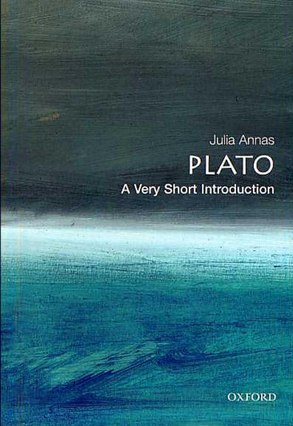
Plato: A Very Short Introduction book pdf download

Number of Pages : 109
Department : Social sciences
Section : Philosophy and logic
book quality : Excellent
Size of file : 2.32MB
Auther : Julia Annas
Language : English
Date of Coming : 2022-08-10

Author: Julia Annas

About the Author: Julia Annas is Regents Professor in Philosophy at the University of Arizona, and previously taught at St Hugh’s College, Oxford. She is a member of the American Academy of Arts and Sciences and the American Philosophical Society, the founder editor of *Oxford Studies in Ancient Philosophy*, former President of the Pacific Division of the American Philosophical Association and foreign member of the Norwegian and Finnish Academies. I’m very grateful to Meena for asking me to contribute to Philosop-her. First off, I’m delighted and excited to see so many younger women in philosophy, and in such a range of areas. There are more women in philosophy than when I was young, and more diversity, and philosophy itself has got a lot more interesting, and the two are connected. Of course we have far to go, but the state of philosophy is a lot healthier than it was in the sixties and seventies, when I was starting out. The only caveat that I find myself registering is the pace of development that’s expected of young philosophers – not just numbers of publications, but constant, sometimes relentless progress in the area you start out. For a variety of reasons – some good, some not – less was expected of me in my early philosophical years, and I was able to make many starts and develop in different areas. My work has only had a single focus in the second part of my career. I am amazed at the energy of younger women philosophers, and I wish that you didn’t have to use so much of it to succeed. I spent many years developing interests in many areas of ancient philosophy. There is, after all, over a thousand years of it, in which different enquiries were developed in a multitude of different ways. Early thinkers do philosophy in Homeric hexameters, Plato writes dialogues, we have Aristotle’s lecture notes, we have texts and fragments from the Stoics and Epicurus, and so on. There are many different styles of doing philosophy. By the end of antiquity philosophers who write commentaries on other philosophers in a way quite like modern academic philosophical commentators. Doing ancient philosophy is a great way of mentally loosening the constraints of the contemporary academic article and book; philosophy can be done well in plain prose examining numbered propositions, but it can be done in many other ways too. In doing ancient philosophy we have to distinguish between an analytical approach in the broad sense, which discusses the reasoned basis for philosophical claims, and a narrower sense in which context is discarded and arguments are reduced to abstract schemata. The first, broader approach is the one more likely to be fruitful, and history of philosophy is a great way to develop it. In my experience ancient philosophy has been the place I have found attitudes that are more co-operative, and less gladiatorial, than turn up in some other areas of philosophy. I don’t know how closely this is connected to the point that, at least in my intellectual lifetime, there have been more women in it than in many other areas of philosophy. I feel fortunate in not having suffered experiences as bad as those that many other women philosophers have had to put up with. We are still far from being equally represented in ancient philosophy, but I think the area does modestly better than some areas in philosophy, especially the more technical ones. For some years my interests in ancient philosophy have concentrated on ancient ethical theories, and their (almost) universal eudaimonist structure. The central concepts are those of happiness and virtue. Neither is well understood within the tradition of moral philosophy that we philosophers have inherited from the 19th and earlier 20th centuries. Because of this, the ancient theories were during that period grotesquely misunderstood by philosophers like Prichard, and it is in the last half-century that interpretations that answer to the texts have been developed in the field of ancient philosophy. At the same time (some wider Zeitgeist was at work, no doubt) contemporary moral philosophers began to rediscover eudaimonism and virtue ethics in the contemporary world. I started to find myself invited to conferences on virtue and happiness as the resident scholar to tell people what Aristotle thought, and I and others started to see how valuable cross-fertilization between ancient and contemporary ethics could be. The rediscovery (after a strange gap of nearly two centuries) of eudaimonism and virtue ethics as illuminating accounts of how we actually think ethically has been the philosophically most exciting development in my lifetime. A great deal of my intellectual life has been spent interpreting the ancients, probing to find what they thought. There has been a great widening of interest and collapsing of barriers in this field, which is far more lively and rewarding than it was when I began. I also find that in the latter years of my career I am in the middle of a new, fermenting movement which is developing on fronts unimaginable when I was beginning in my career. What more could a philosophers want? I often reflect on how fortunate I am. I’ve lived through a period when virtue ethics has gone from being a joke (among conservative ethical philosophers) to having gained respect (sometimes grudging) in the mainstream of ethics. It does not color within the lines set by conservative ethical traditions which start from duty, obligation and the ‘right-makers’ of right actions, and so is still sometimes dismissed as rudely disruptive of business as usual; this attitude can still be found among meta-ethicists who work within a tradition formed in a period when virtue had sunk to a sub-theoretical level. But this is an advantage for eudaimonism and virtue ethics; we constantly have to refine and defend our basic positions against objections and misunderstandings, and so our debates stay lively; we are not in danger of falling into academic disagreement on minor matters within an agreed framework. There have been so many ways that virtue ethics and eudaimonism have developed at dizzying speed in the last thirty years that it has taken me some time to work out what I find the most attractive and defensible version. I spent some years working up a book on virtue ethics, only to find myself stalled, until I ditched it and started again on a book on virtue, which emerged in 2011 as Intelligent Virtue. I had slowly realized that anyone needs to work out and defend a particular conception of virtue before being able to develop a virtue ethics. The conception I developed is on the lines of Aristotle’s conception of virtue as a disposition to be active in acting, reasoning and feeling in accordance with the virtues. Every aspect of that claim needs to be spelled out and developed, of course. This is independent of Aristotle’s own theory about the ‘mean’, and of other aspects of his ethics, such as his version of naturalism. I developed this conception of virtue in several ways and sketched out the relations in which it can stand to happiness or flourishing (which, is an issue in itself). Since then I have been slowly working on various issues in virtue ethics, hoping eventually to be in a position to develop a book. I have been working on the role of virtue in virtue ethics in relation to topics such as learning virtue in terms of ‘thick concepts’; action required by virtue and its relation to duty; the nature of vice and its relation to virtue; how virtue ethics accounts for heroism; and more. There are so many exciting and under-explored areas that I feel really lucky. At the same time I am finishing up a book on virtue and law in Plato’s late work the Laws. Having two such different projects keeps me going, as each is attractive when the other palls, but it’s also true that working on each means that I often feel that neither will get finished. I’d like to end by pointing out how the modern revival of interest in virtue and virtue ethics has been largely driven by the original contributions of women. Anyone talking about virtue has to mention Elizabeth Anscombe’s pathbreaking article in the 50s pointing out the deficiencies of then modern ethics. Nor can anyone pass over the work of Philippa Foot, or Rosalind Hursthouse. Different, non-Aristotelian versions of virtue and virtue ethics have been developed by Christine Swanton, Linda Zagzebski and Julia Driver. And, although they are not virtue ethicists, I should mention the work that virtue ethicists engage with in Humean studies with Rachel Cohon and Kate Abramson, and in Kantian studies with Christine Korsgaard and Barbara Herman. I am deeply grateful to all of these for their original work which has enabled progress to be made by people like me. Despite all the real bad news about women in philosophy, I am modestly optimistic for the future of women philosophers in the fields I work in, which is another thing to be grateful for.

Plato: A Very Short Introduction book pdf download By Julia Annas

This lively and accessible book focuses on the philosophy and argument of Plato’s writings, drawing the reader into Plato’s way of doing philosophy and the general themes of his thinking. It discusses Plato’s style of writing: his use of the dialogue form, his use of what we today call fiction, and his philosophical transformation of myths. It also looks at his discussions of love and philosophy, his attitude towards women, and towards homosexual love. It explores Plato’s claim that virtue is sufficient for happiness and touches on his arguments for the immorality of the soul and his ideas about the nature of the universe.

Download PDF of Plato: A Very Short Introduction book pdf download By Julia Annas
-Adrian Agency Library

Download Now

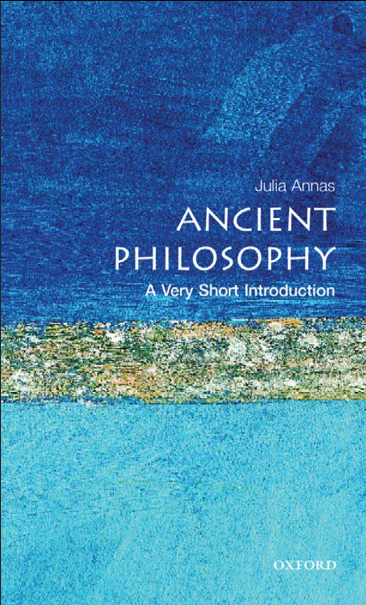
Ancient Philosophy: A Very Short Introduction book pdf download

Section : Philosophy and logic
Auther : Julia Annas
Department : Social sciences
Date of Coming : 2022-08-10
Size of file : 1.65MB
Language : English
book quality : Excellent
Number of Pages : 145

Author: Julia Annas

About the Author: Julia Annas is Regents Professor in Philosophy at the University of Arizona, and previously taught at St Hugh’s College, Oxford. She is a member of the American Academy of Arts and Sciences and the American Philosophical Society, the founder editor of *Oxford Studies in Ancient Philosophy*, former President of the Pacific Division of the American Philosophical Association and foreign member of the Norwegian and Finnish Academies. I’m very grateful to Meena for asking me to contribute to Philosop-her. First off, I’m delighted and excited to see so many younger women in philosophy, and in such a range of areas. There are more women in philosophy than when I was young, and more diversity, and philosophy itself has got a lot more interesting, and the two are connected. Of course we have far to go, but the state of philosophy is a lot healthier than it was in the sixties and seventies, when I was starting out. The only caveat that I find myself registering is the pace of development that’s expected of young philosophers – not just numbers of publications, but constant, sometimes relentless progress in the area you start out. For a variety of reasons – some good, some not – less was expected of me in my early philosophical years, and I was able to make many starts and develop in different areas. My work has only had a single focus in the second part of my career. I am amazed at the energy of younger women philosophers, and I wish that you didn’t have to use so much of it to succeed. I spent many years developing interests in many areas of ancient philosophy. There is, after all, over a thousand years of it, in which different enquiries were developed in a multitude of different ways. Early thinkers do philosophy in Homeric hexameters, Plato writes dialogues, we have Aristotle’s lecture notes, we have texts and fragments from the Stoics and Epicurus, and so on. There are many different styles of doing philosophy. By the end of antiquity philosophers who write commentaries on other philosophers in a way quite like modern academic philosophical commentators. Doing ancient philosophy is a great way of mentally loosening the constraints of the contemporary academic article and book; philosophy can be done well in plain prose examining numbered propositions, but it can be done in many other ways too. In doing ancient philosophy we have to distinguish between an analytical approach in the broad sense, which discusses the reasoned basis for philosophical claims, and a narrower sense in which context is discarded and arguments are reduced to abstract schemata. The first, broader approach is the one more likely to be fruitful, and history of philosophy is a great way to develop it. In my experience ancient philosophy has been the place I have found attitudes that are more co-operative, and less gladiatorial, than turn up in some other areas of philosophy. I don’t know how closely this is connected to the point that, at least in my intellectual lifetime, there have been more women in it than in many other areas of philosophy. I feel fortunate in not having suffered experiences as bad as those that many other women philosophers have had to put up with. We are still far from being equally represented in ancient philosophy, but I think the area does modestly better than some areas in philosophy, especially the more technical ones. For some years my interests in ancient philosophy have concentrated on ancient ethical theories, and their (almost) universal eudaimonist structure. The central concepts are those of happiness and virtue. Neither is well understood within the tradition of moral philosophy that we philosophers have inherited from the 19th and earlier 20th centuries. Because of this, the ancient theories were during that period grotesquely misunderstood by philosophers like Prichard, and it is in the last half-century that interpretations that answer to the texts have been developed in the field of ancient philosophy. At the same time (some wider Zeitgeist was at work, no doubt) contemporary moral philosophers began to rediscover eudaimonism and virtue ethics in the contemporary world. I started to find myself invited to conferences on virtue and happiness as the resident scholar to tell people what Aristotle thought, and I and others started to see how valuable cross-fertilization between ancient and contemporary ethics could be. The rediscovery (after a strange gap of nearly two centuries) of eudaimonism and virtue ethics as illuminating accounts of how we actually think ethically has been the philosophically most exciting development in my lifetime. A great deal of my intellectual life has been spent interpreting the ancients, probing to find what they thought. There has been a great widening of interest and collapsing of barriers in this field, which is far more lively and rewarding than it was when I began. I also find that in the latter years of my career I am in the middle of a new, fermenting movement which is developing on fronts unimaginable when I was beginning in my career. What more could a philosophers want? I often reflect on how fortunate I am. I’ve lived through a period when virtue ethics has gone from being a joke (among conservative ethical philosophers) to having gained respect (sometimes grudging) in the mainstream of ethics. It does not color within the lines set by conservative ethical traditions which start from duty, obligation and the ‘right-makers’ of right actions, and so is still sometimes dismissed as rudely disruptive of business as usual; this attitude can still be found among meta-ethicists who work within a tradition formed in a period when virtue had sunk to a sub-theoretical level. But this is an advantage for eudaimonism and virtue ethics; we constantly have to refine and defend our basic positions against objections and misunderstandings, and so our debates stay lively; we are not in danger of falling into academic disagreement on minor matters within an agreed framework. There have been so many ways that virtue ethics and eudaimonism have developed at dizzying speed in the last thirty years that it has taken me some time to work out what I find the most attractive and defensible version. I spent some years working up a book on virtue ethics, only to find myself stalled, until I ditched it and started again on a book on virtue, which emerged in 2011 as Intelligent Virtue. I had slowly realized that anyone needs to work out and defend a particular conception of virtue before being able to develop a virtue ethics. The conception I developed is on the lines of Aristotle’s conception of virtue as a disposition to be active in acting, reasoning and feeling in accordance with the virtues. Every aspect of that claim needs to be spelled out and developed, of course. This is independent of Aristotle’s own theory about the ‘mean’, and of other aspects of his ethics, such as his version of naturalism. I developed this conception of virtue in several ways and sketched out the relations in which it can stand to happiness or flourishing (which, is an issue in itself). Since then I have been slowly working on various issues in virtue ethics, hoping eventually to be in a position to develop a book. I have been working on the role of virtue in virtue ethics in relation to topics such as learning virtue in terms of ‘thick concepts’; action required by virtue and its relation to duty; the nature of vice and its relation to virtue; how virtue ethics accounts for heroism; and more. There are so many exciting and under-explored areas that I feel really lucky. At the same time I am finishing up a book on virtue and law in Plato’s late work the Laws. Having two such different projects keeps me going, as each is attractive when the other palls, but it’s also true that working on each means that I often feel that neither will get finished. I’d like to end by pointing out how the modern revival of interest in virtue and virtue ethics has been largely driven by the original contributions of women. Anyone talking about virtue has to mention Elizabeth Anscombe’s pathbreaking article in the 50s pointing out the deficiencies of then modern ethics. Nor can anyone pass over the work of Philippa Foot, or Rosalind Hursthouse. Different, non-Aristotelian versions of virtue and virtue ethics have been developed by Christine Swanton, Linda Zagzebski and Julia Driver. And, although they are not virtue ethicists, I should mention the work that virtue ethicists engage with in Humean studies with Rachel Cohon and Kate Abramson, and in Kantian studies with Christine Korsgaard and Barbara Herman. I am deeply grateful to all of these for their original work which has enabled progress to be made by people like me. Despite all the real bad news about women in philosophy, I am modestly optimistic for the future of women philosophers in the fields I work in, which is another thing to be grateful for.

Ancient Philosophy: A Very Short Introduction book pdf download By Julia Annas

The tradition of ancient philosophy is a long, rich and varied one, in which the notes of discussion and argument constantly resound. This book aims to introduce readers to some ancient debates and to get them to engage with the ancient developments of some themes. Getting away from the presentation of ancient philosophy as a succession of Great Thinkers, the book aims to give readers a sense of the freshness and liveliness of ancient philosophy, and of its wide variety of themes and styles.

Download PDF of Ancient Philosophy: A Very Short Introduction book pdf download By Julia Annas
-Adrian Agency Library

Download Now

Oxford Studies in Ancient Philosophy: Volume IX: 1991 book pdf download

Department : Social sciences
book quality : Excellent
Date of Coming : 2022-08-10
Number of Pages : 224
Size of file : 11.6MB
Language : English
Auther : Julia Annas
Section : Philosophy and logic

Author: Julia Annas

About the Author: Julia Annas is Regents Professor in Philosophy at the University of Arizona, and previously taught at St Hugh’s College, Oxford. She is a member of the American Academy of Arts and Sciences and the American Philosophical Society, the founder editor of *Oxford Studies in Ancient Philosophy*, former President of the Pacific Division of the American Philosophical Association and foreign member of the Norwegian and Finnish Academies. I’m very grateful to Meena for asking me to contribute to Philosop-her. First off, I’m delighted and excited to see so many younger women in philosophy, and in such a range of areas. There are more women in philosophy than when I was young, and more diversity, and philosophy itself has got a lot more interesting, and the two are connected. Of course we have far to go, but the state of philosophy is a lot healthier than it was in the sixties and seventies, when I was starting out. The only caveat that I find myself registering is the pace of development that’s expected of young philosophers – not just numbers of publications, but constant, sometimes relentless progress in the area you start out. For a variety of reasons – some good, some not – less was expected of me in my early philosophical years, and I was able to make many starts and develop in different areas. My work has only had a single focus in the second part of my career. I am amazed at the energy of younger women philosophers, and I wish that you didn’t have to use so much of it to succeed. I spent many years developing interests in many areas of ancient philosophy. There is, after all, over a thousand years of it, in which different enquiries were developed in a multitude of different ways. Early thinkers do philosophy in Homeric hexameters, Plato writes dialogues, we have Aristotle’s lecture notes, we have texts and fragments from the Stoics and Epicurus, and so on. There are many different styles of doing philosophy. By the end of antiquity philosophers who write commentaries on other philosophers in a way quite like modern academic philosophical commentators. Doing ancient philosophy is a great way of mentally loosening the constraints of the contemporary academic article and book; philosophy can be done well in plain prose examining numbered propositions, but it can be done in many other ways too. In doing ancient philosophy we have to distinguish between an analytical approach in the broad sense, which discusses the reasoned basis for philosophical claims, and a narrower sense in which context is discarded and arguments are reduced to abstract schemata. The first, broader approach is the one more likely to be fruitful, and history of philosophy is a great way to develop it. In my experience ancient philosophy has been the place I have found attitudes that are more co-operative, and less gladiatorial, than turn up in some other areas of philosophy. I don’t know how closely this is connected to the point that, at least in my intellectual lifetime, there have been more women in it than in many other areas of philosophy. I feel fortunate in not having suffered experiences as bad as those that many other women philosophers have had to put up with. We are still far from being equally represented in ancient philosophy, but I think the area does modestly better than some areas in philosophy, especially the more technical ones. For some years my interests in ancient philosophy have concentrated on ancient ethical theories, and their (almost) universal eudaimonist structure. The central concepts are those of happiness and virtue. Neither is well understood within the tradition of moral philosophy that we philosophers have inherited from the 19th and earlier 20th centuries. Because of this, the ancient theories were during that period grotesquely misunderstood by philosophers like Prichard, and it is in the last half-century that interpretations that answer to the texts have been developed in the field of ancient philosophy. At the same time (some wider Zeitgeist was at work, no doubt) contemporary moral philosophers began to rediscover eudaimonism and virtue ethics in the contemporary world. I started to find myself invited to conferences on virtue and happiness as the resident scholar to tell people what Aristotle thought, and I and others started to see how valuable cross-fertilization between ancient and contemporary ethics could be. The rediscovery (after a strange gap of nearly two centuries) of eudaimonism and virtue ethics as illuminating accounts of how we actually think ethically has been the philosophically most exciting development in my lifetime. A great deal of my intellectual life has been spent interpreting the ancients, probing to find what they thought. There has been a great widening of interest and collapsing of barriers in this field, which is far more lively and rewarding than it was when I began. I also find that in the latter years of my career I am in the middle of a new, fermenting movement which is developing on fronts unimaginable when I was beginning in my career. What more could a philosophers want? I often reflect on how fortunate I am. I’ve lived through a period when virtue ethics has gone from being a joke (among conservative ethical philosophers) to having gained respect (sometimes grudging) in the mainstream of ethics. It does not color within the lines set by conservative ethical traditions which start from duty, obligation and the ‘right-makers’ of right actions, and so is still sometimes dismissed as rudely disruptive of business as usual; this attitude can still be found among meta-ethicists who work within a tradition formed in a period when virtue had sunk to a sub-theoretical level. But this is an advantage for eudaimonism and virtue ethics; we constantly have to refine and defend our basic positions against objections and misunderstandings, and so our debates stay lively; we are not in danger of falling into academic disagreement on minor matters within an agreed framework. There have been so many ways that virtue ethics and eudaimonism have developed at dizzying speed in the last thirty years that it has taken me some time to work out what I find the most attractive and defensible version. I spent some years working up a book on virtue ethics, only to find myself stalled, until I ditched it and started again on a book on virtue, which emerged in 2011 as Intelligent Virtue. I had slowly realized that anyone needs to work out and defend a particular conception of virtue before being able to develop a virtue ethics. The conception I developed is on the lines of Aristotle’s conception of virtue as a disposition to be active in acting, reasoning and feeling in accordance with the virtues. Every aspect of that claim needs to be spelled out and developed, of course. This is independent of Aristotle’s own theory about the ‘mean’, and of other aspects of his ethics, such as his version of naturalism. I developed this conception of virtue in several ways and sketched out the relations in which it can stand to happiness or flourishing (which, is an issue in itself). Since then I have been slowly working on various issues in virtue ethics, hoping eventually to be in a position to develop a book. I have been working on the role of virtue in virtue ethics in relation to topics such as learning virtue in terms of ‘thick concepts’; action required by virtue and its relation to duty; the nature of vice and its relation to virtue; how virtue ethics accounts for heroism; and more. There are so many exciting and under-explored areas that I feel really lucky. At the same time I am finishing up a book on virtue and law in Plato’s late work the Laws. Having two such different projects keeps me going, as each is attractive when the other palls, but it’s also true that working on each means that I often feel that neither will get finished. I’d like to end by pointing out how the modern revival of interest in virtue and virtue ethics has been largely driven by the original contributions of women. Anyone talking about virtue has to mention Elizabeth Anscombe’s pathbreaking article in the 50s pointing out the deficiencies of then modern ethics. Nor can anyone pass over the work of Philippa Foot, or Rosalind Hursthouse. Different, non-Aristotelian versions of virtue and virtue ethics have been developed by Christine Swanton, Linda Zagzebski and Julia Driver. And, although they are not virtue ethicists, I should mention the work that virtue ethicists engage with in Humean studies with Rachel Cohon and Kate Abramson, and in Kantian studies with Christine Korsgaard and Barbara Herman. I am deeply grateful to all of these for their original work which has enabled progress to be made by people like me. Despite all the real bad news about women in philosophy, I am modestly optimistic for the future of women philosophers in the fields I work in, which is another thing to be grateful for.

Oxford Studies in Ancient Philosophy: Volume IX: 1991 book pdf download By Julia Annas

Oxford Studies in Ancient Philosophy is an annual publication which includes original articles, which may be of substantial length, on a wide range of topics in ancient philosophy, and review articles of major books.

Download PDF of Oxford Studies in Ancient Philosophy: Volume IX: 1991 book pdf download By Julia Annas
-Adrian Agency Library

Download Now

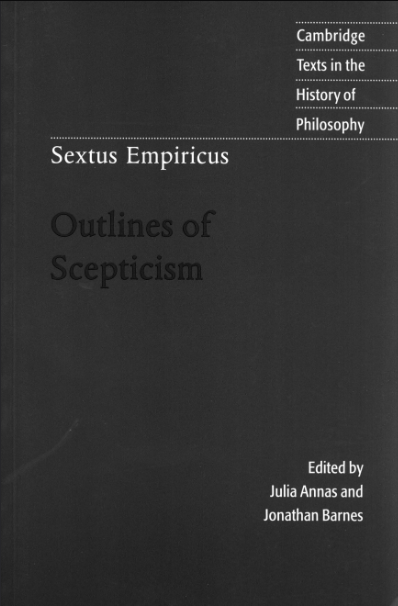
Sextus Empiricus: Outlines of Scepticism book pdf download

book quality : Excellent
Number of Pages : 574
Section : Philosophy and logic
Language : English
Auther : Julia Annas
Size of file : 9.05MB
Department : Social sciences
Date of Coming : 2022-08-10

Author: Julia Annas

About the Author: Julia Annas is Regents Professor in Philosophy at the University of Arizona, and previously taught at St Hugh’s College, Oxford. She is a member of the American Academy of Arts and Sciences and the American Philosophical Society, the founder editor of *Oxford Studies in Ancient Philosophy*, former President of the Pacific Division of the American Philosophical Association and foreign member of the Norwegian and Finnish Academies. I’m very grateful to Meena for asking me to contribute to Philosop-her. First off, I’m delighted and excited to see so many younger women in philosophy, and in such a range of areas. There are more women in philosophy than when I was young, and more diversity, and philosophy itself has got a lot more interesting, and the two are connected. Of course we have far to go, but the state of philosophy is a lot healthier than it was in the sixties and seventies, when I was starting out. The only caveat that I find myself registering is the pace of development that’s expected of young philosophers – not just numbers of publications, but constant, sometimes relentless progress in the area you start out. For a variety of reasons – some good, some not – less was expected of me in my early philosophical years, and I was able to make many starts and develop in different areas. My work has only had a single focus in the second part of my career. I am amazed at the energy of younger women philosophers, and I wish that you didn’t have to use so much of it to succeed. I spent many years developing interests in many areas of ancient philosophy. There is, after all, over a thousand years of it, in which different enquiries were developed in a multitude of different ways. Early thinkers do philosophy in Homeric hexameters, Plato writes dialogues, we have Aristotle’s lecture notes, we have texts and fragments from the Stoics and Epicurus, and so on. There are many different styles of doing philosophy. By the end of antiquity philosophers who write commentaries on other philosophers in a way quite like modern academic philosophical commentators. Doing ancient philosophy is a great way of mentally loosening the constraints of the contemporary academic article and book; philosophy can be done well in plain prose examining numbered propositions, but it can be done in many other ways too. In doing ancient philosophy we have to distinguish between an analytical approach in the broad sense, which discusses the reasoned basis for philosophical claims, and a narrower sense in which context is discarded and arguments are reduced to abstract schemata. The first, broader approach is the one more likely to be fruitful, and history of philosophy is a great way to develop it. In my experience ancient philosophy has been the place I have found attitudes that are more co-operative, and less gladiatorial, than turn up in some other areas of philosophy. I don’t know how closely this is connected to the point that, at least in my intellectual lifetime, there have been more women in it than in many other areas of philosophy. I feel fortunate in not having suffered experiences as bad as those that many other women philosophers have had to put up with. We are still far from being equally represented in ancient philosophy, but I think the area does modestly better than some areas in philosophy, especially the more technical ones. For some years my interests in ancient philosophy have concentrated on ancient ethical theories, and their (almost) universal eudaimonist structure. The central concepts are those of happiness and virtue. Neither is well understood within the tradition of moral philosophy that we philosophers have inherited from the 19th and earlier 20th centuries. Because of this, the ancient theories were during that period grotesquely misunderstood by philosophers like Prichard, and it is in the last half-century that interpretations that answer to the texts have been developed in the field of ancient philosophy. At the same time (some wider Zeitgeist was at work, no doubt) contemporary moral philosophers began to rediscover eudaimonism and virtue ethics in the contemporary world. I started to find myself invited to conferences on virtue and happiness as the resident scholar to tell people what Aristotle thought, and I and others started to see how valuable cross-fertilization between ancient and contemporary ethics could be. The rediscovery (after a strange gap of nearly two centuries) of eudaimonism and virtue ethics as illuminating accounts of how we actually think ethically has been the philosophically most exciting development in my lifetime. A great deal of my intellectual life has been spent interpreting the ancients, probing to find what they thought. There has been a great widening of interest and collapsing of barriers in this field, which is far more lively and rewarding than it was when I began. I also find that in the latter years of my career I am in the middle of a new, fermenting movement which is developing on fronts unimaginable when I was beginning in my career. What more could a philosophers want? I often reflect on how fortunate I am. I’ve lived through a period when virtue ethics has gone from being a joke (among conservative ethical philosophers) to having gained respect (sometimes grudging) in the mainstream of ethics. It does not color within the lines set by conservative ethical traditions which start from duty, obligation and the ‘right-makers’ of right actions, and so is still sometimes dismissed as rudely disruptive of business as usual; this attitude can still be found among meta-ethicists who work within a tradition formed in a period when virtue had sunk to a sub-theoretical level. But this is an advantage for eudaimonism and virtue ethics; we constantly have to refine and defend our basic positions against objections and misunderstandings, and so our debates stay lively; we are not in danger of falling into academic disagreement on minor matters within an agreed framework. There have been so many ways that virtue ethics and eudaimonism have developed at dizzying speed in the last thirty years that it has taken me some time to work out what I find the most attractive and defensible version. I spent some years working up a book on virtue ethics, only to find myself stalled, until I ditched it and started again on a book on virtue, which emerged in 2011 as Intelligent Virtue. I had slowly realized that anyone needs to work out and defend a particular conception of virtue before being able to develop a virtue ethics. The conception I developed is on the lines of Aristotle’s conception of virtue as a disposition to be active in acting, reasoning and feeling in accordance with the virtues. Every aspect of that claim needs to be spelled out and developed, of course. This is independent of Aristotle’s own theory about the ‘mean’, and of other aspects of his ethics, such as his version of naturalism. I developed this conception of virtue in several ways and sketched out the relations in which it can stand to happiness or flourishing (which, is an issue in itself). Since then I have been slowly working on various issues in virtue ethics, hoping eventually to be in a position to develop a book. I have been working on the role of virtue in virtue ethics in relation to topics such as learning virtue in terms of ‘thick concepts’; action required by virtue and its relation to duty; the nature of vice and its relation to virtue; how virtue ethics accounts for heroism; and more. There are so many exciting and under-explored areas that I feel really lucky. At the same time I am finishing up a book on virtue and law in Plato’s late work the Laws. Having two such different projects keeps me going, as each is attractive when the other palls, but it’s also true that working on each means that I often feel that neither will get finished. I’d like to end by pointing out how the modern revival of interest in virtue and virtue ethics has been largely driven by the original contributions of women. Anyone talking about virtue has to mention Elizabeth Anscombe’s pathbreaking article in the 50s pointing out the deficiencies of then modern ethics. Nor can anyone pass over the work of Philippa Foot, or Rosalind Hursthouse. Different, non-Aristotelian versions of virtue and virtue ethics have been developed by Christine Swanton, Linda Zagzebski and Julia Driver. And, although they are not virtue ethicists, I should mention the work that virtue ethicists engage with in Humean studies with Rachel Cohon and Kate Abramson, and in Kantian studies with Christine Korsgaard and Barbara Herman. I am deeply grateful to all of these for their original work which has enabled progress to be made by people like me. Despite all the real bad news about women in philosophy, I am modestly optimistic for the future of women philosophers in the fields I work in, which is another thing to be grateful for.

Sextus Empiricus: Outlines of Scepticism book pdf download By Julia Annas

Outlines of Scepticism, by the Greek philosopher Sextus Empiricus, is a work of major importance for the history of Greek philosophy. It is the fullest extant account of ancient skepticism, and it is also one of our most copious sources of information about the other Hellenistic philosophies. Its argumentative approach revolutionized the study of philosophy when Sextus’ works were rediscovered in the sixteenth century. This volume presents the accurate and readable translation that was first published in 1994, together with a substantial new historical and philosophical introduction by Jonathan Barnes.

Download PDF of Sextus Empiricus: Outlines of Scepticism book pdf download By Julia Annas
-Adrian Agency Library

Download Now

Oxford Studies in Ancient Philosophy: Volume X: 1992 book pdf download

Language : English
Date of Coming : 2022-08-10
Size of file : 14.8MB
Auther : Julia Annas
Department : Social sciences
book quality : Excellent
Section : Philosophy and logic
Number of Pages : 309

Author: Julia Annas

About the Author: Julia Annas is Regents Professor in Philosophy at the University of Arizona, and previously taught at St Hugh’s College, Oxford. She is a member of the American Academy of Arts and Sciences and the American Philosophical Society, the founder editor of *Oxford Studies in Ancient Philosophy*, former President of the Pacific Division of the American Philosophical Association and foreign member of the Norwegian and Finnish Academies. I’m very grateful to Meena for asking me to contribute to Philosop-her. First off, I’m delighted and excited to see so many younger women in philosophy, and in such a range of areas. There are more women in philosophy than when I was young, and more diversity, and philosophy itself has got a lot more interesting, and the two are connected. Of course we have far to go, but the state of philosophy is a lot healthier than it was in the sixties and seventies, when I was starting out. The only caveat that I find myself registering is the pace of development that’s expected of young philosophers – not just numbers of publications, but constant, sometimes relentless progress in the area you start out. For a variety of reasons – some good, some not – less was expected of me in my early philosophical years, and I was able to make many starts and develop in different areas. My work has only had a single focus in the second part of my career. I am amazed at the energy of younger women philosophers, and I wish that you didn’t have to use so much of it to succeed. I spent many years developing interests in many areas of ancient philosophy. There is, after all, over a thousand years of it, in which different enquiries were developed in a multitude of different ways. Early thinkers do philosophy in Homeric hexameters, Plato writes dialogues, we have Aristotle’s lecture notes, we have texts and fragments from the Stoics and Epicurus, and so on. There are many different styles of doing philosophy. By the end of antiquity philosophers who write commentaries on other philosophers in a way quite like modern academic philosophical commentators. Doing ancient philosophy is a great way of mentally loosening the constraints of the contemporary academic article and book; philosophy can be done well in plain prose examining numbered propositions, but it can be done in many other ways too. In doing ancient philosophy we have to distinguish between an analytical approach in the broad sense, which discusses the reasoned basis for philosophical claims, and a narrower sense in which context is discarded and arguments are reduced to abstract schemata. The first, broader approach is the one more likely to be fruitful, and history of philosophy is a great way to develop it. In my experience ancient philosophy has been the place I have found attitudes that are more co-operative, and less gladiatorial, than turn up in some other areas of philosophy. I don’t know how closely this is connected to the point that, at least in my intellectual lifetime, there have been more women in it than in many other areas of philosophy. I feel fortunate in not having suffered experiences as bad as those that many other women philosophers have had to put up with. We are still far from being equally represented in ancient philosophy, but I think the area does modestly better than some areas in philosophy, especially the more technical ones. For some years my interests in ancient philosophy have concentrated on ancient ethical theories, and their (almost) universal eudaimonist structure. The central concepts are those of happiness and virtue. Neither is well understood within the tradition of moral philosophy that we philosophers have inherited from the 19th and earlier 20th centuries. Because of this, the ancient theories were during that period grotesquely misunderstood by philosophers like Prichard, and it is in the last half-century that interpretations that answer to the texts have been developed in the field of ancient philosophy. At the same time (some wider Zeitgeist was at work, no doubt) contemporary moral philosophers began to rediscover eudaimonism and virtue ethics in the contemporary world. I started to find myself invited to conferences on virtue and happiness as the resident scholar to tell people what Aristotle thought, and I and others started to see how valuable cross-fertilization between ancient and contemporary ethics could be. The rediscovery (after a strange gap of nearly two centuries) of eudaimonism and virtue ethics as illuminating accounts of how we actually think ethically has been the philosophically most exciting development in my lifetime. A great deal of my intellectual life has been spent interpreting the ancients, probing to find what they thought. There has been a great widening of interest and collapsing of barriers in this field, which is far more lively and rewarding than it was when I began. I also find that in the latter years of my career I am in the middle of a new, fermenting movement which is developing on fronts unimaginable when I was beginning in my career. What more could a philosophers want? I often reflect on how fortunate I am. I’ve lived through a period when virtue ethics has gone from being a joke (among conservative ethical philosophers) to having gained respect (sometimes grudging) in the mainstream of ethics. It does not color within the lines set by conservative ethical traditions which start from duty, obligation and the ‘right-makers’ of right actions, and so is still sometimes dismissed as rudely disruptive of business as usual; this attitude can still be found among meta-ethicists who work within a tradition formed in a period when virtue had sunk to a sub-theoretical level. But this is an advantage for eudaimonism and virtue ethics; we constantly have to refine and defend our basic positions against objections and misunderstandings, and so our debates stay lively; we are not in danger of falling into academic disagreement on minor matters within an agreed framework. There have been so many ways that virtue ethics and eudaimonism have developed at dizzying speed in the last thirty years that it has taken me some time to work out what I find the most attractive and defensible version. I spent some years working up a book on virtue ethics, only to find myself stalled, until I ditched it and started again on a book on virtue, which emerged in 2011 as Intelligent Virtue. I had slowly realized that anyone needs to work out and defend a particular conception of virtue before being able to develop a virtue ethics. The conception I developed is on the lines of Aristotle’s conception of virtue as a disposition to be active in acting, reasoning and feeling in accordance with the virtues. Every aspect of that claim needs to be spelled out and developed, of course. This is independent of Aristotle’s own theory about the ‘mean’, and of other aspects of his ethics, such as his version of naturalism. I developed this conception of virtue in several ways and sketched out the relations in which it can stand to happiness or flourishing (which, is an issue in itself). Since then I have been slowly working on various issues in virtue ethics, hoping eventually to be in a position to develop a book. I have been working on the role of virtue in virtue ethics in relation to topics such as learning virtue in terms of ‘thick concepts’; action required by virtue and its relation to duty; the nature of vice and its relation to virtue; how virtue ethics accounts for heroism; and more. There are so many exciting and under-explored areas that I feel really lucky. At the same time I am finishing up a book on virtue and law in Plato’s late work the Laws. Having two such different projects keeps me going, as each is attractive when the other palls, but it’s also true that working on each means that I often feel that neither will get finished. I’d like to end by pointing out how the modern revival of interest in virtue and virtue ethics has been largely driven by the original contributions of women. Anyone talking about virtue has to mention Elizabeth Anscombe’s pathbreaking article in the 50s pointing out the deficiencies of then modern ethics. Nor can anyone pass over the work of Philippa Foot, or Rosalind Hursthouse. Different, non-Aristotelian versions of virtue and virtue ethics have been developed by Christine Swanton, Linda Zagzebski and Julia Driver. And, although they are not virtue ethicists, I should mention the work that virtue ethicists engage with in Humean studies with Rachel Cohon and Kate Abramson, and in Kantian studies with Christine Korsgaard and Barbara Herman. I am deeply grateful to all of these for their original work which has enabled progress to be made by people like me. Despite all the real bad news about women in philosophy, I am modestly optimistic for the future of women philosophers in the fields I work in, which is another thing to be grateful for.

Oxford Studies in Ancient Philosophy: Volume X: 1992 book pdf download By Julia Annas

This is the latest in an annual publication that presents original articles, some of substantial length, on a wide range of topics in ancient philosophy, and review articles of major books. Contributors to Volume X include Jonathan Barnes, Roger Crisp, T.H. Irwin, Christopher Janaway, Richard J. Ketchum, Voula Tsouna McKirahan, Martha Nussbaum, Dirk Obbink, and Allan Silverman.

Download PDF of Oxford Studies in Ancient Philosophy: Volume X: 1992 book pdf download By Julia Annas
-Adrian Agency Library


Download Now

Oxford Studies in Ancient Philosophy: Volume IV book pdf download

Date of Coming : 2022-08-10
book quality : Excellent
Language : English
Section : Philosophy and logic
Number of Pages : 260
Auther : Julia Annas
Department : Social sciences
Size of file : 12.2MB

Author: Julia Annas

About the Author: Julia Annas is Regents Professor in Philosophy at the University of Arizona, and previously taught at St Hugh’s College, Oxford. She is a member of the American Academy of Arts and Sciences and the American Philosophical Society, the founder editor of *Oxford Studies in Ancient Philosophy*, former President of the Pacific Division of the American Philosophical Association and foreign member of the Norwegian and Finnish Academies. I’m very grateful to Meena for asking me to contribute to Philosop-her. First off, I’m delighted and excited to see so many younger women in philosophy, and in such a range of areas. There are more women in philosophy than when I was young, and more diversity, and philosophy itself has got a lot more interesting, and the two are connected. Of course we have far to go, but the state of philosophy is a lot healthier than it was in the sixties and seventies, when I was starting out. The only caveat that I find myself registering is the pace of development that’s expected of young philosophers – not just numbers of publications, but constant, sometimes relentless progress in the area you start out. For a variety of reasons – some good, some not – less was expected of me in my early philosophical years, and I was able to make many starts and develop in different areas. My work has only had a single focus in the second part of my career. I am amazed at the energy of younger women philosophers, and I wish that you didn’t have to use so much of it to succeed. I spent many years developing interests in many areas of ancient philosophy. There is, after all, over a thousand years of it, in which different enquiries were developed in a multitude of different ways. Early thinkers do philosophy in Homeric hexameters, Plato writes dialogues, we have Aristotle’s lecture notes, we have texts and fragments from the Stoics and Epicurus, and so on. There are many different styles of doing philosophy. By the end of antiquity philosophers who write commentaries on other philosophers in a way quite like modern academic philosophical commentators. Doing ancient philosophy is a great way of mentally loosening the constraints of the contemporary academic article and book; philosophy can be done well in plain prose examining numbered propositions, but it can be done in many other ways too. In doing ancient philosophy we have to distinguish between an analytical approach in the broad sense, which discusses the reasoned basis for philosophical claims, and a narrower sense in which context is discarded and arguments are reduced to abstract schemata. The first, broader approach is the one more likely to be fruitful, and history of philosophy is a great way to develop it. In my experience ancient philosophy has been the place I have found attitudes that are more co-operative, and less gladiatorial, than turn up in some other areas of philosophy. I don’t know how closely this is connected to the point that, at least in my intellectual lifetime, there have been more women in it than in many other areas of philosophy. I feel fortunate in not having suffered experiences as bad as those that many other women philosophers have had to put up with. We are still far from being equally represented in ancient philosophy, but I think the area does modestly better than some areas in philosophy, especially the more technical ones. For some years my interests in ancient philosophy have concentrated on ancient ethical theories, and their (almost) universal eudaimonist structure. The central concepts are those of happiness and virtue. Neither is well understood within the tradition of moral philosophy that we philosophers have inherited from the 19th and earlier 20th centuries. Because of this, the ancient theories were during that period grotesquely misunderstood by philosophers like Prichard, and it is in the last half-century that interpretations that answer to the texts have been developed in the field of ancient philosophy. At the same time (some wider Zeitgeist was at work, no doubt) contemporary moral philosophers began to rediscover eudaimonism and virtue ethics in the contemporary world. I started to find myself invited to conferences on virtue and happiness as the resident scholar to tell people what Aristotle thought, and I and others started to see how valuable cross-fertilization between ancient and contemporary ethics could be. The rediscovery (after a strange gap of nearly two centuries) of eudaimonism and virtue ethics as illuminating accounts of how we actually think ethically has been the philosophically most exciting development in my lifetime. A great deal of my intellectual life has been spent interpreting the ancients, probing to find what they thought. There has been a great widening of interest and collapsing of barriers in this field, which is far more lively and rewarding than it was when I began. I also find that in the latter years of my career I am in the middle of a new, fermenting movement which is developing on fronts unimaginable when I was beginning in my career. What more could a philosophers want? I often reflect on how fortunate I am. I’ve lived through a period when virtue ethics has gone from being a joke (among conservative ethical philosophers) to having gained respect (sometimes grudging) in the mainstream of ethics. It does not color within the lines set by conservative ethical traditions which start from duty, obligation and the ‘right-makers’ of right actions, and so is still sometimes dismissed as rudely disruptive of business as usual; this attitude can still be found among meta-ethicists who work within a tradition formed in a period when virtue had sunk to a sub-theoretical level. But this is an advantage for eudaimonism and virtue ethics; we constantly have to refine and defend our basic positions against objections and misunderstandings, and so our debates stay lively; we are not in danger of falling into academic disagreement on minor matters within an agreed framework. There have been so many ways that virtue ethics and eudaimonism have developed at dizzying speed in the last thirty years that it has taken me some time to work out what I find the most attractive and defensible version. I spent some years working up a book on virtue ethics, only to find myself stalled, until I ditched it and started again on a book on virtue, which emerged in 2011 as Intelligent Virtue. I had slowly realized that anyone needs to work out and defend a particular conception of virtue before being able to develop a virtue ethics. The conception I developed is on the lines of Aristotle’s conception of virtue as a disposition to be active in acting, reasoning and feeling in accordance with the virtues. Every aspect of that claim needs to be spelled out and developed, of course. This is independent of Aristotle’s own theory about the ‘mean’, and of other aspects of his ethics, such as his version of naturalism. I developed this conception of virtue in several ways and sketched out the relations in which it can stand to happiness or flourishing (which, is an issue in itself). Since then I have been slowly working on various issues in virtue ethics, hoping eventually to be in a position to develop a book. I have been working on the role of virtue in virtue ethics in relation to topics such as learning virtue in terms of ‘thick concepts’; action required by virtue and its relation to duty; the nature of vice and its relation to virtue; how virtue ethics accounts for heroism; and more. There are so many exciting and under-explored areas that I feel really lucky. At the same time I am finishing up a book on virtue and law in Plato’s late work the Laws. Having two such different projects keeps me going, as each is attractive when the other palls, but it’s also true that working on each means that I often feel that neither will get finished. I’d like to end by pointing out how the modern revival of interest in virtue and virtue ethics has been largely driven by the original contributions of women. Anyone talking about virtue has to mention Elizabeth Anscombe’s pathbreaking article in the 50s pointing out the deficiencies of then modern ethics. Nor can anyone pass over the work of Philippa Foot, or Rosalind Hursthouse. Different, non-Aristotelian versions of virtue and virtue ethics have been developed by Christine Swanton, Linda Zagzebski and Julia Driver. And, although they are not virtue ethicists, I should mention the work that virtue ethicists engage with in Humean studies with Rachel Cohon and Kate Abramson, and in Kantian studies with Christine Korsgaard and Barbara Herman. I am deeply grateful to all of these for their original work which has enabled progress to be made by people like me. Despite all the real bad news about women in philosophy, I am modestly optimistic for the future of women philosophers in the fields I work in, which is another thing to be grateful for.

Oxford Studies in Ancient Philosophy: Volume IV book pdf download By Julia Annas

The fourth volume of Oxford Studies in Ancient Philosophy is devoted to essays in honor of Professor John Ackrill on the occasion of his 65th birthday. Contributors include: David Wiggins, Colin Strand, Julius Moravcsik, Lesley Brown, Gail Fine, Julia Annas, David Charles, Michael Woods, Christopher Kirwan, Bernard Williams, Jonathan Barnes, and Richard Sorabji.

Download PDF of Oxford Studies in Ancient Philosophy: Volume IV book pdf download By Julia Annas
-Adrian Agency Library

Download Now