Key perspectives in criminology book pdf download

Department : Social sciences
book quality : Good
Auther : John Tierney
Date of Coming : 2022-08-10
Section : psychology
Size of file : 2.28MB
Number of Pages : 181
Language : English

Author: John Tierney

About the Author: JOHN TIERNEY John Tierney is a journalist and bestselling author. He’s a contributing editor to City Journal, a contributing science columnist to the New York Times, and has written for dozens of magazines and newspapers. His reporting has taken him to all seven continents, and his books have been translated into more than 20 languages. His latest book, co-authored with the social psychologist Roy Baumeister, is “The Power of Bad: How the Negativity Effect Rules Us and How We Can Rule It.” It has been praised by P.J. O’Rourke as “the best bad news ever,” and described by Martin Seligman, the eminent psychologist, as “the most important book at the borderland of psychology and politics that I have ever read.” He and Baumeister previously co-wrote New York Times best-seller, “Willpower: Rediscovering the Greatest Human Strength.” The psychologist Steven Pinker, writing in the New York Times Book Review, called it “an immensely rewarding book, filled with ingenious research, wise advice and insightful reflections on the human condition.” During more than two decades at the New York Times, he was a science columnist, an Op-Ed columnist and a staff writer for the Times Magazine. He wrote about New York in a column, “The Big City,” which ran in the Times Magazine and in the Metro section. John’s books include what he calls an “alleged work of humor,” “The Best-Case Scenario Handbook,” which explains, among other things, how to deal with a broken ATM spewing cash and how to accept the Nobel Peace Prize. He is also the co-author, with Christopher Buckley, of a novel parodying self-help books: “God Is My Broker: A Monk Tycoon Reveals the 7 ½ Laws of Spiritual and Financial Growth

Key perspectives in criminology book pdf download By John Tierney

This book is an invaluable reference for those new to the field of criminology, who are looking for a clear outline of the major perspectives and traditions found in criminology. The author has outlined the ideas, concepts and traditions of the key theoretical perspectives that drive contemporary debate. Topics discussed include: Anomie theory Classical criminology Critical criminology Labelling theory Positivism Post-modernism Subcultural theory Key Perspectives in Criminology is not simply a dictionary of criminology, but a welcome introduction for those with a genuine interest in the terms, concepts, themes and debates in the field

Download PDF of Key perspectives in criminology book pdf download By John Tierney
-Adrian Agency Library

Download Now

Criminology: Theory & Context book pdf download

Size of file : 4.96MB
book quality : Good
Date of Coming : 2022-08-10
Number of Pages : 417
Department : Social sciences
Auther : John Tierney
Language : English
Section : psychology

Author: John Tierney

About the Author: JOHN TIERNEY John Tierney is a journalist and bestselling author. He’s a contributing editor to City Journal, a contributing science columnist to the New York Times, and has written for dozens of magazines and newspapers. His reporting has taken him to all seven continents, and his books have been translated into more than 20 languages. His latest book, co-authored with the social psychologist Roy Baumeister, is “The Power of Bad: How the Negativity Effect Rules Us and How We Can Rule It.” It has been praised by P.J. O’Rourke as “the best bad news ever,” and described by Martin Seligman, the eminent psychologist, as “the most important book at the borderland of psychology and politics that I have ever read.” He and Baumeister previously co-wrote New York Times best-seller, “Willpower: Rediscovering the Greatest Human Strength.” The psychologist Steven Pinker, writing in the New York Times Book Review, called it “an immensely rewarding book, filled with ingenious research, wise advice and insightful reflections on the human condition.” During more than two decades at the New York Times, he was a science columnist, an Op-Ed columnist and a staff writer for the Times Magazine. He wrote about New York in a column, “The Big City,” which ran in the Times Magazine and in the Metro section. John’s books include what he calls an “alleged work of humor,” “The Best-Case Scenario Handbook,” which explains, among other things, how to deal with a broken ATM spewing cash and how to accept the Nobel Peace Prize. He is also the co-author, with Christopher Buckley, of a novel parodying self-help books: “God Is My Broker: A Monk Tycoon Reveals the 7 ½ Laws of Spiritual and Financial Growth

Criminology: Theory & Context book pdf download By John Tierney

This is a clear, historical introduction to criminology that combines an accessible style with in-depth analysis to promote a broad understanding of this fascinating discipline. Close attention to the development of criminology and criminological theory provides a logical structure through which students will absorb the wide scope of this area from an appreciation of the societal and cultural influences that have shaped it.

Download PDF of Criminology: Theory & Context book pdf download By John Tierney
-Adrian Agency Library

Download Now

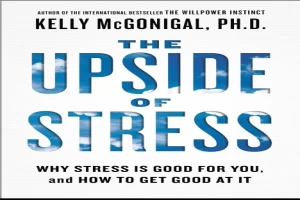
The Upside of Stress: Why Stress Is Good for You, and How to Get Good at It book pdf download

Language : English
Number of Pages : 217
Auther : Kelly McGonigal
Section : psychology
Date of Coming : 2022-08-10
Size of file : 1.84MB
book quality : Good
Department : Social sciences

Author: Kelly McGonigal

About the Author: Kelly McGonigal, PhD, is a research psychologist, lecturer at Stanford University, and an award-winning science writer. Her scientific research focuses on the mind-body connection, and how to cultivate resilience and compassion. She is the author of the international bestseller The Willpower Instinct, The Joy of Movement, The Upside of Stress, and Yoga for Pain Relief. Her work is published in thirty-one languages. Since 2000, she has taught dance, yoga, and group exercise in the San Francisco Bay Area. In her free time, she volunteers as an adoption counselor for animal rescue

The Upside of Stress: Why Stress Is Good for You, and How to Get Good at It book pdf download By Kelly McGonigal

The author of The Willpower Instinct delivers a controversial and groundbreaking new book that overturns long-held beliefs about stress. More than forty-four percent of Americans admit to losing sleep over stress. And while most of us do everything we can to reduce it, Stanford psychologist and bestselling author Kelly McGonigal, Ph.D., delivers a startling message: Stress isn’t bad. In The Upside of Stress, McGonigal highlights new research indicating that stress can, in fact, make us stronger, smarter, and happier—if we learn how to embrace it. The Upside of Stress is the first book to bring together cutting-edge discoveries on the correlation between resilience—the human capacity for stress-related growth—and mind-set, the power of beliefs to shape reality. As she did in The Willpower Instinct, McGonigal combines science, stories, and exercises into an engaging and practical book that is both entertaining and life-changing, showing you: how to cultivate a mind-set to embrace stresshow stress can provide focus and energyhow stress can help people connect and strengthen close relationshipswhy your brain is built to learn from stress, and how to increase its ability to learn from challenging experiences McGonigal’s TED talk on the subject has already received more than 7 million views. Her message resonates with people who know they can’t eliminate the stress in their lives and want to learn to take advantage of it. The Upside of Stress is not a guide to getting rid of stress, but a guide to getting better at stress, by understanding it, embracing it, and using it.

Download PDF of The Upside of Stress: Why Stress Is Good for You, and How to Get Good at It book pdf download By Kelly McGonigal
-Adrian Agency Library
Download Now

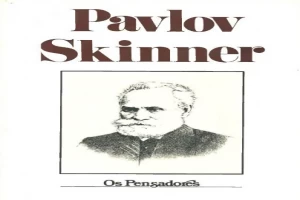
Os Pensadores : Pavlov, Skinner book pdf download

Auther : Ivan Pavlov
Department : Social sciences
Section : psychology
Date of Coming : 2022-08-10
Number of Pages : 416
Size of file : 13.1MB
book quality : Good
Language : Portuguese

Author: Ivan Pavlov

About the Author: Ivan Petrovich Pavlov or Ivan Pavlov (1849-1936), Russian physician and psychiatrist, received the Nobel Prize in Medicine in 1904 for his research on the digestive system, and one of his most famous works is the conditioned response theory that explains learning. One of Pavlov’s dogs, Pavlov Museum, Ryazan, Russia He was a professor at the Military Medical Academy until 1925 and a member of the Academy of Sciences starting in 1907. He was awarded the Nobel Prize. Pavlov believed that complex psychological activities are a product of the relationship between the organism and the environment in the form of conditioned reflexes that represent the response of the organism to the medium in which it is located, which represents an external action. and in connection with the environment. Pavlov’s idea of ​​this was his discoveries of conditional reflexes, which had a significant impact on building his new theory of psychological life. In his works he tried to answer his basic question, which is the nature of the relationship between the brain and psychological activities, and he says in this regard, “Can we not find primary psychological manifestations that can at the same time be, in a universal way, a physiological phenomenon?”

Os Pensadores : Pavlov, Skinner book pdf download By Ivan Pavlov

Pavlov, Skinner – Seleção de textos de Pavlov por Rachel Moreno. Consultoria da introdução por Antônio Branco Lefèvre (Pavlov) e Rodolpho Azzi (Skinner). 1. Os primeiros passos certos no caminho de uma nova investigação [Pavlov, 1904] ::: Discurso proferido em Estocolmo, por ocasião do Prêmio Nobel. 2. A psicologia e a psicopatologia experimentais dos animais [idem, 1903] ::: Discurso pronunciado no Congresso Médico Internacional de Madri. 3. Estudo científico dos assim-chamados processos psíquicos nos animais superiores [idem, 1906] ::: Conferência realizada na Charing Cross Medical School de Londres. 4. O conceito do reflexo e sua extensão [idem, 1927]; O reflexo condicionado [idem, 1934] ::: Análise de conceitos fundamentais na psicologia pavloviana. 5. O estabelecimento do sono [idem, 1927] ::: A sonolência e o sono são investigados em função de estímulos. 6. Estágios hipnóticos em cães: dissolução das respostas secretórias e motoras [idem, 1932] ::: Exemplo do método experimental usado por Pavlov em animais. 7. O trabalho dos grandes hemisférios cerebrais [idem, 1924/26] ::: A investigação sobre os hemisférios cerebrais permite a elucidação de aspectos importantes dos comportamentos reflexos. 8. Resposta de um fisiólogo aos psicólogos [idem, 1932] ::: Apresentação dos princípios metodológicos fundamentais da teoria do reflexo, base da psicologia de Pavlov. 9. Crítica da psicologia da Gestalt [idem, 1929/36] ::: O debate focaliza as relações entre fisiologia e psicologia, contendo críticas às concepções idealistas. 10. Uma tentativa de digressão de um fisiólogo no campo da psiquiatria [idem, s.d.] ::: Pavlov utiliza dados da fisiologia para esclarecer aspectos de determinadas “desordens mentais”, como a esquizofrenia. 11. Contingências do reforço [Skinner, 1969] ::: A noção de comportamento é investigada sob diversos enfoques: o papel no meio ambiente, comportamento governado por regras e comportamento modelado por contingências, o comportamento solucionador de problemas, comportamento específico da espécie etc.

Download PDF of Os Pensadores : Pavlov, Skinner book pdf download By Ivan Pavlov
-Adrian Agency Library

Download Now

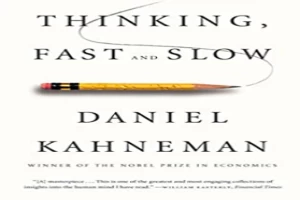
Thinking, Fast and Slow book pdf download

Number of Pages : 749
book quality : Good
Auther : Daniel Kahneman
Department : Social sciences
Language : English
Section : psychology
Date of Coming : 2022-08-10
Size of file : 3.06MB

Author: Daniel Kahneman

About the Author: Daniel Kahneman (Hebrew: דניאל כהנמן‎, born March 5, 1934) is an Israeli-American psychologist notable for his work on the psychology of judgment and decision-making, as well as behavioral economics, for which he was awarded the 2002 Nobel Memorial Prize in Economic Sciences (shared with Vernon L. Smith). His empirical findings challenge the assumption of human rationality prevailing in modern economic theory. With Amos Tversky and others, Kahneman established a cognitive basis for common human errors that arise from heuristics and biases (Kahneman & Tversky, 1973; Kahneman, Slovic & Tversky, 1982; Tversky & Kahneman, 1974), and developed prospect theory (Kahneman & Tversky, 1979). In 2011, he was named by Foreign Policy magazine to its list of top global thinkers. In the same year, his book Thinking, Fast and Slow, which summarizes much of his research, was published and became a best seller. He is professor emeritus of psychology and public affairs at Princeton University’s Woodrow Wilson School. Kahneman is a founding partner of TGG Group, a business and philanthropy consulting company. He is married to Royal Society Fellow Anne Treisman. In 2015 The Economist listed him as the seventh most influential economist in the world. Bio from Wikipedia, the free encyclopedia. Photo by see page for author [Public domain], via Wikimedia Commons.

Thinking, Fast and Slow book pdf download By Daniel Kahneman

System 1 is fast, intuitive, and emotional; System 2 is slower, more deliberative, and more logical. The impact of overconfidence on corporate strategies, the difficulties of predicting what will make us happy in the future, the profound effect of cognitive biases on everything from playing the stock market to planning our next vacation―each of these can be understood only by knowing how the two systems shape our judgments and decisions. Engaging the reader in a lively conversation about how we think, Kahneman reveals where we can and cannot trust our intuitions and how we can tap into the benefits of slow thinking. He offers practical and enlightening insights into how choices are made in both our business and our personal lives―and how we can use different techniques to guard against the mental glitches that often get us into trouble. Topping bestseller lists for almost ten years, Thinking, Fast and Slow is a contemporary classic, an essential book that has changed the lives of millions of readers.

Download PDF of Thinking, Fast and Slow book pdf download By Daniel Kahneman
-Adrian Agency Library
Download Now

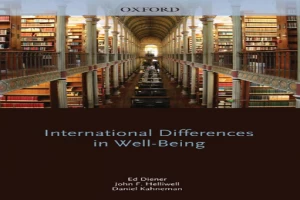
International Differences in Well-Being book pdf download

Number of Pages : 508
Size of file : 5.58MB
Auther : Daniel Kahneman
Department : Social sciences
Language : English
Date of Coming : 2022-08-10
Section : psychology
book quality : Good

Author: Daniel Kahneman

About the Author: Daniel Kahneman (Hebrew: דניאל כהנמן‎, born March 5, 1934) is an Israeli-American psychologist notable for his work on the psychology of judgment and decision-making, as well as behavioral economics, for which he was awarded the 2002 Nobel Memorial Prize in Economic Sciences (shared with Vernon L. Smith). His empirical findings challenge the assumption of human rationality prevailing in modern economic theory. With Amos Tversky and others, Kahneman established a cognitive basis for common human errors that arise from heuristics and biases (Kahneman & Tversky, 1973; Kahneman, Slovic & Tversky, 1982; Tversky & Kahneman, 1974), and developed prospect theory (Kahneman & Tversky, 1979). In 2011, he was named by Foreign Policy magazine to its list of top global thinkers. In the same year, his book Thinking, Fast and Slow, which summarizes much of his research, was published and became a best seller. He is professor emeritus of psychology and public affairs at Princeton University’s Woodrow Wilson School. Kahneman is a founding partner of TGG Group, a business and philanthropy consulting company. He is married to Royal Society Fellow Anne Treisman. In 2015 The Economist listed him as the seventh most influential economist in the world. Bio from Wikipedia, the free encyclopedia. Photo by see page for author [Public domain], via Wikimedia Commons.

International Differences in Well-Being book pdf download By Daniel Kahneman

This book draws together the latest work from scholars around the world using subjective well-being data to understand and compare well-being across countries and cultures. Starting from many different vantage points, the authors reached a consensus that many measures of subjective well-being, ranging from life evaluations through emotional states, based on memories and current evaluations, merit broader collection and analysis. Using data from the Gallup World Poll, the World Values Survey, and other internationally comparable surveys, the authors document wide divergences among countries in all measures of subjective well-being, The international differences are greater for life evaluations than for emotions. Despite the well-documented differences in the ways in which subjective evaluations change through time and across cultures, the bulk of the very large international differences in life evaluations are due to differences in life circumstances rather than differences in the way these differences are evaluated.

Download PDF of International Differences in Well-Being book pdf download By Daniel Kahneman
-Adrian Agency Library

Download Now

Lectures on Conditioned Reflexes book pdf download

book quality : Good
Section : psychology
Size of file : 35.7MB
Number of Pages : 50
Date of Coming : 2022-08-10
Department : Social sciences
Language : English
Auther : Ivan Pavlov

Author: Ivan Pavlov

About the Author: Ivan Petrovich Pavlov or Ivan Pavlov (1849-1936), Russian physician and psychiatrist, received the Nobel Prize in Medicine in 1904 for his research on the digestive system, and one of his most famous works is the conditioned response theory that explains learning. One of Pavlov’s dogs, Pavlov Museum, Ryazan, Russia He was a professor at the Military Medical Academy until 1925 and a member of the Academy of Sciences starting in 1907. He was awarded the Nobel Prize. Pavlov believed that complex psychological activities are a product of the relationship between the organism and the environment in the form of conditioned reflexes that represent the response of the organism to the medium in which it is located, which represents an external action. and in connection with the environment. Pavlov’s idea of ​​this was his discoveries of conditional reflexes, which had a significant impact on building his new theory of psychological life. In his works he tried to answer his basic question, which is the nature of the relationship between the brain and psychological activities, and he says in this regard, “Can we not find primary psychological manifestations that can at the same time be, in a universal way, a physiological phenomenon?”

Lectures on Conditioned Reflexes book pdf download By Ivan Pavlov

Ivan Petrovitch Pavlov Lectures on Conditioned Reflexes. Volume I. (1928) Twenty-five Years of Objective Study of the Higher Nervous Activity (Behaviour) of Animals Volume One

Download PDF of Lectures on Conditioned Reflexes book pdf download By Ivan Pavlov
-Adrian Agency Library

Download Now

Los reflejos condicionados book pdf download

Language : Spanish
Size of file : 16.2MB
Auther : Ivan Pavlov
book quality : Good
Department : Social sciences
Number of Pages : 50
Date of Coming : 2022-08-10
Section : psychology

Author: Ivan Pavlov

About the Author: Ivan Petrovich Pavlov or Ivan Pavlov (1849-1936), Russian physician and psychiatrist, received the Nobel Prize in Medicine in 1904 for his research on the digestive system, and one of his most famous works is the conditioned response theory that explains learning. One of Pavlov’s dogs, Pavlov Museum, Ryazan, Russia He was a professor at the Military Medical Academy until 1925 and a member of the Academy of Sciences starting in 1907. He was awarded the Nobel Prize. Pavlov believed that complex psychological activities are a product of the relationship between the organism and the environment in the form of conditioned reflexes that represent the response of the organism to the medium in which it is located, which represents an external action. and in connection with the environment. Pavlov’s idea of ​​this was his discoveries of conditional reflexes, which had a significant impact on building his new theory of psychological life. In his works he tried to answer his basic question, which is the nature of the relationship between the brain and psychological activities, and he says in this regard, “Can we not find primary psychological manifestations that can at the same time be, in a universal way, a physiological phenomenon?”

Los reflejos condicionados book pdf download By Ivan Pavlov

Encontrándonos ahora en plena «Década del Cerebro» la decisión de volver a publicar la obra original de Ivan P. PAVLOV está más que justificada, ya que en ella encontramos el rigor experimental y las enseñanzas que deben ser acicate y guía para los jóvenes que empiezan a investigar. I. P. PAVLOV, Premio Nobel de Fisiología en 1904, es conocido universalmente por sus clásicos experimentos de reflejos condicionados: un perro puede ser entrenado a salivar al oír el sonido de una campana previamente asociado con la visión de alimento. La trascendencia de este hecho tiene importantes aplicaciones en fisiología, medicina, pedagogía, filosofía y en general en la comprensión de muchas actividades humanas. Citando al propio PAVLOV: «Las diferentes clases de hábitos basados en la disciplina, aprendizaje y educación, no son más sino una larga cadena de reflejos condicionados». La lectura de esta obra constituye una inspiración, una enseñanza y un ejemplo de gran trascendencia, tanto para investigadores científicos como para el gran público en general. (Del prólogo de José M.a Rodríguez Delgado, 1997) Las ideas generales sobre los reflejos condicionados están, ya hace años, divulgadas en nuestro medio científico. Pertenecen a aquella categoría de verdades que merced a su propia excelsitud se incorporan al pensamiento universal y circulan de mente en mente, liberadas hasta del nombre de su autor. Cada cual se sirve de ellas como punto de partida del pensamiento; o gracias a ellas interpreta los hechos observados, sin cuidarse de su procedencia. Este es el privilegio -a la vez triste y glorioso- de las grandes concepciones de la inteligencia humana: que terminan por anular a su propio creador. (Del prólogo de Gregorio Marañón, 1929)

Download PDF of Los reflejos condicionados book pdf download By Ivan Pavlov
-Adrian Agency Library

Download Now

Heuristics and Biases: The Psychology of Intuitive Judgment book pdf download

Auther : Daniel Kahneman
book quality : Good
Date of Coming : 2022-08-10
Number of Pages : 50
Language : English
Size of file : 22.5MB
Section : psychology
Department : Social sciences

Author: Daniel Kahneman

About the Author: Daniel Kahneman (Hebrew: דניאל כהנמן‎, born March 5, 1934) is an Israeli-American psychologist notable for his work on the psychology of judgment and decision-making, as well as behavioral economics, for which he was awarded the 2002 Nobel Memorial Prize in Economic Sciences (shared with Vernon L. Smith). His empirical findings challenge the assumption of human rationality prevailing in modern economic theory. With Amos Tversky and others, Kahneman established a cognitive basis for common human errors that arise from heuristics and biases (Kahneman & Tversky, 1973; Kahneman, Slovic & Tversky, 1982; Tversky & Kahneman, 1974), and developed prospect theory (Kahneman & Tversky, 1979). In 2011, he was named by Foreign Policy magazine to its list of top global thinkers. In the same year, his book Thinking, Fast and Slow, which summarizes much of his research, was published and became a best seller. He is professor emeritus of psychology and public affairs at Princeton University’s Woodrow Wilson School. Kahneman is a founding partner of TGG Group, a business and philanthropy consulting company. He is married to Royal Society Fellow Anne Treisman. In 2015 The Economist listed him as the seventh most influential economist in the world. Bio from Wikipedia, the free encyclopedia. Photo by see page for author [Public domain], via Wikimedia Commons.

Heuristics and Biases: The Psychology of Intuitive Judgment book pdf download By Daniel Kahneman

Judgment pervades human experience. Do I have a strong enough case to go to trial? Will the Fed change interest rates? Can I trust this person? This book examines how people answer such questions. How do people cope with the complexities of the world economy, the uncertain behavior of friends and adversaries, or their own changing tastes and personalities? When are people’s judgments prone to bias, and what is responsible for their biases? This book compiles psychologists’ best attempts to answer these important questions.

Download PDF of Heuristics and Biases: The Psychology of Intuitive Judgment book pdf download By Daniel Kahneman
-Adrian Agency Library

Download Now

Attention and Effort (Experimental Psychology) book pdf download

Department : Social sciences
Section : psychology
Auther : Daniel Kahneman
Number of Pages : 251
Language : English
book quality : Good
Size of file : 17.0MB
Date of Coming : 2022-08-10

Author: Daniel Kahneman

About the Author: Daniel Kahneman (Hebrew: דניאל כהנמן‎, born March 5, 1934) is an Israeli-American psychologist notable for his work on the psychology of judgment and decision-making, as well as behavioral economics, for which he was awarded the 2002 Nobel Memorial Prize in Economic Sciences (shared with Vernon L. Smith). His empirical findings challenge the assumption of human rationality prevailing in modern economic theory. With Amos Tversky and others, Kahneman established a cognitive basis for common human errors that arise from heuristics and biases (Kahneman & Tversky, 1973; Kahneman, Slovic & Tversky, 1982; Tversky & Kahneman, 1974), and developed prospect theory (Kahneman & Tversky, 1979). In 2011, he was named by Foreign Policy magazine to its list of top global thinkers. In the same year, his book Thinking, Fast and Slow, which summarizes much of his research, was published and became a best seller. He is professor emeritus of psychology and public affairs at Princeton University’s Woodrow Wilson School. Kahneman is a founding partner of TGG Group, a business and philanthropy consulting company. He is married to Royal Society Fellow Anne Treisman. In 2015 The Economist listed him as the seventh most influential economist in the world. Bio from Wikipedia, the free encyclopedia. Photo by see page for author [Public domain], via Wikimedia Commons.

Attention and Effort (Experimental Psychology) book pdf download By Daniel Kahneman

Attention and Effort (Experimental Psychology)

Download PDF of Attention and Effort (Experimental Psychology) book pdf download By Daniel Kahneman
-Adrian Agency Library

Download Now