Schnelles Denken, langsames Denken book pdf download

Department : Social sciences
Auther : Daniel Kahneman
Size of file : 35.1MB
Number of Pages : 50
book quality : Good
Date of Coming : 2022-08-10
Section : psychology
Language : German

Author: Daniel Kahneman

About the Author: Daniel Kahneman (Hebrew: דניאל כהנמן‎, born March 5, 1934) is an Israeli-American psychologist notable for his work on the psychology of judgment and decision-making, as well as behavioral economics, for which he was awarded the 2002 Nobel Memorial Prize in Economic Sciences (shared with Vernon L. Smith). His empirical findings challenge the assumption of human rationality prevailing in modern economic theory. With Amos Tversky and others, Kahneman established a cognitive basis for common human errors that arise from heuristics and biases (Kahneman & Tversky, 1973; Kahneman, Slovic & Tversky, 1982; Tversky & Kahneman, 1974), and developed prospect theory (Kahneman & Tversky, 1979). In 2011, he was named by Foreign Policy magazine to its list of top global thinkers. In the same year, his book Thinking, Fast and Slow, which summarizes much of his research, was published and became a best seller. He is professor emeritus of psychology and public affairs at Princeton University’s Woodrow Wilson School. Kahneman is a founding partner of TGG Group, a business and philanthropy consulting company. He is married to Royal Society Fellow Anne Treisman. In 2015 The Economist listed him as the seventh most influential economist in the world. Bio from Wikipedia, the free encyclopedia. Photo by see page for author [Public domain], via Wikimedia Commons.

Schnelles Denken, langsames Denken book pdf download By Daniel Kahneman

Wie treffen wir unsere Entscheidungen? Warum ist Zögern ein überlebensnotwendiger Reflex, und was passiert in unserem Gehirn, wenn wir andere Menschen oder Dinge beurteilen? Daniel Kahneman, Nobelpreisträger und einer der einflussreichsten Wissenschaftler unserer Zeit, zeigt anhand ebenso nachvollziehbarer wie verblüffender Beispiele, welchen mentalen Mustern wir folgen und wie wir uns gegen verhängnisvolle Fehlentscheidungen wappnen können.

Download PDF of Schnelles Denken, langsames Denken book pdf download By Daniel Kahneman
-Adrian Agency Library

Download Now

Happiness by Design: Change What You Do, Not How You Think book pdf download

Number of Pages : 319
Size of file : 1.99MB
Date of Coming : 2022-08-10
Section : psychology
Auther : Daniel Kahneman
Department : Social sciences
Language : English
book quality : Good

Author: Daniel Kahneman

About the Author: Daniel Kahneman (Hebrew: דניאל כהנמן‎, born March 5, 1934) is an Israeli-American psychologist notable for his work on the psychology of judgment and decision-making, as well as behavioral economics, for which he was awarded the 2002 Nobel Memorial Prize in Economic Sciences (shared with Vernon L. Smith). His empirical findings challenge the assumption of human rationality prevailing in modern economic theory. With Amos Tversky and others, Kahneman established a cognitive basis for common human errors that arise from heuristics and biases (Kahneman & Tversky, 1973; Kahneman, Slovic & Tversky, 1982; Tversky & Kahneman, 1974), and developed prospect theory (Kahneman & Tversky, 1979). In 2011, he was named by Foreign Policy magazine to its list of top global thinkers. In the same year, his book Thinking, Fast and Slow, which summarizes much of his research, was published and became a best seller. He is professor emeritus of psychology and public affairs at Princeton University’s Woodrow Wilson School. Kahneman is a founding partner of TGG Group, a business and philanthropy consulting company. He is married to Royal Society Fellow Anne Treisman. In 2015 The Economist listed him as the seventh most influential economist in the world. Bio from Wikipedia, the free encyclopedia. Photo by see page for author [Public domain], via Wikimedia Commons.

Happiness by Design: Change What You Do, Not How You Think book pdf download By Daniel Kahneman

“Pretty much all the advice about happiness we have heard revolves around one basic assumption: that we can think ourselves happier. But in HAPPINESS BY DESIGN, behavior and happiness expert Paul Dolan reveals that the key to being happy does not lie in changing how we think–it’s changing what we do”– Abstract: “Pretty much all the advice about happiness we have heard revolves around one basic assumption: that we can think ourselves happier. But in HAPPINESS BY DESIGN, behavior and happiness expert Paul Dolan reveals that the key to being happy does not lie in changing how we think–it’s changing what we do”

Download PDF of Happiness by Design: Change What You Do, Not How You Think book pdf download By Daniel Kahneman
-Adrian Agency Library
Download Now

Pensieri lenti e veloci book pdf download

book quality : Good
Auther : Daniel Kahneman
Size of file : 4.08MB
Section : psychology
Language : Italian
Number of Pages : 783
Department : Social sciences
Date of Coming : 2022-08-10

Author: Daniel Kahneman

About the Author: Daniel Kahneman (Hebrew: דניאל כהנמן‎, born March 5, 1934) is an Israeli-American psychologist notable for his work on the psychology of judgment and decision-making, as well as behavioral economics, for which he was awarded the 2002 Nobel Memorial Prize in Economic Sciences (shared with Vernon L. Smith). His empirical findings challenge the assumption of human rationality prevailing in modern economic theory. With Amos Tversky and others, Kahneman established a cognitive basis for common human errors that arise from heuristics and biases (Kahneman & Tversky, 1973; Kahneman, Slovic & Tversky, 1982; Tversky & Kahneman, 1974), and developed prospect theory (Kahneman & Tversky, 1979). In 2011, he was named by Foreign Policy magazine to its list of top global thinkers. In the same year, his book Thinking, Fast and Slow, which summarizes much of his research, was published and became a best seller. He is professor emeritus of psychology and public affairs at Princeton University’s Woodrow Wilson School. Kahneman is a founding partner of TGG Group, a business and philanthropy consulting company. He is married to Royal Society Fellow Anne Treisman. In 2015 The Economist listed him as the seventh most influential economist in the world. Bio from Wikipedia, the free encyclopedia. Photo by see page for author [Public domain], via Wikimedia Commons.

Pensieri lenti e veloci book pdf download By Daniel Kahneman

Siamo stati abituati a ritenere che all’uomo, in quanto essere dotato di razionalità, sia sufficiente tenere a freno l’istinto e l’emotività per essere in grado di valutare in modo obiettivo le situazioni che deve affrontare e di scegliere, tra varie alternative, quella per sé più vantaggiosa. Gli studi sul processo decisionale condotti ormai da molti anni dal premio Nobel Daniel Kahneman hanno mostrato quanto illusoria sia questa convinzione e come, in realtà, siamo sempre esposti a condizionamenti – magari da parte del nostro stesso modo di pensare – che possono insidiare la capacità di giudicare e di agire lucidamente. Illustrando gli ultimi risultati della sua ricerca, Kahneman ci guida in un’esplorazione della mente umana e ci spiega come essa sia caratterizzata da due processi di pensiero ben distinti: uno veloce e intuitivo (sistema 1), e uno più lento ma anche più logico e riflessivo (sistema 2). Se il primo presiede all’attività cognitiva automatica e involontaria, il secondo entra in azione quando dobbiamo svolgere compiti che richiedono concentrazione e autocontrollo. Efficiente e produttiva, questa organizzazione del pensiero ci consente di sviluppare raffinate competenze e abilità e di eseguire con relativa facilità operazioni complesse. Ma può anche essere fonte di errori sistematici (bias), quando l’intuizione si lascia suggestionare dagli stereotipi e la riflessione è troppo pigra per correggerla.

Download PDF of Pensieri lenti e veloci book pdf download By Daniel Kahneman
-Adrian Agency Library

Download Now

思考,快与慢 book pdf download

Language : Chinese
book quality : Good
Size of file : 5.53MB
Section : psychology
Auther : Daniel Kahneman
Department : Social sciences
Number of Pages : 701
Date of Coming : 2022-08-10

Author: Daniel Kahneman

About the Author: Daniel Kahneman (Hebrew: דניאל כהנמן‎, born March 5, 1934) is an Israeli-American psychologist notable for his work on the psychology of judgment and decision-making, as well as behavioral economics, for which he was awarded the 2002 Nobel Memorial Prize in Economic Sciences (shared with Vernon L. Smith). His empirical findings challenge the assumption of human rationality prevailing in modern economic theory. With Amos Tversky and others, Kahneman established a cognitive basis for common human errors that arise from heuristics and biases (Kahneman & Tversky, 1973; Kahneman, Slovic & Tversky, 1982; Tversky & Kahneman, 1974), and developed prospect theory (Kahneman & Tversky, 1979). In 2011, he was named by Foreign Policy magazine to its list of top global thinkers. In the same year, his book Thinking, Fast and Slow, which summarizes much of his research, was published and became a best seller. He is professor emeritus of psychology and public affairs at Princeton University’s Woodrow Wilson School. Kahneman is a founding partner of TGG Group, a business and philanthropy consulting company. He is married to Royal Society Fellow Anne Treisman. In 2015 The Economist listed him as the seventh most influential economist in the world. Bio from Wikipedia, the free encyclopedia. Photo by see page for author [Public domain], via Wikimedia Commons.

思考,快与慢 book pdf download By Daniel Kahneman

◆内容简介 《纽约时报》2011年度十大好书 新书上市,连续20多周蝉联亚马逊、《纽约时报》畅销书排行榜前20名,上市至今超过7个月,横扫全球各大畅销书排行榜,稳居亚马逊总榜前50名 《经济学人》、《华尔街日报》、《卫报》、《纽约时报》、《金融时报》、《商业周刊》、《华盛顿邮报》、等国外权威媒体,《三联生活周刊》、《商学院》、《东方早报》等国内知名媒体争相报道,国内外读者好评如潮

Download PDF of 思考,快与慢 book pdf download By Daniel Kahneman
-Adrian Agency Library

Download Now

Choices, Values, and Frames book pdf download

Section : psychology
book quality : Good
Auther : Daniel Kahneman
Department : Social sciences
Date of Coming : 2022-08-10
Size of file : 10.1MB
Language : English
Number of Pages : 1018

Author: Daniel Kahneman

About the Author: Daniel Kahneman (Hebrew: דניאל כהנמן‎, born March 5, 1934) is an Israeli-American psychologist notable for his work on the psychology of judgment and decision-making, as well as behavioral economics, for which he was awarded the 2002 Nobel Memorial Prize in Economic Sciences (shared with Vernon L. Smith). His empirical findings challenge the assumption of human rationality prevailing in modern economic theory. With Amos Tversky and others, Kahneman established a cognitive basis for common human errors that arise from heuristics and biases (Kahneman & Tversky, 1973; Kahneman, Slovic & Tversky, 1982; Tversky & Kahneman, 1974), and developed prospect theory (Kahneman & Tversky, 1979). In 2011, he was named by Foreign Policy magazine to its list of top global thinkers. In the same year, his book Thinking, Fast and Slow, which summarizes much of his research, was published and became a best seller. He is professor emeritus of psychology and public affairs at Princeton University’s Woodrow Wilson School. Kahneman is a founding partner of TGG Group, a business and philanthropy consulting company. He is married to Royal Society Fellow Anne Treisman. In 2015 The Economist listed him as the seventh most influential economist in the world. Bio from Wikipedia, the free encyclopedia. Photo by see page for author [Public domain], via Wikimedia Commons.

Choices, Values, and Frames book pdf download By Daniel Kahneman

This book presents a selection of the research that grew from the editors’ early collaboration on “Prospect Theory,” the landmark article that offered the first compelling alternative to the standard “rational agent” model of choice under risk. In the spirit of the highly influential volume Judgment Under Uncertainty, first published in 1982, this book collects numerous theoretical and empirical articles that have become classics, important extensions, and applications that range from principles of legal compensation to the behavior of New York cab drivers on busy days. Several surveys prepared especially for this volume illustrate the scope and vigor of the behavioral study of choice. Theoretically elegant and empirically robust, the research collected in this volume represents an approach to the science of decision making that has influenced numerous fields of study, including decision theory, behavioral economics and behavioral finance, consumer psychology, the study of negotiation and conflict, medical decision making, legal analysis and practice, well-being studies, political science, and philosophical investigations of rationality and ethics. The book provides an accessible introduction to the study of decision-making behavior and is an indispensable reference source for students and specialists. ____________________ Daniel Kahneman and the late Amos Tversky have started a new perspective on the traditional economic categories of choice, decision, and value. A series of experimental and empirical studies by them and others have rejected traditional assumptions of rationality. Even more importantly, these scholars have developed alternative generalizations with significant predictive power and have found empirical verification for them. This outstanding collection of studies will make these new results readily accessible.

Download PDF of Choices, Values, and Frames book pdf download By Daniel Kahneman
-Adrian Agency Library

Download Now

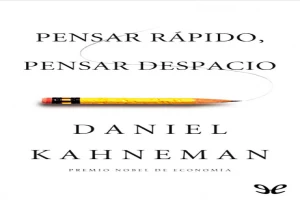
Pensar Rapido, Pensar Despacio book pdf download

Auther : Daniel Kahneman
Language : Spanish
book quality : Good
Department : Social sciences
Size of file : 3.29MB
Section : psychology
Date of Coming : 2022-08-10
Number of Pages : 904

Author: Daniel Kahneman

About the Author: Daniel Kahneman (Hebrew: דניאל כהנמן‎, born March 5, 1934) is an Israeli-American psychologist notable for his work on the psychology of judgment and decision-making, as well as behavioral economics, for which he was awarded the 2002 Nobel Memorial Prize in Economic Sciences (shared with Vernon L. Smith). His empirical findings challenge the assumption of human rationality prevailing in modern economic theory. With Amos Tversky and others, Kahneman established a cognitive basis for common human errors that arise from heuristics and biases (Kahneman & Tversky, 1973; Kahneman, Slovic & Tversky, 1982; Tversky & Kahneman, 1974), and developed prospect theory (Kahneman & Tversky, 1979). In 2011, he was named by Foreign Policy magazine to its list of top global thinkers. In the same year, his book Thinking, Fast and Slow, which summarizes much of his research, was published and became a best seller. He is professor emeritus of psychology and public affairs at Princeton University’s Woodrow Wilson School. Kahneman is a founding partner of TGG Group, a business and philanthropy consulting company. He is married to Royal Society Fellow Anne Treisman. In 2015 The Economist listed him as the seventh most influential economist in the world. Bio from Wikipedia, the free encyclopedia. Photo by see page for author [Public domain], via Wikimedia Commons.

Pensar Rapido, Pensar Despacio book pdf download By Daniel Kahneman

Daniel Kahneman, uno de los pensadores más importantes del mundo, recibió el premio Nobel de Economía por su trabajo pionero en psicología sobre el modelo racional de la toma de decisiones. Sus ideas han tenido un profundo impacto en campos tan diversos como la economía, la medicina o la política, pero hasta ahora no había reunido la obra de su vida en un libro. En Pensar rápido, pensar despacio, un éxito internacional, Kahneman nos ofrece una revolucionaria perspectiva del cerebro y explica los dos sistemas que modelan cómo pensamos. El sistema 1 es rápido, intuitivo y emocional, mientras que el sistema 2 es más lento, deliberativo y lógico. Kahneman expone la extraordinaria capacidad (y también los errores y los sesgos) del pensamiento rápido, y revela la duradera influencia de las impresiones intuitivas sobre nuestro pensamiento y nuestra conducta. El impacto de la aversión a la pérdida y el exceso de confianza en las estrategias empresariales, la dificultad de predecir lo que nos hará felices en el futuro, el reto de enmarcar adecuadamente los riesgos en el trabajo y en el hogar, el profundo efecto de los sesgos cognitivos sobre todo lo que hacemos, desde jugar en la Bolsa hasta planificar las vacaciones; todo esto solo puede ser comprendido si entendemos el funcionamiento conjunto de los dos sistemas a la hora de formular nuestros juicios y decisiones. Al implicar al lector en una animada reflexión sobre cómo pensamos, Kahneman consigue revelar cuándo podemos confiar en nuestras intuiciones y cuándo no, y de qué modo podemos aprovechar los beneficios del pensamiento lento. Además, ofrece enseñanzas prácticas e iluminadoras sobre cómo se adoptan decisiones en la vida profesional o personal, y sobre cómo podemos usardistintas técnicas para protegernos de los fallos mentales que nos crean problemas. Pensar rápido, pensar despacio cambiará para siempre nuestra manera de pensar sobre cómo pensamos.

Download PDF of Pensar Rapido, Pensar Despacio book pdf download By Daniel Kahneman
-Adrian Agency Library

Download Now

Système 1 : Système 2 : Les deux vitesses de la pensée book pdf download

book quality : Good
Section : psychology
Language : French
Auther : Daniel Kahneman
Date of Coming : 2022-08-10
Size of file : 2.88MB
Number of Pages : 521
Department : Social sciences

Author: Daniel Kahneman

About the Author: Daniel Kahneman (Hebrew: דניאל כהנמן‎, born March 5, 1934) is an Israeli-American psychologist notable for his work on the psychology of judgment and decision-making, as well as behavioral economics, for which he was awarded the 2002 Nobel Memorial Prize in Economic Sciences (shared with Vernon L. Smith). His empirical findings challenge the assumption of human rationality prevailing in modern economic theory. With Amos Tversky and others, Kahneman established a cognitive basis for common human errors that arise from heuristics and biases (Kahneman & Tversky, 1973; Kahneman, Slovic & Tversky, 1982; Tversky & Kahneman, 1974), and developed prospect theory (Kahneman & Tversky, 1979). In 2011, he was named by Foreign Policy magazine to its list of top global thinkers. In the same year, his book Thinking, Fast and Slow, which summarizes much of his research, was published and became a best seller. He is professor emeritus of psychology and public affairs at Princeton University’s Woodrow Wilson School. Kahneman is a founding partner of TGG Group, a business and philanthropy consulting company. He is married to Royal Society Fellow Anne Treisman. In 2015 The Economist listed him as the seventh most influential economist in the world. Bio from Wikipedia, the free encyclopedia. Photo by see page for author [Public domain], via Wikimedia Commons.

Système 1 : Système 2 : Les deux vitesses de la pensée book pdf download By Daniel Kahneman

En 2002, Daniel Kahneman recevait le Nobel d’économie. Evénement exceptionnel dans l’histoire du prix, car le lauréat est avant tout un psychologue. Simplement, depuis le début des années 1970, ses travaux en psychologie de la connaissance et de la décision se sont attachés à remettre en cause la rationalité fondamentale de la pensée, fondement des théories économiques néoclassiques. Dans cet ouvrage de synthèse, il décrit les deux systèmes qui régissent notre façon de penser : ce qu’il appelle le système 1 est rapide, intuitif et émotionnel ; le système 2 est plus lent, plus réfléchi, plus contrôlé et plus logique. A partir de nombreux exemples et expériences, il expose les facultés extraordinaires de la pensée rapide, le rôle de l’émotion dans nos choix et nos jugements, mais aussi les défauts de la pensée intuitive et les ravages des partis pris cognitifs. Où l’on verra à quel point la peur de se tromper ou au contraire une confiance excessive influencent les stratégies d’entreprise, pourquoi nous avons tant de mal à prévoir ce qui nous rendra heureux dans le futur, et comment nos partis pris sont souvent déterminants dans tous les domaines de notre vie, du jeu en Bourse au choix de nos prochaines vacances… En explorant ainsi les limites de notre esprit, l’auteur nous apprend quand nous pouvons ou non nous appuyer sur notre intuition et quand il vaut mieux prendre le temps d’une réflexion approfondie. Une théorie éclairante sur nos façons de penser et de faire nos choix, qui a des prolongements pratiques immédiats, dans la vie quotidienne et professionnelle.

Download PDF of Système 1 : Système 2 : Les deux vitesses de la pensée book pdf download By Daniel Kahneman
-Adrian Agency Library

Download Now

Rapido e Devagar: Duas Formas de Pensar book pdf download

Auther : Daniel Kahneman
Date of Coming : 2022-08-10
Size of file : 2.64MB
book quality : Good
Language : Portuguese
Section : psychology
Number of Pages : 497
Department : Social sciences

Author: Daniel Kahneman

About the Author: Daniel Kahneman (Hebrew: דניאל כהנמן‎, born March 5, 1934) is an Israeli-American psychologist notable for his work on the psychology of judgment and decision-making, as well as behavioral economics, for which he was awarded the 2002 Nobel Memorial Prize in Economic Sciences (shared with Vernon L. Smith). His empirical findings challenge the assumption of human rationality prevailing in modern economic theory. With Amos Tversky and others, Kahneman established a cognitive basis for common human errors that arise from heuristics and biases (Kahneman & Tversky, 1973; Kahneman, Slovic & Tversky, 1982; Tversky & Kahneman, 1974), and developed prospect theory (Kahneman & Tversky, 1979). In 2011, he was named by Foreign Policy magazine to its list of top global thinkers. In the same year, his book Thinking, Fast and Slow, which summarizes much of his research, was published and became a best seller. He is professor emeritus of psychology and public affairs at Princeton University’s Woodrow Wilson School. Kahneman is a founding partner of TGG Group, a business and philanthropy consulting company. He is married to Royal Society Fellow Anne Treisman. In 2015 The Economist listed him as the seventh most influential economist in the world. Bio from Wikipedia, the free encyclopedia. Photo by see page for author [Public domain], via Wikimedia Commons.

Rapido e Devagar: Duas Formas de Pensar book pdf download By Daniel Kahneman

Todos nos acreditamos que o homem, por ser dotado de razao, e capaz de conter os instintos e as emocoes, avaliando objetivamente as situacoes e escolhendo, dentre varias alternativas, a que lhe e mais vantajosa. Estudos conduzidos durante anos por Daniel Kahneman, um dos mais importantes pensadores do seculo XXI, colocam em xeque a ideia de que a nossa tomada de decisoes e essencialmente racional. Em Rapido e devagar: duas formas de pensar, o autor nos leva a uma viagem pela mente humana e explica as duas formas de pensar: uma e rapida, intuitiva e emocional; a outra, mais lenta, deliberativa e logica. Kahneman expoe as capacidades extraordinarias e tambem os defeitos e vicios do pensamento rapido e revela o peso das impressoes intuitivas nas nossas decisoes. Comportamentos tais como a aversao a perda, o excesso de confianca no momento de escolhas estrategicas, a dificuldade de prever o que vai nos fazer felizes no futuro e os desafios de identificar corretamente os riscos no trabalho e em casa so podem ser compreendidos se soubermos como as duas formas de pensar moldam nossos julgamentos. As questoes colocadas por Kahneman se revelam muitas vezes inquietantes: e verdade que o sucesso de um investidor e completamente aleatorio e que sua habilidade no mercado financeiro e apenas uma ilusao? Por que o medo de perder e mais forte do que o prazer de ganhar? Por que assumimos que uma pessoa mais bonita sera mais competente? Suas ideias tiveram um impacto profundo em muitas areas, incluindo economia, psicologia, medicina e politica, mas e a primeira vez que reune seus muitos anos de pesquisa e pensamento em um livro. De forma envolvente, o autor revela quando podemos ou nao confiar em nossa intuicao. Oferece insights praticos e esclarecedores sobre como tomamos decisoes nos negocios e na vida pessoal, e como podemos usar diferentes tecnicas para nos proteger contra falhas mentais que muitas vezes nos colocam em apuros.

Download PDF of Rapido e Devagar: Duas Formas de Pensar book pdf download By Daniel Kahneman
-Adrian Agency Library

Download Now

La falsa ilusión del éxito book pdf download

Language : Spanish
Department : Social sciences
Date of Coming : 2022-08-10
Section : psychology
Auther : Daniel Kahneman
Number of Pages : 87
Size of file : 0.51MB
book quality : Good

Author: Daniel Kahneman

About the Author: Daniel Kahneman (Hebrew: דניאל כהנמן‎, born March 5, 1934) is an Israeli-American psychologist notable for his work on the psychology of judgment and decision-making, as well as behavioral economics, for which he was awarded the 2002 Nobel Memorial Prize in Economic Sciences (shared with Vernon L. Smith). His empirical findings challenge the assumption of human rationality prevailing in modern economic theory. With Amos Tversky and others, Kahneman established a cognitive basis for common human errors that arise from heuristics and biases (Kahneman & Tversky, 1973; Kahneman, Slovic & Tversky, 1982; Tversky & Kahneman, 1974), and developed prospect theory (Kahneman & Tversky, 1979). In 2011, he was named by Foreign Policy magazine to its list of top global thinkers. In the same year, his book Thinking, Fast and Slow, which summarizes much of his research, was published and became a best seller. He is professor emeritus of psychology and public affairs at Princeton University’s Woodrow Wilson School. Kahneman is a founding partner of TGG Group, a business and philanthropy consulting company. He is married to Royal Society Fellow Anne Treisman. In 2015 The Economist listed him as the seventh most influential economist in the world. Bio from Wikipedia, the free encyclopedia. Photo by see page for author [Public domain], via Wikimedia Commons.

La falsa ilusión del éxito book pdf download By Daniel Kahneman

Las evidencias son inquietantes: la mayoría de las grandes iniciativas de negocios no rinden fruto. Según los economistas, los malos resultados son una consecuencia inevitable del hecho de que las empresas corran riesgos racionales en situaciones inciertas. Sin embargo, tras analizarlo desde la psicología, los autores consideran que ese fracaso es consecuencia de una toma de decisiones basada en un optimismo ilusorio en lugar de en una valoración racional de ganancias, pérdidas y probabilidades. Los sesgos cognitivos y las presiones organizativas que se hallan en el origen de ese exceso de optimismo son omnipresentes, pero sus efectos pueden atenuarse. Complementando los procesos tradicionales de previsión con el análisis de iniciativas análogas finalizadas con anterioridad, los directivos pueden discernir de manera mucho más precisa el desenlace probable de un proyecto. Esa «visión externa» es un baño de realidad que reduce las probabilidades de que una empresa se embarque en una inversión de tiempo y dinero desastrosa. Los IMPRESCINDIBLES de Conecta, en colaboración con Harvard Business Review, permiten acceder a las grandes ideas de los autores de referencia que inspiran a directivos y profesionales. Este volumen reúne los textos «La falsa ilusión del éxito», de Daniel Kahneman y Dan Lovallo, y «Antes de tomar una gran decisión», de Kahneman, Lovallo y Olivier Sibony.

Download PDF of La falsa ilusión del éxito book pdf download By Daniel Kahneman
-Adrian Agency Library

Download Now

Noise: A Flaw in Human Judgment book pdf download

Date of Coming : 2022-08-10
Section : psychology
Number of Pages : 570
Size of file : 4.80MB
Language : English
Department : Social sciences
Auther : Daniel Kahneman
book quality : Good

Author: Daniel Kahneman

About the Author: Daniel Kahneman (Hebrew: דניאל כהנמן‎, born March 5, 1934) is an Israeli-American psychologist notable for his work on the psychology of judgment and decision-making, as well as behavioral economics, for which he was awarded the 2002 Nobel Memorial Prize in Economic Sciences (shared with Vernon L. Smith). His empirical findings challenge the assumption of human rationality prevailing in modern economic theory. With Amos Tversky and others, Kahneman established a cognitive basis for common human errors that arise from heuristics and biases (Kahneman & Tversky, 1973; Kahneman, Slovic & Tversky, 1982; Tversky & Kahneman, 1974), and developed prospect theory (Kahneman & Tversky, 1979). In 2011, he was named by Foreign Policy magazine to its list of top global thinkers. In the same year, his book Thinking, Fast and Slow, which summarizes much of his research, was published and became a best seller. He is professor emeritus of psychology and public affairs at Princeton University’s Woodrow Wilson School. Kahneman is a founding partner of TGG Group, a business and philanthropy consulting company. He is married to Royal Society Fellow Anne Treisman. In 2015 The Economist listed him as the seventh most influential economist in the world. Bio from Wikipedia, the free encyclopedia. Photo by see page for author [Public domain], via Wikimedia Commons.

Noise: A Flaw in Human Judgment book pdf download By Daniel Kahneman

Imagine that two doctors in the same city give different diagnoses to identical patients–or that two judges in the same courthouse give markedly different sentences to people who have committed the same crime. Suppose that different interviewers at the same firm make different decisions about indistinguishable job applicants–or that when a company is handling customer complaints, the resolution depends on who happens to answer the phone. Now imagine that the same doctor, the same judge, the same interviewer, or the same customer service agent makes different decisions depending on whether it is morning or afternoon, or Monday rather than Wednesday. These are examples of noise: variability in judgments that should be identical. In Noise, Daniel Kahneman, Olivier Sibony, and Cass R. Sunstein show the detrimental effects of noise in many fields, including medicine, law, economic forecasting, forensic science, bail, child protection, strategy, performance reviews, and personnel selection. Wherever there is judgment, there is noise. Yet, most of the time, individuals and organizations alike are unaware of it. They neglect noise. With a few simple remedies, people can reduce both noise and bias, and so make far better decisions. Packed with original ideas, and offering the same kinds of research-based insights that made Thinking, Fast and Slow and Nudge groundbreaking New York Times bestsellers, Noise explains how and why humans are so susceptible to noise in judgment–and what we can do about it.

Download PDF of Noise: A Flaw in Human Judgment book pdf download By Daniel Kahneman
-Adrian Agency Library
Download Now