The Eighteenth Brumaire of Louis Bonaparte book pdf download

Auther : Karl Marx
Section : Philosophy and logic
Number of Pages : 73
book quality : Excellent
Date of Coming : 2022-08-10
Department : Social sciences
Size of file : 7.81MB
Language : English

Author: Karl Marx

About the Author: Karl Heinrich Marx was a German philosopher, economist, sociologist, historian, journalist and revolutionary socialist (5 May 1818 – 14 March 1883). His ideas played an important role in the foundation of sociology and in the development of socialist movements. Marx was considered one of the greatest economists in history. He published several books during his lifetime, the most important of which are The Manifesto of the Communist Party (1848) and Das Kapital (1867–1894). Born into a wealthy middle-class family in Trier in the Prussian Rhineland, Marx studied at the University of Bonn and the University of Berlin, where he became interested in the philosophical ideas of the Young Hegelians. He was associated with Jenny von Westphalen in 1836 AD, and married her in 1843 AD after his studies. He wrote for a radical newspaper in Cologne, and began to develop his theory of dialectical materialism. After moving to Paris in 1843, he began writing for other radical newspapers.

The Eighteenth Brumaire of Louis Bonaparte book pdf download By Karl Marx

The Eighteenth Brumaire of Louis Bonaparte” is one of Karl Marx’ most profound and most brilliant monographs. It may be considered the best work extant on the philosophy of history. On the 18th Brumaire (Nov. 9th), the post-revolutionary development of affairs in France enabled the first Napoleon to take a step that led with inevitable certainty to the imperial throne. The circumstance that fifty and odd years later similar events aided his nephew, Louis Bonaparte, to take a similar step with a similar result, gives the name to this work-“The Eighteenth Brumaire of Louis Bonaparte.

Download PDF of The Eighteenth Brumaire of Louis Bonaparte book pdf download By Karl Marx
-Adrian Agency Library

Download Now

Questioning the Millennium: A Rationalist’s Guide to a Precisely Arbitrary Countdown book pdf download

Auther : Stephen Jay Gould
Section : Philosophy and logic
Number of Pages : 224
Language : English
Department : Social sciences
Date of Coming : 2022-08-10
Size of file : 0.66MB
book quality : Excellent

Author: Stephen Jay Gould

About the Author: Stephen Jay Gould was an American paleontologist, evolutionary biologist, and historian of science. He was one of the most influential and widely read authors of popular science of his generation. Gould spent most of his career teaching at Harvard University and working at the American Museum of Natural History in New York. In 1996, Gould was hired as the Vincent Astor Visiting Research Professor of Biology at New York University, after which he divided his time teaching between there and Harvard. Gould’s most significant contribution to evolutionary biology was the theory of punctuated equilibrium developed with Niles Eldredge in 1972. The theory proposes that most evolution is characterized by long periods of evolutionary stability, infrequently punctuated by swift periods of branching speciation. The theory was contrasted against phyletic gradualism, the popular idea that evolutionary change is marked by a pattern of smooth and continuous change in the fossil record. Most of Gould’s empirical research was based on the land snail genera Poecilozonites and Cerion. He also made important contributions to evolutionary developmental biology, receiving broad professional recognition for his book Ontogeny and Phylogeny.[5] In evolutionary theory he opposed strict selectionism, sociobiology as applied to humans, and evolutionary psychology. He campaigned against creationism and proposed that science and religion should be considered two distinct fields (or “non-overlapping magisteria”) whose authorities do not overlap. Gould was known by the general public mainly for his 300 popular essays in Natural History magazine, and his numerous books written for both the specialist and non-specialist. In April 2000, the US Library of Congress named him a “Living Legend”

Questioning the Millennium: A Rationalist’s Guide to a Precisely Arbitrary Countdown book pdf download By Stephen Jay Gould

In this new edition of Questioning the Millennium, best-selling author Stephen Jay Gould applies his wit and erudition to one of today’s most pressing subjects: the significance of the millennium. In 1950 at age eight, prompted by an issue of Life magazine marking the century’s midpoint, Stephen Jay Gould started thinking about the approaching turn of the millennium. In this beautiful inquiry into time and its milestones, he shares his interest and insights with his readers. Refreshingly reasoned and absorbing, the book asks and answers the three major questions that define the approaching calendrical event. First, what exactly is this concept of a millennium and how has its meaning shifted? How did the name for a future thousand-year reign of Jesus Christ on earth get transferred to the passage of a secular period of a thousand years in current human history? When does the new millennium really begin: January 1, 2000, or January 1, 2001? (Although seemingly trivial, the debate over this issue tells an intriguing story about the cultural history of the twentieth century.) And why must our calendars be so complex, leading to our search for arbitrary regularity, including a fascination with millennia? This revised edition begins with a new and extensive preface on a key subject not treated in the original version. As always, Gould brings into his essays a wide range of compelling historical and scientific fact, including a brief history of millennial fevers, calendrical traditions, and idiosyncrasies from around the world; the story of a sixth-century monk whose errors in chronology plague us even today; and the heroism of a young autistic man who has developed the extraordinary ability to calculate dates deep into the past and the future. Ranging over a wide terrain of phenomena–from the arbitrary regularities of human calendars to the unpredictability of nature, from the vagaries of pop culture to the birth of Christ–Stephen Jay Gould holds up the mirror to our millennial passions to reveal our foibles, absurdities, and uniqueness–in other words, our humanity.

Download PDF of Questioning the Millennium: A Rationalist’s Guide to a Precisely Arbitrary Countdown book pdf download By Stephen Jay Gould
-Adrian Agency Library

Download Now

Rocks of Ages: Science and Religion in the Fullness of Life book pdf download

book quality : Excellent
Auther : Stephen Jay Gould
Number of Pages : 175
Section : Philosophy and logic
Size of file : 1.34MB
Date of Coming : 2022-08-10
Language : English
Department : Social sciences

Author: Stephen Jay Gould

About the Author: Stephen Jay Gould was an American paleontologist, evolutionary biologist, and historian of science. He was one of the most influential and widely read authors of popular science of his generation. Gould spent most of his career teaching at Harvard University and working at the American Museum of Natural History in New York. In 1996, Gould was hired as the Vincent Astor Visiting Research Professor of Biology at New York University, after which he divided his time teaching between there and Harvard. Gould’s most significant contribution to evolutionary biology was the theory of punctuated equilibrium developed with Niles Eldredge in 1972. The theory proposes that most evolution is characterized by long periods of evolutionary stability, infrequently punctuated by swift periods of branching speciation. The theory was contrasted against phyletic gradualism, the popular idea that evolutionary change is marked by a pattern of smooth and continuous change in the fossil record. Most of Gould’s empirical research was based on the land snail genera Poecilozonites and Cerion. He also made important contributions to evolutionary developmental biology, receiving broad professional recognition for his book Ontogeny and Phylogeny.[5] In evolutionary theory he opposed strict selectionism, sociobiology as applied to humans, and evolutionary psychology. He campaigned against creationism and proposed that science and religion should be considered two distinct fields (or “non-overlapping magisteria”) whose authorities do not overlap. Gould was known by the general public mainly for his 300 popular essays in Natural History magazine, and his numerous books written for both the specialist and non-specialist. In April 2000, the US Library of Congress named him a “Living Legend”

Rocks of Ages: Science and Religion in the Fullness of Life book pdf download By Stephen Jay Gould

Writing with bracing intelligence and clarity, internationally renowned evolutionist and bestselling author Stephen Jay Gould sheds new light on a dilemma that has plagued thinking people since the Renaissance: the rift between science and religion. Instead of choosing them, Gould asks, why not opt for a golden mean that accords dignity and distinction to each realm? In his distinctively elegant style, Gould offers a lucid, contemporary principle that allows science and religion to coexist peacefully in a position of respectful noninterference. Science defines the natural world; religion our moral world in recognition of their separate spheres of influence. In exploring this thought-provoking concept, Gould delves into the history of science, sketching affecting portraits of scientists and moral leaders wrestling with matters of faith and reason. Stories of seminal figures such as Galileo, Darwin, and Thomas Henry Huxley make vivid his argument that individuals and cultures must cultivate both a life of the spirit and a life of rational inquiry in order to experience the fullness of being human. In Rocks of Ages, Gould’s passionate humanism, ethical discernment, and erudition are fused to create a dazzling gem of contemporary cultural philosophy.

Download PDF of Rocks of Ages: Science and Religion in the Fullness of Life book pdf download By Stephen Jay Gould
-Adrian Agency Library

Download Now

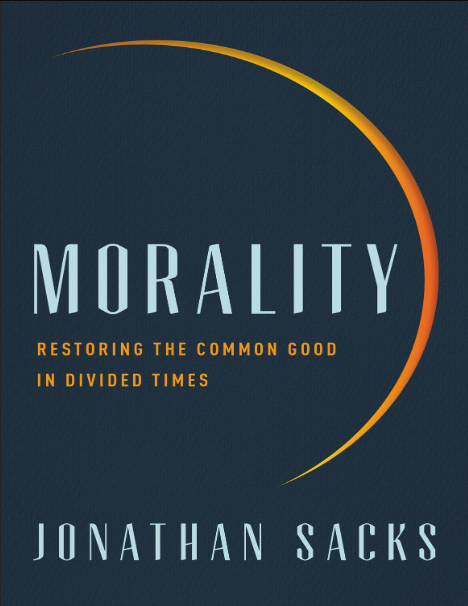
Morality: Restoring the Common Good in Divided Times book pdf download

Size of file : 4.47MB
Department : Social sciences
Number of Pages : 385
Section : Philosophy and logic
book quality : Excellent
Auther : Jonathan Sacks
Date of Coming : 2022-08-24
Language : English

Author: Jonathan Sacks

About the Author: Rabbi Lord Jonathan Sacks
An international religious leader, philosopher, award-winning author and respected moral voice, Rabbi Lord Jonathan Sacks was awarded the 2016 Templeton Prize in recognition of his “exceptional contributions to affirming life’s spiritual dimension.” Described by H.R.H. The Prince of Wales as “a light unto this nation” and by former British Prime Minister Tony Blair as “an intellectual giant”, Rabbi Sacks was a frequent and sought-after contributor to radio, television and the press both in Britain and around the world.
Since stepping down as the Chief Rabbi of the United Hebrew Congregations of the Commonwealth – a position he served for 22 years between 1991 and 2013 – Rabbi Sacks held a number of professorships at several academic institutions including Yeshiva University, New York University and King’s College London. Rabbi Sacks was awarded 18 honorary doctorates including a Doctor of Divinity conferred to mark his first ten years in office as Chief Rabbi, by the then Archbishop of Canterbury, Lord Carey.
Rabbi Sacks authored over 35 books. His most recent work, Morality: Restoring the Common Good in Divided Times (2020), was a top ten Sunday Times bestseller and was published in North America on 1st September 2020 and was named as the 2020 ‘Book of the Year’ by the National Jewish Book Council. Other works include: Not in God’s Name: Confronting Religious Violence; The Great Partnership: God, Science and the Search for Meaning; The Dignity of Difference: How to Avoid the Clash of Civilizations (winner of the Grawemeyer Prize for Religion in 2004 for its success in defining a framework for interfaith dialogue between people of all faith and of none); To Heal a Fractured World: The Ethics of Responsibility; and A Letter in the Scroll: On Being Jewish, winner of a National Jewish Book Awards in 2000.
In recognition of his work, Rabbi Sacks received, among others, the Jerusalem Prize in 1995 for his contribution to diaspora Jewish life, The Ladislaus Laszt Ecumenical and Social Concern Award from Ben Gurion University in Israel in 2011, The Guardian of Zion Award from the Ingeborg Rennert Center for Jerusalem Studies at Bar-Ilan University in 2014, and The Katz Award in recognition of his contribution to the practical analysis and application of Halacha in modern life in Israel in 2014. He was named as The Becket Fund’s 2014 Canterbury Medalist for his role in the defence of religious liberty in the public square; won a Bradley Prize in 2016 in recognition of being “a leading moral voice in today’s world”; and in 2017, he was awarded the Irving Kristol Award from the American Enterprise Institute for his “remarkable contributions to philosophy, religion, and interfaith discourse… as one of the world’s greatest living public intellectuals.” In 2018, he was given the Lifetime Achievement Award by The London Jewish News in recognition of his services to the Jewish world and wider society.
Rabbi Sacks was knighted by Her Majesty The Queen in 2005 and made a Life Peer, taking his seat in the House of Lords in October 2009. Born in 1948 in London, he married Elaine in 1970. Together they raised three children.
Rabbi Sacks passed away on 7th November 2020, aged 72. He leaves behind a legacy as one of the greatest Jewish thinkers of the 20th century, one who bridged the religious and secular world through his remarkable and ground-breaking canon of work.

About the Author:  

Morality: Restoring the Common Good in Divided Times book pdf download By Jonathan Sacks

In today’s world of cultural climate change, argues Jonathan Sacks, we have outsourced morality to the markets on the one hand, and to government on the other. If the market rewards it, it must be OK – unless the law says not to.

Yet while the markets have brought wealth to many and the state has done much to contain the worst excesses of inequality, neither is capable of bearing the moral weight of showing us how to live.

On the one hand, traditional values no longer hold, yet recent political swings show that modern ideals of tolerance have left many feeling rudderless and adrift. In this environment we see things fall apart in unexpected ways – toxic public discourse that makes true societal progress almost unattainable; the rise of religious extremism on the one hand and of aggressive atheism on the other; a drive for respect of all that establishes ‘safe space’ only where true debate is off limits.

How can we build – or rebuild – a collective culture that is able to both respect difference and draw us together to work for the common good? Talking to key modern influences and thinkers – including Jordan Peterson, Melinda Gates and David Brooks – and drawing inspiration from the Bible and the historical experience of the Jewish people, Sacks argues that there are eight key factors in establishing, maintaining and passing on resilient moral values within a broad group, among them attitudes of lifelong learning and of thanksgiving, the importance of family life and community, and a culture of positive argument in place of destructive conflict.

Combining his passionate belief in a positive way forward with a careful weighing of the realities and challenges of the position in which we find ourselves, Jonathan Sacks sets out a clear picture of a world in which we can all find our place and build a future worth working for.

Download PDF of Morality: Restoring the Common Good in Divided Times book pdf download By Jonathan Sacks
-Adrian Agency Library


Download Now

The big picture : on the origins of life, meaning, and the universe itself book pdf download

Auther : Sean Carroll
Language : English
book quality : Excellent
Department : Social sciences
Number of Pages : 467
Section : Philosophy and logic
Date of Coming : 2022-08-29
Size of file : 7.69MB

Author: Sean Carroll

About the Author: ean Carroll is Homewood Professor of Natural Philosophy at Johns Hopkins University and Fractal Faculty at the Santa Fe Institute. His research focuses on fundamental issues in quantum mechanics, gravitation, statistical mechanics, and cosmology. He has wide-ranging interests, including in philosophy, complexity theory, and information.
Carroll is an active science communicator, and has been blogging regularly since 2004. His textbook “Spacetime and Geometry” has been adopted by a number of universities for their graduate courses in general relativity. He is a frequent public speaker, and has appeared on TV shows such as The Colbert Report and Through The Wormhole with Morgan Freeman. He has produced a set of lectures for The Teaching Company on dark matter and dark energy, and another on the nature of time. He has served as a science consultant for films such as Thor and TRON: Legacy, as well as for TV shows such as Fringe and Bones.
His 2010 popular book, “From Eternity to Here,” explained the arrow of time and connected it with the origin of our universe. “The Particle at the End of the Universe,” about the Large Hadron Collider and the quest to discover the Higgs boson, was released November 2012, “The Big Picture: On the Origins of Life, Meaning, and the Universe Itself” in May 2016, and “Something Deeply Hidden: Quantum Worlds and the Emergence of Spacetime” in 2019. His next book project is “The Biggest Ideas in the Universe,” which will consist of three books. The first, “Space, Time, and Motion,” appears in September 2022.

The big picture : on the origins of life, meaning, and the universe itself book pdf download By Sean Carroll

Already internationally acclaimed for his elegant, lucid writing on the most challenging notions in modern physics, Sean Carroll is emerging as one of the greatest humanist thinkers of his generation as he brings his extraordinary intellect to bear not only on Higgs bosons and extra dimensions but now also on our deepest personal questions.  Where are we? Who are we? Are our emotions, our beliefs, and our hopes and dreams ultimately meaningless out there in the void? Does human purpose and meaning fit into a scientific worldview?

In short chapters filled with intriguing historical anecdotes, personal asides, and rigorous exposition, readers learn the difference between how the world works at the quantum level, the cosmic level, and the human level–and then how each connects to the other.  Carroll’s presentation of the principles that have guided the scientific revolution from Darwin and Einstein to the origins of life, consciousness, and the universe is dazzlingly unique.

Carroll shows how an avalanche of discoveries in the past few hundred years has changed our world and what really matters to us. Our lives are dwarfed like never before by the immensity of space and time, but they are redeemed by our capacity to comprehend it and give it meaning.

The Big Picture is an unprecedented scientific worldview, a tour de force that will sit on shelves alongside the works of Stephen Hawking, Carl Sagan, Daniel Dennett, and E. O. Wilson for years to come.

Download PDF of The big picture : on the origins of life, meaning, and the universe itself book pdf download By Sean Carroll
-Adrian Agency Library
Download Now

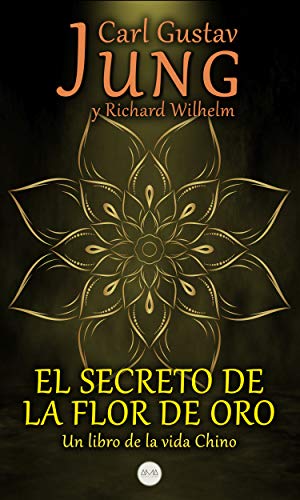
El Secreto de La Flor de Oro book pdf download

Department : Social sciences
book quality : Excellent
Number of Pages : 121
Section : Philosophy and logic
Size of file : 1.06MB
Language : Spanish
Date of Coming : 2022-08-30
Auther : Carl Gustav Jung

Author: Carl Gustav Jung

About the Author: Carl Gustav Jung (1875-1961) was a Swiss psychiatrist, an influential thinker and the founder of analytical psychology (also known as Jungian psychology). Jung’s radical approach to psychology has been influential in the field of depth psychology and in counter-cultural movements across the globe. Jung is considered as the first modern psychologist to state that the human psyche is “by nature religious” and to explore it in depth. His many major works include “Analytic Psychology: Its Theory and Practice,” “Man and His Symbols,” “Memories, Dreams, Reflections,” “The Collected Works of Carl G. Jung,” and “The Red Book.”

El Secreto de La Flor de Oro book pdf download By Carl Gustav Jung

El secreto de la flor de oro es una obra taoísta china sobre meditación, fue traducida por Richard Wilhelm, amigo de Carl Gustav Jung, también traductor del clásico doctrinal chino I ching. De acuerdo a Wilhelm, Lü Dongbin fue el principal origen del material presentado en el libro. La traducción de Wilhelm fue el resultado de su presencia en China, donde aprendió doctrina china clásica de un maestro chino. Jung proporciona comentarios para la traducción, aumentando su aspecto filosófico.

Download PDF of El Secreto de La Flor de Oro book pdf download By Carl Gustav Jung
-Adrian Agency Library

Download Now

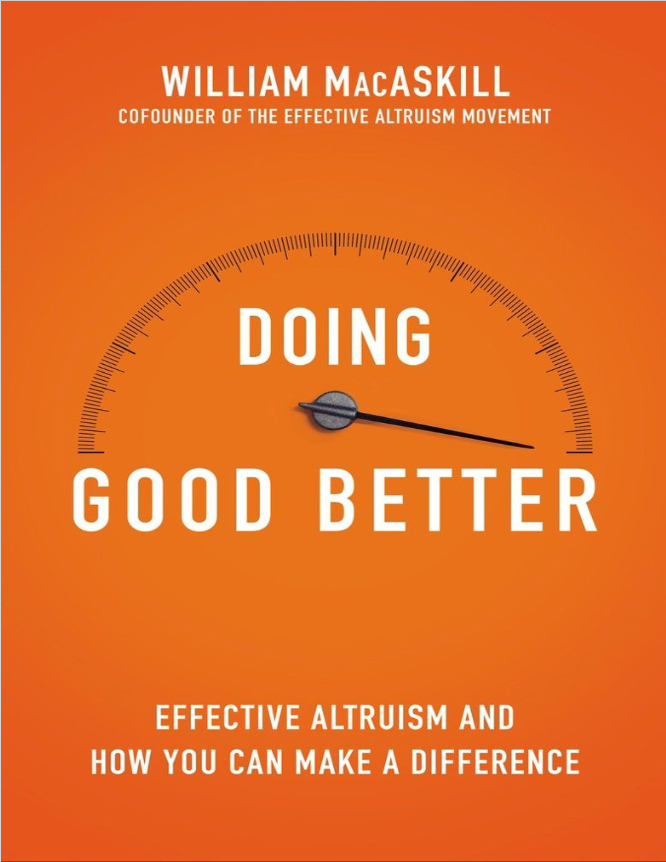
Doing Good Better: Effective Altruism and a Radical New Way to Make a Difference book pdf download

Size of file : 2.15MB
Section : Philosophy and logic
Number of Pages : 309
Department : Social sciences
Language : English
Auther : William MacAskill
book quality : Excellent
Date of Coming : 2022-09-05

Author: William MacAskill

About the Author: Will MacAskill Associate Professor in Philosophy and Research Fellow at the Global Priorities Institute, University of Oxford. My academic research focuses on the fundamentals of effective altruism – the use of evidence and reason to help others by as much as possible with our time and money, with a particular concentration on how to act given moral uncertainty.
the Director of the Forethought Foundation for Global Priorities Research, a co-founder and the President of the Centre for Effective Altruism (CEA) and I helped to create the effective altruism movement. Through Giving What We Can, CEA encourages people to commit to donate at least 10% of their income to the most effective charities. CEA also runs over 100 effective altruism local groups, hosts regular effective altruism conferences, and does research into high-impact policy and philanthropic opportunities.
also co-founded 80,000 Hours, a YCombinator-backed non-profit that provides research and advice on how you can best make a difference through your career.

About the Author:  

Doing Good Better: Effective Altruism and a Radical New Way to Make a Difference book pdf download By William MacAskill

Almost all of us want to make a difference. So we volunteer, donate to charity, recycle or try to cut down our carbon emissions. But rarely do we know how much of a difference we’re really making.
In a remarkable re-examination of the evidence, Doing Good Better reveals why buying sweatshop-produced goods benefits the poor; why cosmetic surgeons can do more good than charity workers; and why giving to a relief fund is generally not the best way to help after a natural disaster. By examining the charities you give to, the volunteering you do, the goods you buy and the career you pursue, this fascinating and often surprising guide shows how through simple actions you can improve thousands of lives – including your own.

Download PDF of Doing Good Better: Effective Altruism and a Radical New Way to Make a Difference book pdf download By William MacAskill
-Adrian Agency Library
Download Now

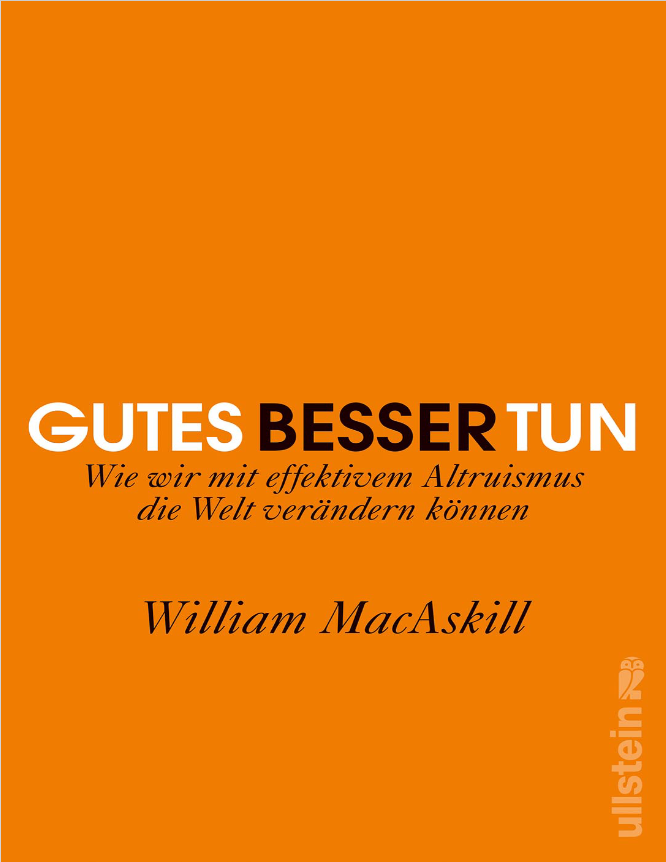
Gutes besser tun Wie wir mit effektivem Altruismus die Welt verändern können book pdf download

Department : Social sciences
Date of Coming : 2022-09-05
Number of Pages : 413
Size of file : 2.79MB
Section : Philosophy and logic
Auther : William MacAskill
book quality : Excellent
Language : German

Author: William MacAskill

About the Author: Will MacAskill Associate Professor in Philosophy and Research Fellow at the Global Priorities Institute, University of Oxford. My academic research focuses on the fundamentals of effective altruism – the use of evidence and reason to help others by as much as possible with our time and money, with a particular concentration on how to act given moral uncertainty.
the Director of the Forethought Foundation for Global Priorities Research, a co-founder and the President of the Centre for Effective Altruism (CEA) and I helped to create the effective altruism movement. Through Giving What We Can, CEA encourages people to commit to donate at least 10% of their income to the most effective charities. CEA also runs over 100 effective altruism local groups, hosts regular effective altruism conferences, and does research into high-impact policy and philanthropic opportunities.
also co-founded 80,000 Hours, a YCombinator-backed non-profit that provides research and advice on how you can best make a difference through your career.

About the Author:  

Gutes besser tun Wie wir mit effektivem Altruismus die Welt verändern können book pdf download By William MacAskill

Almost all of us want to make a difference. So we volunteer, donate to charity, recycle or try to cut down our carbon emissions. But rarely do we know how much of a difference we’re really making.
In a remarkable re-examination of the evidence, Doing Good Better reveals why buying sweatshop-produced goods benefits the poor; why cosmetic surgeons can do more good than charity workers; and why giving to a relief fund is generally not the best way to help after a natural disaster. By examining the charities you give to, the volunteering you do, the goods you buy and the career you pursue, this fascinating and often surprising guide shows how through simple actions you can improve thousands of lives – including your own.

Download PDF of Gutes besser tun Wie wir mit effektivem Altruismus die Welt verändern können book pdf download By William MacAskill
-Adrian Agency Library

Download Now

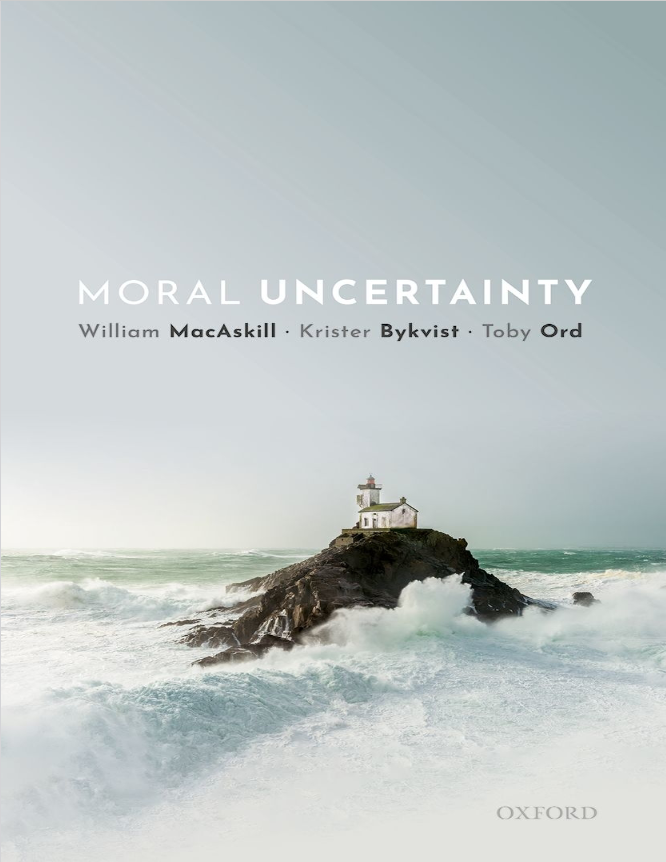
Moral Uncertainty book pdf download

book quality : Excellent
Language : English
Number of Pages : 334
Date of Coming : 2022-09-05
Size of file : 2.33MB
Department : Social sciences
Auther : William MacAskill
Section : Philosophy and logic

Author: William MacAskill

About the Author: Will MacAskill Associate Professor in Philosophy and Research Fellow at the Global Priorities Institute, University of Oxford. My academic research focuses on the fundamentals of effective altruism – the use of evidence and reason to help others by as much as possible with our time and money, with a particular concentration on how to act given moral uncertainty.
the Director of the Forethought Foundation for Global Priorities Research, a co-founder and the President of the Centre for Effective Altruism (CEA) and I helped to create the effective altruism movement. Through Giving What We Can, CEA encourages people to commit to donate at least 10% of their income to the most effective charities. CEA also runs over 100 effective altruism local groups, hosts regular effective altruism conferences, and does research into high-impact policy and philanthropic opportunities.
also co-founded 80,000 Hours, a YCombinator-backed non-profit that provides research and advice on how you can best make a difference through your career.

About the Author:  

Moral Uncertainty book pdf download By William MacAskill

This is an open access title available under the terms of a CC BY-NC-ND 4.0 International licence. It is free to read at Oxford Scholarship Online and offered as a free PDF download from OUP and selected open access locations. Very often we’re uncertain about what we ought, morally, to do. We don’t know how to weigh the interests of animals against humans, how strong our duties are to improve the lives of distant strangers, or how to think about the ethics of bringing new people into existence. But we still need to act. So how should we make decisions in the face of such uncertainty? Though economists and philosophers have extensively studied the issue of decision-making in the face of uncertainty about matters of fact, the question of decision-making given fundamental moral uncertainty has been neglected. Philosophers William MacAskill, Krister Bykvist, and Toby Ord try to fill this gap. Moral Uncertainty argues that there are distinctive norms that govern how one ought to make decisions. It defends an information-sensitive account of how to make such decisions by developing an analogy between moral uncertainty and social choice, arguing that the correct way to act in the face of moral uncertainty depends on whether the moral theories in which one has credence are merely ordinal, cardinal, or both cardinal and intertheoretically comparable. It tackles the problem of how to make intertheoretical comparisons, discussing potential solutions and the implications of their view for metaethics and practical ethics.

Download PDF of Moral Uncertainty book pdf download By William MacAskill
-Adrian Agency Library
Download Now

What We Owe the Future book pdf download

Section : Philosophy and logic
Auther : William MacAskill
Date of Coming : 2022-09-05
Number of Pages : 0
Department : Social sciences
Language : English
book quality : Excellent
Size of file : 18.0MB

Author: William MacAskill

About the Author: Will MacAskill Associate Professor in Philosophy and Research Fellow at the Global Priorities Institute, University of Oxford. My academic research focuses on the fundamentals of effective altruism – the use of evidence and reason to help others by as much as possible with our time and money, with a particular concentration on how to act given moral uncertainty.
the Director of the Forethought Foundation for Global Priorities Research, a co-founder and the President of the Centre for Effective Altruism (CEA) and I helped to create the effective altruism movement. Through Giving What We Can, CEA encourages people to commit to donate at least 10% of their income to the most effective charities. CEA also runs over 100 effective altruism local groups, hosts regular effective altruism conferences, and does research into high-impact policy and philanthropic opportunities.
also co-founded 80,000 Hours, a YCombinator-backed non-profit that provides research and advice on how you can best make a difference through your career.

About the Author:  

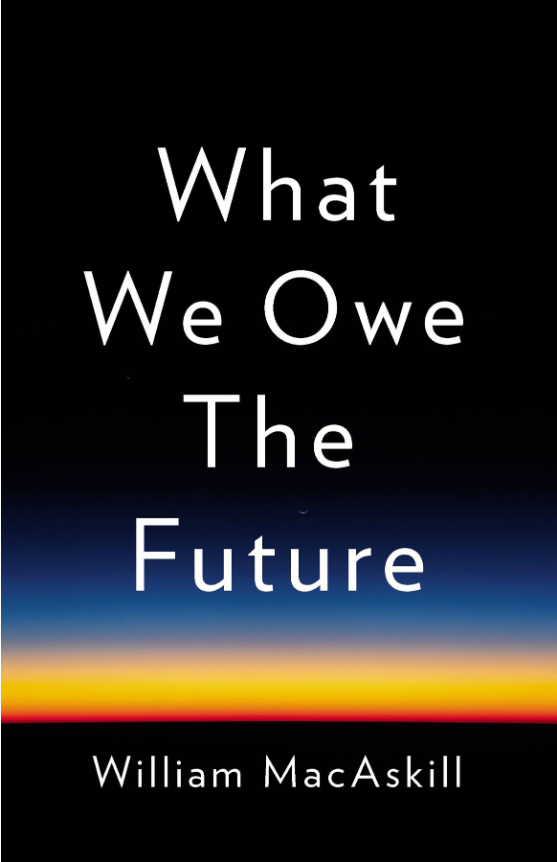
What We Owe the Future book pdf download By William MacAskill

This book will change your sense of how grand the sweep of human history could be, where you fit into it, and how much you could do to change it for the better. It’s as simple, and as ambitious, as that.” —Ezra Klein
An Oxford philosopher makes the case for “longtermism” — that positively influencing the long-term future is a key moral priority of our time.
The fate of the world is in our hands. Humanity’s written history spans only five thousand years. Our yet-unwritten future could last for millions more — or it could end tomorrow. Astonishing numbers of people
could lead lives of great happiness or unimaginable suffering, or never live at all, depending on what we choose to do today.
In What We Owe The Future, philosopher William MacAskill argues for longtermism, that idea that positively influencing the distant future is a key moral priority of our time. From this perspective, it’s not enough to reverse climate change or avert the next pandemic. We must ensure that civilization would rebound if it collapsed; counter the end of moral progress; and prepare for a planet where the smartest beings are digital, not human.
If we make wise choices today, our grandchildren’s grandchildren will thrive, knowing we did everything we could to give them a world full of justice, hope and beauty.

Download PDF of What We Owe the Future book pdf download By William MacAskill
-Adrian Agency Library

Download Now