Journey Into Philosophy: An Introduction with Classic and Contemporary Readings book pdf download

Number of Pages : 1379
Section : Philosophy and logic
Auther : Stan Baronett
Language : English
Date of Coming : 2022-08-10
Department : Social sciences
book quality : Good
Size of file : 9.65MB

Author: Stan Baronett

About the Author: Stan Baronett is Lecturer in the Philosophy Department and Honors College at the University of Nevada, Las Vegas, USA. He is the author of Logic: 5th Edition (2021) and Journey into Philosophy (2016).

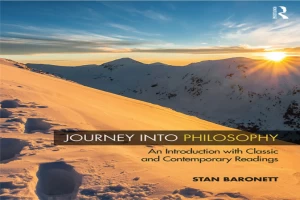
Journey Into Philosophy: An Introduction with Classic and Contemporary Readings book pdf download By Stan Baronett

The overriding rationale behind this book is a desire to enrich the lives of college students by introducing them to the practice of philosophical thought in an accessible and engaging manner. The text has over one hundred classical and contemporary readings that facilitate studying each philosophical issue from a variety of perspectives, giving instructors the opportunity to choose a set of readings that matches the individual needs of each class. It includes many selections by philosophers whose works are often ignored or underrepresented in other introductory texts. The initial reading, “The Role of Philosophy,” is a relevant, clear, and absorbing introduction to the discipline of philosophy. It uses everyday life situations to give students a solid foothold before they journey into specific philosophical topics. In addition, every section of the book has its own special introduction that connects each topic to students personal lives. The surrounding narrative is designed to be conversational and comprehensible. Special features include a section on the role of logic, and writing a philosophy paper, two useful tools for approaching and analyzing philosophical writing for students who are new to philosophy. The book is accompanied by a companion website (www.routledge.com/cw/Baronett), with many helpful features, including (for students) review questions for all readings in the book, videos, and 66 related entries taken from the student-friendlyRoutledge Encyclopedia of Philosophyand (for instructors) 2,500 questions and answers.”

Download PDF of Journey Into Philosophy: An Introduction with Classic and Contemporary Readings book pdf download By Stan Baronett
-Adrian Agency Library

Download Now

Euthyphro. Apology. Crito. Phaedo. Phaedrus book pdf download

Size of file : 30.9MB
Department : Social sciences
Section : Philosophy and logic
book quality : Good
Auther : Plato
Date of Coming : 2022-08-10
Language : English
Number of Pages : 614

Author: Plato

About the Author: Plato (428-348 BCE) was a philosopher and mathematician in ancient Greece. A student of Socrates and a teacher of Aristotle, his Academy was one of the first institutions of higher learning in the Western world. He is widely regarded as the father of modern philosophy.

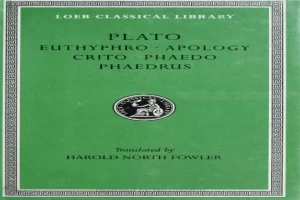
Euthyphro. Apology. Crito. Phaedo. Phaedrus book pdf download By Plato

Plato, the great philosopher of Athens, was born in 427 BCE. In early manhood an admirer of Socrates, he later founded the famous school of philosophy in the grove Academus. Much else recorded of his life is uncertain; that he left Athens for a time after Socrates’ execution is probable; that later he went to Cyrene, Egypt, and Sicily is possible; that he was wealthy is likely; that he was critical of ‘advanced’ democracy is obvious. He lived to be 80 years old. Linguistic tests including those of computer science still try to establish the order of his extant philosophical dialogues, written in splendid prose and revealing Socrates’ mind fused with Plato’s thought. In Laches, Charmides, and Lysis, Socrates and others discuss separate ethical conceptions. Protagoras, Ion, and Meno discuss whether righteousness can be taught. In Gorgias, Socrates is estranged from his city’s thought, and his fate is impending. The Apology (not a dialogue), Crito, Euthyphro, and the unforgettable Phaedo relate the trial and death of Socrates and propound the immortality of the soul. In the famous Symposium and Phaedrus, written when Socrates was still alive, we find the origin and meaning of love. Cratylus discusses the nature of language. The great masterpiece in ten books, the Republic, concerns righteousness (and involves education, equality of the sexes, the structure of society, and abolition of slavery). Of the six so-called dialectical dialogues Euthydemus deals with philosophy; metaphysical Parmenides is about general concepts and absolute being; Theaetetus reasons about the theory of knowledge. Of its sequels, Sophist deals with not-being; Politicus with good and bad statesmanship and governments; Philebus with what is good. The Timaeus seeks the origin of the visible universe out of abstract geometrical elements. The unfinished Critias treats of lost Atlantis. Unfinished also is Plato’s last work of the twelve books of Laws (Socrates is absent from it), a critical discussion of principles of law which Plato thought the Greeks might accept.

Download PDF of Euthyphro. Apology. Crito. Phaedo. Phaedrus book pdf download By Plato
-Adrian Agency Library

Download Now

Plato: Laches, Protagoras, Meno, Euthydemus book pdf download

Size of file : 15.6MB
Section : Philosophy and logic
book quality : Good
Date of Coming : 2022-08-10
Auther : Plato
Number of Pages : 548
Department : Social sciences
Language : English

Author: Plato

About the Author: Plato (428-348 BCE) was a philosopher and mathematician in ancient Greece. A student of Socrates and a teacher of Aristotle, his Academy was one of the first institutions of higher learning in the Western world. He is widely regarded as the father of modern philosophy.

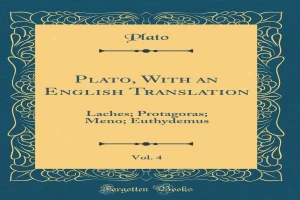
Plato: Laches, Protagoras, Meno, Euthydemus book pdf download By Plato

Plato, the great philosopher of Athens, was born in 427 BCE. In early manhood an admirer of Socrates, he later founded the famous school of philosophy in the grove Academus. Much else recorded of his life is uncertain; that he left Athens for a time after Socrates’ execution is probable; that later he went to Cyrene, Egypt, and Sicily is possible; that he was wealthy is likely; that he was critical of ‘advanced’ democracy is obvious. He lived to be 80 years old. Linguistic tests including those of computer science still try to establish the order of his extant philosophical dialogues, written in splendid prose and revealing Socrates’ mind fused with Plato’s thought. In Laches, Charmides, and Lysis, Socrates and others discuss separate ethical conceptions. Protagoras, Ion, and Meno discuss whether righteousness can be taught. In Gorgias, Socrates is estranged from his city’s thought, and his fate is impending. The Apology (not a dialogue), Crito, Euthyphro, and the unforgettable Phaedo relate the trial and death of Socrates and propound the immortality of the soul. In the famous Symposium and Phaedrus, written when Socrates was still alive, we find the origin and meaning of love. Cratylus discusses the nature of language. The great masterpiece in ten books, the Republic, concerns righteousness (and involves education, equality of the sexes, the structure of society, and abolition of slavery). Of the six so-called dialectical dialogues Euthydemus deals with philosophy; metaphysical Parmenides is about general concepts and absolute being; Theaetetus reasons about the theory of knowledge. Of its sequels, Sophist deals with not-being; Politicus with good and bad statesmanship and governments; Philebus with what is good. The Timaeus seeks the origin of the visible universe out of abstract geometrical elements. The unfinished Critias treats of lost Atlantis. Unfinished also is Plato’s last work of the twelve books of Laws (Socrates is absent from it), a critical discussion of principles of law which Plato thought the Greeks might accept. The Loeb Classical Library edition of Plato is in twelve volumes.

Download PDF of Plato: Laches, Protagoras, Meno, Euthydemus book pdf download By Plato
-Adrian Agency Library

Download Now

The Laws of Plato book pdf download

Size of file : 1.40MB
Date of Coming : 2022-08-10
Number of Pages : 218
book quality : Good
Language : English
Auther : Plato
Section : Philosophy and logic
Department : Social sciences

Author: Plato

About the Author: Plato (428-348 BCE) was a philosopher and mathematician in ancient Greece. A student of Socrates and a teacher of Aristotle, his Academy was one of the first institutions of higher learning in the Western world. He is widely regarded as the father of modern philosophy.

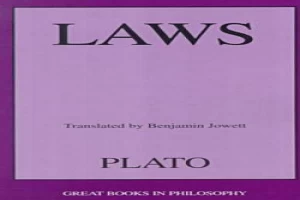
The Laws of Plato book pdf download By Plato

When one thinks of Plato and his ideas of politics, one naturally gravitates toward his best-known work, the Republic. In that book, Plato set up the ideal city-state, with classes born and bred to specific functions and roles in society, and a sense of philosophical outlook consistent across the board. However, such a society was unlikely to be brought out, in Plato’s time and, as it turned out, in any other. Plato tried at different times to persuade rulers to become his envisioned philosopher-king; the last attempt was with a tyrant of Syracuse, who in the end imprisoned Plato rather than following his directions. Plato wrote this work, ‘The Laws’, as the last of his dialogues. Its difference from the Republic is immediately apparent in the absence of Socrates as a character – Plato at the end of his life has finally taken to working in his own right and not through a proxy. Just looking at the contents will show the breadth of this work – it involves practically every aspect of civil society: legislative bodies (and Plato has some scathing commentaries on some that he has known); education and its proper role and method (including even drinking parties as part of the educational process); ideas of monarchy, democracy, and the balance of power (some American constitutional ideas were generated from a reading (and occasional misreading) of this work); civil administration; arts and sciences; military and sports training; sexual conduct; economics; criminal law, torts, and judicial process; religion and theology; civil law, property and family law; Plato even argues for the need of a ‘nocturnal council’, one that delves not only into the practical aspects of the law, but also their philosophical bases. According to translator and editor Trevor Saunders, ‘The reader of the Republic who picks up the Laws is likely to have difficulty in believing that the same person wrote both.’ Saunders speculates that Plato in his older years changed from optimism to pessimism, from idealism to realism, but that this is not all there is to the assumption, because in actual fact the transition from the Republic to the Laws involves transitioning unattainable ideals to attainable realities. Plato describes the construction of a utopian society in great detail, down to the number of citizens permitted to live in the city (5040) and the length of time foreigners might reside in the city (20 years). This shows that Plato considers politics to be an exact science (indeed, despite the inclusion of the ‘nocturnal council’, he did see his system of laws being essentially unalterable through history). Plato is not averse to the use of force and coercion to set up and maintain the utopian society. Finally, Plato sees a self-contained kind of society that is likely to become xenophobic to the extreme, with less tolerance toward its own citizens than toward those foreigners permitted to live and work in the city. Indeed, for the virtuous citizens to be free to pursue their virtue, the majority of the manual work and crafts must be done by a worker class composed of slaves or immigrant workers, or both. Plato’s Laws suffer from much greater criticism in the modern world than the Republic, in part because it is a more ‘realistic’ work, with a reality that no longer applies. However, many of his insights are worthwhile, and the overall structure of his society reflected in the Laws is worth discussion as much as is that of the Republic. One of the problems with this work vis-a-vis the Republic is its length (the Laws is considerable longer); another problem is that it lacks the dramatic reading possible from the Republic, rather the difference between a political debate and a legal seminar. Still, it is an important work, showing how Plato’s thought had shifted in his lifetime.

Download PDF of The Laws of Plato book pdf download By Plato
-Adrian Agency Library

Download Now

Phaedrus book pdf download

Number of Pages : 171
Size of file : 0.71MB
Date of Coming : 2022-08-10
Language : English
Auther : Plato
Department : Social sciences
Section : Philosophy and logic
book quality : Good

Author: Plato

About the Author: Plato (428-348 BCE) was a philosopher and mathematician in ancient Greece. A student of Socrates and a teacher of Aristotle, his Academy was one of the first institutions of higher learning in the Western world. He is widely regarded as the father of modern philosophy.

Phaedrus book pdf download By Plato

_I have heard some call this work a confused jumble of unrelated concepts. These people just didn’t get it. There is one unified theme to the Phaedrus: without a deep connection to the soul and to the higher Reality only accessible to the soul, then all human endeavors are in error._The first part of the dialogue deals with three speeches on the topic of love. This is used only as an example and is not the primary theme (though it is an extremely thorough and compelling examination of the subject.) The first speech (by Lysias) is clearly in error- it is badly composed, badly reasoned, and supports what is clearly the wrong conclusion. The second speech (by Socrates), while an impeccable model of correct rhetoric, and reaching the correct conclusion is also essentially flawed- for it makes no appeal to the deepest fundamental causes of things. Simply put, it lacks soul. The third argument (attributed to Stesichorus) however, delves deeply into the soul. In fact, the core of the argument is centered around the proof of the existence and nature of the soul. That is the consistency here- unless you are Philosopher enough to have looked deeply within your own soul, to have made contact (recollection) with ultimate Reality (Justice, Wisdom, Beauty, Temperance, etc.) then your arguments are just empty words- even if you are accidentally on the correct side._The second part of the dialogue concentrates on showing how true rhetoric is more than “empty rhetoric” (i.e. just clever arguments and tricks used to sway the masses.) True rhetoric is shown to literally be the art of influencing the soul through words. It also reads as the perfect description, and damnation, of modern politics and the legal system. No wonder Socrates was condemned to later take poison- he actually BELIEVED in Justice, Truth, and the Good. As a Philosopher he could not compromise on such things for he knew the profound damage and that it would do to his soul and to his “wings.”

Download PDF of Phaedrus book pdf download By Plato
-Adrian Agency Library

Download Now

Essays of Francis Bacon book pdf download

Number of Pages : 203
Language : English
Date of Coming : 2022-08-10
Auther : Francis Bacon
Section : Philosophy and logic
book quality : Good
Department : Social sciences
Size of file : 2.76MB

Author: Francis Bacon

About the Author: Francis Bacon: An English writer and philosopher, and one of the pioneers of modern philosophy, his philosophy caused a major scientific revolution, and went beyond Aristotelian and Aristotelian analogy. Francis Bacon was born in 1561 AD, his mother took over his education since childhood as her father was a teacher of the royal family, and was fluent in Greek, Latin, Italian, French, and has a culture and wide, as well as the teaching of theology functioning. Francis Bacon joined the University of Cambridge in 1573 AD, but quickly exited without obtaining a scientific degree; To disdain the curricula in which they are taught for relying mainly on Aristotle’s philosophy, which he considers a theoretical and useless. Bacon moved to France and mingled with all political and cultural circles, and worked in the English Embassy in Paris, then returned to England after he died and joined them. He was known for his eloquence, eloquence, and strength of argument, and he was close to Queen Elizabeth in his capacity as Chancellor of the British Crown, and for his nickname “The Queen” for his condescension. Bacon suffered a setback he lost political weight after he was stripped of his political posts on after he was accused of bribery, was jailed for four days and then received a royal pardon, and retired people Vantage at the end of his most important works, including: «the history of the reign of King Henry VII» in 1622, and six articles On the natural history, entitled “The History of the Winds”. Bacon remained devoted to his research and experiments until he died in 1626 AD of acute pneumonia as a result of exposure to severe cold during the course of the procedure.

Essays of Francis Bacon book pdf download By Francis Bacon

Essays of Francis Bacon asks: WHAT is truth? said jesting Pilate, and would not stay for an answer. Certainly there be, that delight in giddiness, and count it a bondage to fix a belief; affecting free-will in thinking, as well as in acting. And though the sects of philosophers of that kind be gone, yet there remain certain discoursing wits, which are of the same veins, though there be not so much blood in them, as was in those of the ancients.

Download PDF of Essays of Francis Bacon book pdf download By Francis Bacon
-Adrian Agency Library

Download Now

The Advancement of Learning book pdf download

Auther : Francis Bacon
Date of Coming : 2022-08-10
Section : Philosophy and logic
book quality : Good
Size of file : 0.56MB
Language : English
Number of Pages : 179
Department : Social sciences

Author: Francis Bacon

About the Author: Francis Bacon: An English writer and philosopher, and one of the pioneers of modern philosophy, his philosophy caused a major scientific revolution, and went beyond Aristotelian and Aristotelian analogy. Francis Bacon was born in 1561 AD, his mother took over his education since childhood as her father was a teacher of the royal family, and was fluent in Greek, Latin, Italian, French, and has a culture and wide, as well as the teaching of theology functioning. Francis Bacon joined the University of Cambridge in 1573 AD, but quickly exited without obtaining a scientific degree; To disdain the curricula in which they are taught for relying mainly on Aristotle’s philosophy, which he considers a theoretical and useless. Bacon moved to France and mingled with all political and cultural circles, and worked in the English Embassy in Paris, then returned to England after he died and joined them. He was known for his eloquence, eloquence, and strength of argument, and he was close to Queen Elizabeth in his capacity as Chancellor of the British Crown, and for his nickname “The Queen” for his condescension. Bacon suffered a setback he lost political weight after he was stripped of his political posts on after he was accused of bribery, was jailed for four days and then received a royal pardon, and retired people Vantage at the end of his most important works, including: «the history of the reign of King Henry VII» in 1622, and six articles On the natural history, entitled “The History of the Winds”. Bacon remained devoted to his research and experiments until he died in 1626 AD of acute pneumonia as a result of exposure to severe cold during the course of the procedure.

The Advancement of Learning book pdf download By Francis Bacon

Francis Bacon, lawyer, statesman, and philosopher, remains one of the most effectual thinkers in European intellectual history. We can trace his influence from Kant in the 1700s to Darwin a century later. The Advancement of Learning , first published in 1605, contains an unprecedented and thorough systematization of the whole range of human knowledge. Bacon’s argument that the sciences should move away from divine philosophy and embrace empirical observation would forever change the way philosophers and natural scientists interpret their world.

Download PDF of The Advancement of Learning book pdf download By Francis Bacon
-Adrian Agency Library

Download Now

Valerius Terminus: Of The Interpretation Of Nature book pdf download

Department : Social sciences
Size of file : 0.26MB
Auther : Francis Bacon
book quality : Good
Date of Coming : 2022-08-10
Language : English
Number of Pages : 95
Section : Philosophy and logic

Author: Francis Bacon

About the Author: Francis Bacon: An English writer and philosopher, and one of the pioneers of modern philosophy, his philosophy caused a major scientific revolution, and went beyond Aristotelian and Aristotelian analogy. Francis Bacon was born in 1561 AD, his mother took over his education since childhood as her father was a teacher of the royal family, and was fluent in Greek, Latin, Italian, French, and has a culture and wide, as well as the teaching of theology functioning. Francis Bacon joined the University of Cambridge in 1573 AD, but quickly exited without obtaining a scientific degree; To disdain the curricula in which they are taught for relying mainly on Aristotle’s philosophy, which he considers a theoretical and useless. Bacon moved to France and mingled with all political and cultural circles, and worked in the English Embassy in Paris, then returned to England after he died and joined them. He was known for his eloquence, eloquence, and strength of argument, and he was close to Queen Elizabeth in his capacity as Chancellor of the British Crown, and for his nickname “The Queen” for his condescension. Bacon suffered a setback he lost political weight after he was stripped of his political posts on after he was accused of bribery, was jailed for four days and then received a royal pardon, and retired people Vantage at the end of his most important works, including: «the history of the reign of King Henry VII» in 1622, and six articles On the natural history, entitled “The History of the Winds”. Bacon remained devoted to his research and experiments until he died in 1626 AD of acute pneumonia as a result of exposure to severe cold during the course of the procedure.

Valerius Terminus: Of The Interpretation Of Nature book pdf download By Francis Bacon

For as for the uttermost antiquity which is like fame that muffles her head and tells tales, I cannot presume much of it; for I would not willingly imitate the manner of those that describe maps, which when they come to some far countries whereof they have no knowledge, set down how there be great wastes and deserts there: so I am not apt to affirm that they knew little, because what they knew is little known to us.

Download PDF of Valerius Terminus: Of The Interpretation Of Nature book pdf download By Francis Bacon
-Adrian Agency Library

Download Now

The New Organon book pdf download

Department : Social sciences
Auther : Francis Bacon
Language : English
Number of Pages : 291
Size of file : 0.92MB
Date of Coming : 2022-08-10
Section : Philosophy and logic
book quality : Good

Author: Francis Bacon

About the Author: Francis Bacon: An English writer and philosopher, and one of the pioneers of modern philosophy, his philosophy caused a major scientific revolution, and went beyond Aristotelian and Aristotelian analogy. Francis Bacon was born in 1561 AD, his mother took over his education since childhood as her father was a teacher of the royal family, and was fluent in Greek, Latin, Italian, French, and has a culture and wide, as well as the teaching of theology functioning. Francis Bacon joined the University of Cambridge in 1573 AD, but quickly exited without obtaining a scientific degree; To disdain the curricula in which they are taught for relying mainly on Aristotle’s philosophy, which he considers a theoretical and useless. Bacon moved to France and mingled with all political and cultural circles, and worked in the English Embassy in Paris, then returned to England after he died and joined them. He was known for his eloquence, eloquence, and strength of argument, and he was close to Queen Elizabeth in his capacity as Chancellor of the British Crown, and for his nickname “The Queen” for his condescension. Bacon suffered a setback he lost political weight after he was stripped of his political posts on after he was accused of bribery, was jailed for four days and then received a royal pardon, and retired people Vantage at the end of his most important works, including: «the history of the reign of King Henry VII» in 1622, and six articles On the natural history, entitled “The History of the Winds”. Bacon remained devoted to his research and experiments until he died in 1626 AD of acute pneumonia as a result of exposure to severe cold during the course of the procedure.

The New Organon book pdf download By Francis Bacon

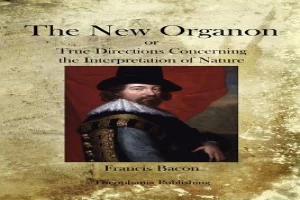
The New Organon or True Directions concerning the interpretation of Nature by Francis Bacon. The Novum Organum, full original title Novum Organum Scientiarum, is a philosophical work by Francis Bacon, written in Latin and published in 1620. The title translates as new instrument, i.e. new instrument of science. This is a reference to Aristotle’s work Organon, which was his treatise on logic and syllogism. In Novum Organum, Bacon details a new system of logic he believes to be superior to the old ways of syllogism. This is now known as the Baconian method. For Bacon, finding the essence of a thing was a simple process of reduction, and the use of inductive reasoning. In finding the cause of a phenomenal nature such as heat, one must list all of the situations where heat is found. Then another list should be drawn up, listing situations that are similar to those of the first list except for the lack of heat. A third table lists situations where heat can vary. The form nature, or cause, of heat must be that which is common to all instances in the first table, is lacking from all instances of the second table and varies by degree in instances of the third table. The title page of Novum Organum depicts a galleon passing between the mythical Pillars of Hercules that stand either side of the Strait of Gibraltar, marking the exit from the well-charted waters of the Mediterranean into the Atlantic Ocean. The Pillars, as the boundary of the Mediterranean, have been smashed through opening a new world for exploration. Bacon hopes that empirical investigation will, similarly, smash the old scientific ideas and lead to greater understanding of the world and heavens. The Latin tag across the bottom (“Multi pertransibunt & augebitur scientia”) is taken from Daniel 12:4. It means: “Many will travel and knowledge will be increased”. Those who have taken upon them to lay down the law of nature as a thing already searched out and understood, whether they have spoken in simple assurance or professional affectation, have therein done philosophy and the sciences great injury. For as they have been successful in inducing belief, so they have been effective in quenching and stopping inquiry; and have done more harm by spoiling and putting an end to other men’s efforts than good by their own. Those on the other hand who have taken a contrary course, and asserted that absolutely nothing can be known – whether it were from hatred of the ancient sophists, or from uncertainty and fluctuation of mind, or even from a kind of fullness of learning, that they fell upon this opinion – have certainly advanced reasons for it that are not to be despised; but yet they have neither started from true principles nor rested in the just conclusion, zeal and affectation having carried them much too far. The more ancient of the Greeks (whose writings are lost) took up with better judgment a position between these two extremes – between the presumption of pronouncing on everything, and the despair of comprehending anything; and though frequently and bitterly complaining of the difficulty of inquiry and the obscurity of things, and like impatient horses champing at the bit, they did not the less follow up their object and engage with nature, thinking (it seems) that this very question – viz., whether or not anything can be known – was to be settled not by arguing, but by trying. And yet they too, trusting entirely to the force of their understanding, applied no rule, but made everything turn upon hard thinking and perpetual working and exercise of the mind.

Download PDF of The New Organon book pdf download By Francis Bacon
-Adrian Agency Library

Download Now

الأسطورة والتراث book pdf download

Size of file : 87.9MB
Section : Philosophy and logic
Language : Arabic
book quality : Good
Department : Social sciences
Auther : Sayed Qimni
Date of Coming : 2022-08-10
Number of Pages : 326

Author: Sayed Qimni

About the Author: Sayyid al-Qimni: One of the most controversial thinkers; Between accusing him of infidelity and atheism on the one hand, and calculating him within the rational and enlightening trend on the other hand, the position on him fluctuates. Sayed Mahmoud Al-Qimni was born in the city of Al-Wasta in the Beni Suef Governorate in 1947 AD, and continued to study until he obtained his doctorate from the University of Southern California (and some argue about the credibility of his obtaining that degree). Al-Qimni specialized in writing about the early days of Islamic history, analyzing and criticizing a lot of its historical stations until he was threatened with assassination in 2005 AD, after being accused of blasphemy and atheism by some of his opponents. After that, Qimni opted for safety and announced his retirement from thought and writing, and later retracted his decision. Finally, after a long effort, the state appreciated him by granting him the State Appreciation Award in 2009 AD, and this was accompanied by a violent earthquake of rejection and objection. The intellectual project of Sayed Al-Qimni revolves around critiquing and sifting heritage; Where he criticized a lot of what he sees outside the scope of reason in Islamic history, so he demanded the abrogation of the verses of slaves, female slaves and the king of the oath, stressing that Muslims froze intellectually upon the death of the Prophet, considering that the current Qur’anic text, which some of the Qur’anic texts of our era used to transcend. The Messenger is a human being who makes mistakes and makes mistakes, and there is no sanctity for a person in Islam, whether it was the Messenger or his companions after him, and that Islamic history is a continuous series of blood wasted in order to build the Islamic state. Undoubtedly, this made Qimni subject to accountability, whether from the state agencies or Al-Azhar Al-Sharif. Al-Qimni’s most prominent books include: “The Wars of the Messenger’s State,” “The Hashemite Party,” and “Legend and Legacy.” Al-Qimni remains—whether we agree or disagree with him—a bold thinker who expresses his views without equivocation.

الأسطورة والتراث book pdf download By Sayed Qimni

لا شك أن إهدار التراث القديم دون بحثه، وبحث ظرفه الموضوعي، وإصدار أحكام قَبْلية عليه وعلى مَن مِنه مِن فلاسفتنا، ليس من العِلمية في شيء؛ ومِن ثَمَّ يمكننا القول: إنه بالتزام كل شروط العِلمية في البحث يمكن أن نعثر في القديم على كثير مما يفيد قِراءتنا لتراثنا وحاضرنا قراءةً صحيحة.» شكَّلَت الأسطورة وعي الإنسان في أقدم الحضارات، كما كان لها عظيم الأثر في اللاوعي الخاص به، فكانت بمثابة الكتاب الذي يُسجل كل حركة وسكنة، بل يطورها ويتطور معها، حتى تنتقل بين الحضارات واللغات للتشابه بينها رغم تعدُّدها، وتظهر وكأنما يربطها رباط واحد وجذر يضرب في عمق التاريخ قرونًا وقرونًا. والدكتور «سيد القمني» هنا بعدة بحوث تتنوَّع موضوعاتها وتتوحَّد مآربها، يضع أمامنا أساطيرنا داخل قوالبها التراثية، في دعوة صريحة لإعادة قراءتها قراءة جديدة تناسب حاضرنا؛ ولتفادي خلطٍ قد يحدث، واتهامٍ قد يُلقى جزافًا؛ فقد حدَّد الباحث نطاقًا لبحثه عن كُنه العلاقة بين الأسطورة والدين، حيث سترتكز الدراسة على «الأديان الابتدائية» دون غيرها، لتشابه ظروف ظهورها بظروف نشأة الأسطورة.

Download PDF of الأسطورة والتراث book pdf download By Sayed Qimni
-Adrian Agency Library

Download Now