The Anthropology of Religion, Magic, and Witchcraft book pdf download

Number of Pages : 285
book quality : Excellent
Size of file : 7.50MB
Date of Coming : 2022-08-10
Language : English
Department : Social sciences
Section : Anthropology
Auther : Rebecca Stein

Author: Rebecca Stein

About the Author: cultural anthropologist, and an award winning teacher, researching linkages between culture and politics in Israel in the context of the Israeli military occupation and legacy of the Palestinian dispossession. I am the author and/or editor of five books in the field of anti-colonial Israel/Palestine studies: Screen Shots: State Violence on Camera in Israel and Palestine (Stanford University Press, 2021), which studies the Israeli military occupation in the age of the global smartphone and viral image; Digital Militarism: Israel’s Occupation in the Social Media Age (co-authored with Adi Kuntsman; Stanford University Press, 2015), which studies the ways that social media has altered the Israeli relationship to its military occupation, in both state and civilian contexts; Itineraries in Conflict: Israelis, Palestinians, and the Political Lives of Tourism (Duke University Press, 2008) which considers the relationship between tourism, mobility politics, and the Israeli-Palestinian conflict; the coeditor of Palestine, Israel and the Politics of Popular Culture (Duke University Press, 2005) with Ted Swedenburg; and the co-editor of The Struggle for Sovereignty: Palestine and Israel, 1993-2005 with Joel Beinin (Stanford University Press, 2006).

The Anthropology of Religion, Magic, and Witchcraft book pdf download By Rebecca Stein

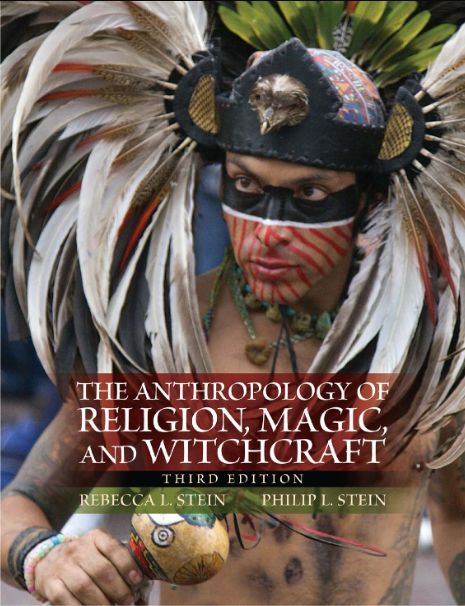
This concise introductory textbook emphasizes the major concepts of both anthropology and the anthropology of religion. It is aimed at students encountering anthropology for the first time. Reviewers describe the text as vivid, rich, user-friendly, accessible, and well-organized. The text examines religious expression from a cross-cultural perspective while incorporating key theoretical concepts. In addition to providing a basic overview of anthropology, including definition of key terms and exposure to ethnographies, the text exposes students to the varying complexity of world religions.

Download PDF of The Anthropology of Religion, Magic, and Witchcraft book pdf download By Rebecca Stein
-Adrian Agency Library

Download Now

Fragments of an Anarchist Anthropology book pdf download

Auther : David Graeber
Date of Coming : 2022-08-10
Section : Anthropology
Number of Pages : 50
book quality : Excellent
Size of file : 0.39MB
Department : Social sciences
Language : English

Author: David Graeber

About the Author: David Rolfe Graeber is a London-based anthropologist and anarchist activist, perhaps best known for his 2011 volume Debt: The First 5000 Years. He is Professor of Anthropology at the London School of Economics. As an assistant professor and associate professor of anthropology at Yale from 1998–2007 he specialised in theories of value and social theory. The university’s decision not to rehire him when he would otherwise have become eligible for tenure sparked an academic controversy, and a petition with more than 4,500 signatures. He went on to become, from 2007–13, Reader in Social Anthropology at Goldsmiths, University of London. His activism includes protests against the 3rd Summit of the Americas in Quebec City in 2001, and the 2002 World Economic Forum in New York City. Graeber was a leading figure in the Occupy Wall Street movement, and is sometimes credited with having coined the slogan, “We are the 99 percent”.

Fragments of an Anarchist Anthropology book pdf download By David Graeber

Everywhere anarchism is on the upswing as a political philosophy—everywhere, that is, except the academy. Anarchists repeatedly appeal to anthropologists for ideas about how society might be reorganized on a more egalitarian, less alienating basis. Anthropologists, terrified of being accused of romanticism, respond with silence . . . . But what if they didn’t? This pamphlet ponders what that response would be, and explores the implications of linking anthropology to anarchism. Here, David Graeber invites readers to imagine this discipline that currently only exists in the realm of possibility: anarchist anthropology.

Download PDF of Fragments of an Anarchist Anthropology book pdf download By David Graeber
-Adrian Agency Library

Download Now

Toward An Anthropological Theory of Value book pdf download

Number of Pages : 352
book quality : Excellent
Department : Social sciences
Size of file : 1.10MB
Section : Anthropology
Language : English
Date of Coming : 2022-08-10
Auther : David Graeber

Author: David Graeber

About the Author: David Rolfe Graeber is a London-based anthropologist and anarchist activist, perhaps best known for his 2011 volume Debt: The First 5000 Years. He is Professor of Anthropology at the London School of Economics. As an assistant professor and associate professor of anthropology at Yale from 1998–2007 he specialised in theories of value and social theory. The university’s decision not to rehire him when he would otherwise have become eligible for tenure sparked an academic controversy, and a petition with more than 4,500 signatures. He went on to become, from 2007–13, Reader in Social Anthropology at Goldsmiths, University of London. His activism includes protests against the 3rd Summit of the Americas in Quebec City in 2001, and the 2002 World Economic Forum in New York City. Graeber was a leading figure in the Occupy Wall Street movement, and is sometimes credited with having coined the slogan, “We are the 99 percent”.

Toward An Anthropological Theory of Value book pdf download By David Graeber

This innovative book is the first comprehensive synthesis of economic, political, and cultural theories of value. David Graeber reexamines a century of anthropological thought about value and exchange, in large measure to find a way out of quandaries in current social theory that have become critical at a time of ideological collapse in the face of Neoliberalism. Rooted in an engaged, dynamic realism, Graeber argues that projects of cultural comparison are necessarily revolutionary projects: He attempts to synthesize the best insights of Karl Marx and Marcel Mauss, who represent two extreme, but ultimately complementary, possibilities in the shape such a project might take. Graeber breathes new life into the classic anthropological texts on exchange, value, and economy. He rethinks the cases of Iroquois wampum, Pacific kula exchanges, and the Kwakiutl potlatch within the flow of world historical process, and recasts value as a model of human meaning-making that far exceeds rationalist/reductive economist paradigms.

Download PDF of Toward An Anthropological Theory of Value book pdf download By David Graeber
-Adrian Agency Library

Download Now

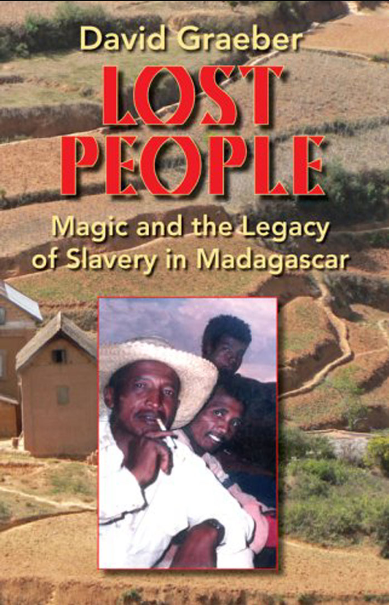
Lost People: Magic and the Legacy of Slavery in Madagascar book pdf download

Date of Coming : 2022-08-10
Auther : David Graeber
Department : Social sciences
Section : Anthropology
Language : English
Number of Pages : 50
Size of file : 2.03MB
book quality : Excellent

Author: David Graeber

About the Author: David Rolfe Graeber is a London-based anthropologist and anarchist activist, perhaps best known for his 2011 volume Debt: The First 5000 Years. He is Professor of Anthropology at the London School of Economics. As an assistant professor and associate professor of anthropology at Yale from 1998–2007 he specialised in theories of value and social theory. The university’s decision not to rehire him when he would otherwise have become eligible for tenure sparked an academic controversy, and a petition with more than 4,500 signatures. He went on to become, from 2007–13, Reader in Social Anthropology at Goldsmiths, University of London. His activism includes protests against the 3rd Summit of the Americas in Quebec City in 2001, and the 2002 World Economic Forum in New York City. Graeber was a leading figure in the Occupy Wall Street movement, and is sometimes credited with having coined the slogan, “We are the 99 percent”.

Lost People: Magic and the Legacy of Slavery in Madagascar book pdf download By David Graeber

Betafo, a rural community in central Madagascar, is divided between the descendants of nobles and descendants of slaves. Anthropologist David Graeber arrived for fieldwork at the height of tensions attributed to a disastrous communal ordeal two years earlier. As Graeber uncovers the layers of historical, social, and cultural knowledge required to understand this event, he elaborates a new view of power, inequality, and the political role of narrative. Combining theoretical subtlety, a compelling narrative line, and vividly drawn characters, Lost People is a singular contribution to the anthropology of politics and the literature on ethnographic writing.

Download PDF of Lost People: Magic and the Legacy of Slavery in Madagascar book pdf download By David Graeber
-Adrian Agency Library

Download Now

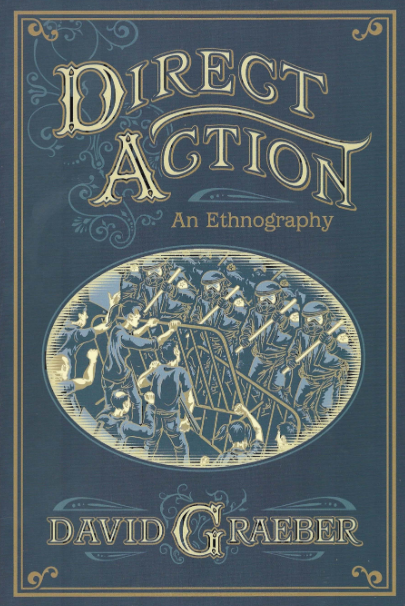
Direct Action: An Ethnography book pdf download

book quality : Excellent
Section : Anthropology
Date of Coming : 2022-08-10
Department : Social sciences
Number of Pages : 1295
Size of file : 10.5MB
Language : English
Auther : David Graeber

Author: David Graeber

About the Author: David Rolfe Graeber is a London-based anthropologist and anarchist activist, perhaps best known for his 2011 volume Debt: The First 5000 Years. He is Professor of Anthropology at the London School of Economics. As an assistant professor and associate professor of anthropology at Yale from 1998–2007 he specialised in theories of value and social theory. The university’s decision not to rehire him when he would otherwise have become eligible for tenure sparked an academic controversy, and a petition with more than 4,500 signatures. He went on to become, from 2007–13, Reader in Social Anthropology at Goldsmiths, University of London. His activism includes protests against the 3rd Summit of the Americas in Quebec City in 2001, and the 2002 World Economic Forum in New York City. Graeber was a leading figure in the Occupy Wall Street movement, and is sometimes credited with having coined the slogan, “We are the 99 percent”.

Direct Action: An Ethnography book pdf download By David Graeber

Anthropologist David Graeber undertakes the first detailed ethnographic study of the global justice movement. The case study at the center of Direct Action is the organizing and events that led to the one of the most dramatic and militant mass protests in recent years—against the Summit of the Americas in Québec City. Written in a clear, accessible style (with a minimum of academic jargon), this study brings readers behind the scenes of a movement that has changed the terms of debate about world power relations. From informal conversations in coffee shops to large “spokescouncil” planning meetings and tear gas-drenched street actions, Graeber paints a vivid and fascinating picture. Along the way, he addresses matters of deep interest to anthropologists: meeting structure and process, language, symbolism and representation, the specific rituals of activist culture, and much more. Starting from the assumption that, when dealing with possibilities of global transformation and emerging political forms, a disinterested, “objective” perspective is impossible, Graeber writes as both scholar and activist. At the same time, his experiment in the application of ethnographic methods to important ongoing political events is a serious and unique contribution to the field of anthropology, as well as an inquiry into anthropology’s political implications. David Graeber is an anthropologist and activist who teaches at the University of London. Active in numerous direct-action political organizations, he has written for Harper’s Magazine and is the author of Fragments of an Anarchist Anthropology, Towards an Anthropological Theory of Value, and Possibilities. In Oakland, California on March 24, 2015 a fire destroyed the AK Press warehouse along with several other businesses. Please consider visiting the AK Press website to learn more about the fundraiser to help them and their neighbors.

Download PDF of Direct Action: An Ethnography book pdf download By David Graeber
-Adrian Agency Library

Download Now

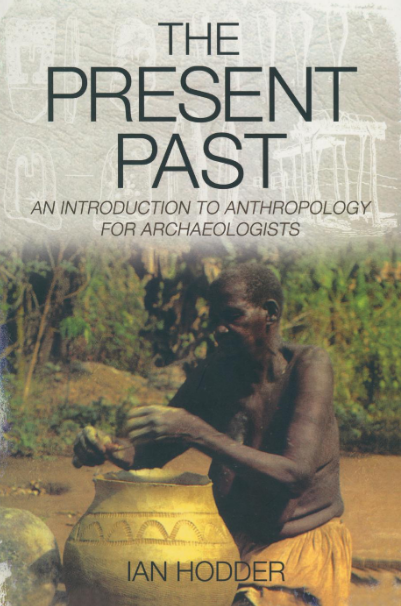
THE PRESENT PAST: An Introduction to Anthropology for Archaeologists book pdf download

Number of Pages : 240
book quality : Excellent
Language : English
Date of Coming : 2022-08-10
Section : Anthropology
Auther : Ian Hodder
Size of file : 23.3MB
Department : Social sciences

Author: Ian Hodder

About the Author: Ian Hodder is Dunleavie Family Professor of Archaeology at Stanford University. A Fellow of the British Academy, he has received numerous awards for his accomplishments, including the Oscar Montelius Medal from the Swedish Society of Antiquaries, the Huxley Memorial Medal by the Royal Anthropological Institute, the Fyssen International Prize, and the Gold Medal by the Archaeological Institute of America, along with honorary doctorates from the Bristol and Leiden Universities. Hodder is the author of numerous books, including Symbols in Action (Cambridge, 1982), Reading the Past (Cambridge, 1982), and Entangled: An Archaeology of the Relationships between Humans and Things (2012).

THE PRESENT PAST: An Introduction to Anthropology for Archaeologists book pdf download By Ian Hodder

This updated edition of Professor Ian Hodder’s original and classic work on the role which anthropology must play in the interpretation of the archaeological record.There has long been a need for archaeologists and anthropologists to correlate their ideas and methods for interpreting the material culture of past civilizations. Archaeological interpretation of the past is inevitably based on the ideas and experiences of the present and the use of such ethnographic analogy has been widely adapted – and criticized, not least in Britain.In this challenging study, Ian Hodder questions the assumptions, values and methods, which have been too readily accepted. At the same time, he shows how anthropology can be applied to archaeology. He examines the criteria for the proper use of analogy and, in particular, emphasizes the need to consider the meaning and interpretation of material cultures within the total social and cultural contexts. He discusses anthropological models of refuse deposits, technology and production, subsistence, settlement, burial, trade exchange, art form and ritual; he then considers their application to comparable archaeological data.Throughout, Professor Hodder emphasizes the need for a truly scientific approach and a critical self-awareness by archaeologists, who should be prepared to study their own social and cultural context, not least their own attitudes to the present-day material world.

Download PDF of THE PRESENT PAST: An Introduction to Anthropology for Archaeologists book pdf download By Ian Hodder
-Adrian Agency Library

Download Now

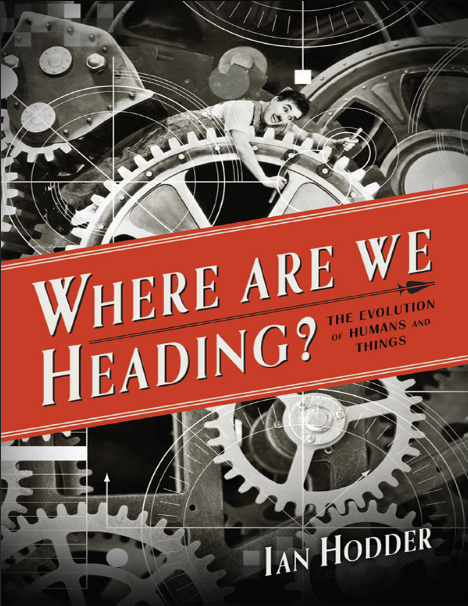
Where Are We Heading:The Evolution of Humans and Things book pdf download

Number of Pages : 182
Department : Social sciences
book quality : Excellent
Section : Anthropology
Language : English
Auther : Ian Hodder
Size of file : 4.33MB
Date of Coming : 2022-08-10

Author: Ian Hodder

About the Author: Ian Hodder is Dunleavie Family Professor of Archaeology at Stanford University. A Fellow of the British Academy, he has received numerous awards for his accomplishments, including the Oscar Montelius Medal from the Swedish Society of Antiquaries, the Huxley Memorial Medal by the Royal Anthropological Institute, the Fyssen International Prize, and the Gold Medal by the Archaeological Institute of America, along with honorary doctorates from the Bristol and Leiden Universities. Hodder is the author of numerous books, including Symbols in Action (Cambridge, 1982), Reading the Past (Cambridge, 1982), and Entangled: An Archaeology of the Relationships between Humans and Things (2012).

Where Are We Heading:The Evolution of Humans and Things book pdf download By Ian Hodder

In this engaging exploration, archaeologist Ian Hodder departs from the two prevailing modes of thought about human evolution: the older idea of constant advancement toward a civilized ideal and the newer one of a directionless process of natural selection. Instead, he proposes a theory of human evolution and history based on “entanglement,” the ever-increasing mutual dependency between humans and things. Not only do humans become dependent on things, Hodder asserts, but things become dependent on humans, requiring an endless succession of new innovations. It is this mutual dependency that creates the dominant trend in both cultural and genetic evolution. He selects a small number of cases, ranging in significance from the invention of the wheel down to Christmas tree lights, to show how entanglement has created webs of human-thing dependency that encircle the world and limit our responses to global crises.

Download PDF of Where Are We Heading:The Evolution of Humans and Things book pdf download By Ian Hodder
-Adrian Agency Library

Download Now

Religion, History, and Place in the Origin of Settled Life book pdf download

Number of Pages : 309
Language : English
Section : Anthropology
Auther : Ian Hodder
Date of Coming : 2022-08-10
Department : Social sciences
Size of file : 6.60MB
book quality : Excellent

Author: Ian Hodder

About the Author: Ian Hodder is Dunleavie Family Professor of Archaeology at Stanford University. A Fellow of the British Academy, he has received numerous awards for his accomplishments, including the Oscar Montelius Medal from the Swedish Society of Antiquaries, the Huxley Memorial Medal by the Royal Anthropological Institute, the Fyssen International Prize, and the Gold Medal by the Archaeological Institute of America, along with honorary doctorates from the Bristol and Leiden Universities. Hodder is the author of numerous books, including Symbols in Action (Cambridge, 1982), Reading the Past (Cambridge, 1982), and Entangled: An Archaeology of the Relationships between Humans and Things (2012).

Religion, History, and Place in the Origin of Settled Life book pdf download By Ian Hodder

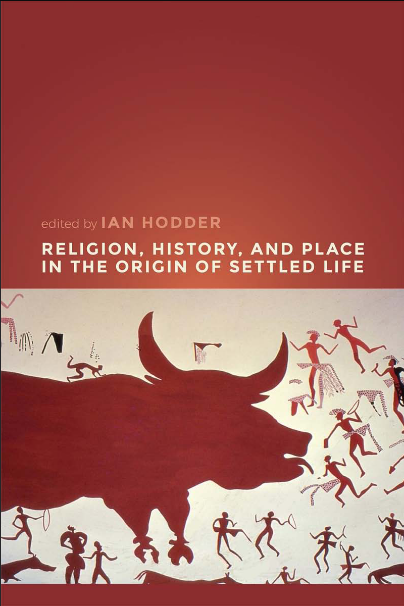
This volume explores the role of religion and ritual in the origin of settled life in the Middle East, focusing on the repetitive construction of houses or cult buildings in the same place. Prominent archaeologists, anthropologists, and scholars of religion working at several of the region’s most important sites—such as Çatalhöyük, Göbekli Tepe, Körtik Tepe, and Aşıklı Höyük—contend that religious factors significantly affected the timing and stability of settled economic structures. Contributors argue that the long-term social relationships characteristic of delayed-return agricultural systems must be based on historical ties to place and to ancestors. They define different forms of history-making, including nondiscursive routinized practices as well as commemorative memorialization. They consider the timing in the Neolithic of an emerging concern with history-making in place in relation to the adoption of farming and settled life in regional sequences. They explore whether such correlations indicate the causal processes in which history-making, ritual practices, agricultural intensification, population increase, and social competition all played a role. Religion, History, and Place in the Origin of Settled Life takes a major step forward in understanding the adoption of farming and a settled way of life in the Middle East by foregrounding the roles of history-making and religious ritual. This work is relevant to students and scholars of Near Eastern archaeology, as well as those interested in the origins of agriculture and social complexity or the social role of religion in the past.

Download PDF of Religion, History, and Place in the Origin of Settled Life book pdf download By Ian Hodder
-Adrian Agency Library

Download Now