Understanding molecules: lectures on chemistry for physicists and engineers book pdf download

Language : English
Auther : Thomas George
Date of Coming : 2022-08-10
Size of file : 13.6MB
Section : chemistry
Department : Natural Science
book quality : Good
Number of Pages : 323

Author: Thomas George

About the Author: Thomas F. George is chancellor and professor of chemistry and physics at the University of Missouri–St. Louis. As chancellor, he oversees academic and administrative operations of a university with 17,000 students, 2,500 faculty and staff, 40 academic buildings and a $200 million annual operating budget.In addition, $150 million of new capital construction, renovation and landscaping on campus took place during 2015-17. The annual amount of philanthropic contributions during his tenure as chancellor has quadrupled to over $27 million, reaching as high as $31 million in 2014.

Understanding molecules: lectures on chemistry for physicists and engineers book pdf download By Thomas George

“Chemistry is a subject that many students with differing goals have to tackle. This unique general chemistry textbook is tailored to more mathematically-oriented engineering or physics students. The authors emphasize the principles underlying chemistry rather than chemistry itself and the almost encyclopedic completeness appearing in a common textbook of general chemistry is sacrificed for an emphasis to these Read more… Abstract: “Chemistry is a subject that many students with differing goals have to tackle. This unique general chemistry textbook is tailored to more mathematically-oriented engineering or physics students. The authors emphasize the principles underlying chemistry rather than chemistry itself and the almost encyclopedic completeness appearing in a common textbook of general chemistry is sacrificed for an emphasis to these principles”

Download PDF of Understanding molecules: lectures on chemistry for physicists and engineers book pdf download By Thomas George
-Adrian Agency Library

Download Now

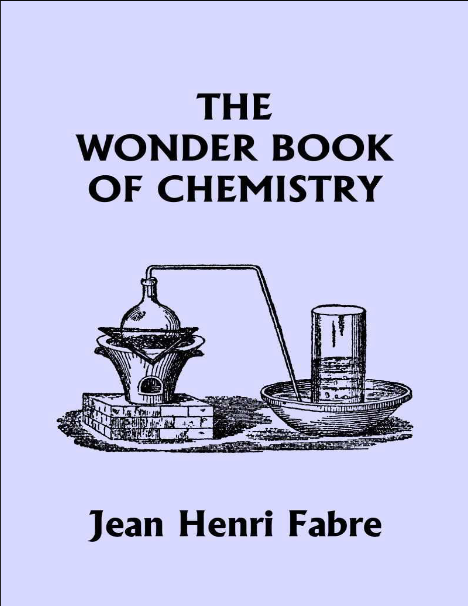
The Wonder Book of Chemistry book pdf download

Number of Pages : 389
Department : Natural Science
Date of Coming : 2022-08-10
Section : chemistry
Size of file : 4.36MB
book quality : Excellent
Language : English
Auther : Jean Henri Fabre

Author: Jean Henri Fabre

About the Author: Jean Henri Fabre, (born Dec. 22, 1823, Saint-Léons, Fr.—died Oct. 11, 1915, Sérignan-du-Comtat), French entomologist famous for his study of the anatomy and behaviour of insects. Largely self-taught, Fabre was appointed a teacher at the lycée of Carpentras, Fr. (1842), was made physics teacher at the lycée of Ajaccio, Corsica (1843–51), and was given a teaching position at the lycée of Avignon (1853). Fabre did important research on the insect orders Hymenoptera (e.g., bees and wasps), Coleoptera (e.g., beetles), and Orthoptera (e.g., grasshoppers, crickets). Based on his observations of the paralyzing actions of wasps in response to stimulating zones in their prey, he described the importance of inherited instinct as a behaviour pattern in insects. In 1866 he isolated from the madder plant a colouring substance, later identified as alizarin, which became useful as a biological stain. He wrote many books to popularize science. Although Fabre never accepted the theory of evolution, his work was respected by Darwin.

The Wonder Book of Chemistry book pdf download By Jean Henri Fabre

Starting with a mixture of iron filings and sulphur, Uncle Paul awakens in his young nephews an eagerness to learn more about the properties of the elements. Through a series of carefully-devised experiments and conversations about the experiments, he leads the boys to an understanding of some of the basic principles of chemistry. Excellent as a follow-on to “The Story Book ofScience” and “The Secret of Everyday Things” by the same author. Suitable for ages 11 and up.

Download PDF of The Wonder Book of Chemistry book pdf download By Jean Henri Fabre
-Adrian Agency Library

Download Now

The Elements : A very short introduction book pdf download

Number of Pages : 193
Size of file : 3.04MB
Date of Coming : 2022-08-10
Auther : Philip Ball
Department : Natural Science
book quality : Excellent
Section : chemistry
Language : English

Author: Philip Ball

About the Author: Philip Ball is a freelance science writer. He worked previously at Nature for over 20 years, first as an editor for physical sciences (for which his brief extended from biochemistry to quantum physics and materials science) and then as a Consultant Editor. His writings on science for the popular press have covered topical issues ranging from cosmology to the future of molecular biology. Philip is the author of many popular books on science, including works on the nature of water, pattern formation in the natural world, colour in art, the science of social and political philosophy, the cognition of music, and physics in Nazi Germany. He has written widely on the interactions between art and science, and has delivered lectures to scientific and general audiences at venues ranging from the Victoria and Albert Museum (London) to the NASA Ames Research Center, London’s National Theatre and the London School of Economics. Philip continues to write regularly for Nature. He has contributed to publications ranging from New Scientist to the New York Times, the Guardian, the Financial Times and New Statesman. He is a contributing editor of Prospect magazine (for which he writes a science blog), and also a columnist for Chemistry World, Nature Materials, and the Italian science magazine Sapere. He has broadcast on many occasions on radio and TV, and is a presenter of “Science Stories” on BBC Radio 4. He is a Fellow of the Royal Society of Chemistry, sits on the editorial board of Chemistry World and Interdiscipinary Science Reviews, and is a board member of the RESOLV network on solvation science at the Ruhr University of Bochum. Philip has a BA in Chemistry from the University of Oxford and a PhD in Physics from the University of Bristol. Philip Ball is a writer. Most of his books are concerned with science in some form or another: its history, its interactions with the arts and society, its achievements, delights and detours. He is a regular columnist for several magazines and an occasional radio presenter and broadcaster. He was an editor of Nature for many years, and long ago, a chemist and physicist of sorts.

The Elements : A very short introduction book pdf download By Philip Ball

This Very Short Introduction is an exciting and non-traditional approach to understanding the terminology, properties, and classification of chemical elements. It traces the history and cultural impact of the elements on humankind, and examines why people have long sought to identify the substances around them. The book includes chapters on particular elements such as gold, iron, and oxygen, showing how they shaped culture and technology. Looking beyond the Periodic Table, the author examines our relationship with matter, from the uncomplicated vision of the Greek philosophers, who believed there were four elements–earth, air, fire, and water–to the work of modern-day scientists in creating elements such as hassium and meitnerium. Packed with anecdotes, The Elements is a highly engaging and entertaining exploration of the fundamental question: what is the world made from?

Download PDF of The Elements : A very short introduction book pdf download By Philip Ball
-Adrian Agency Library
Download Now

Colore : Una biografia book pdf download

Size of file : 6.12MB
book quality : Excellent
Department : Natural Science
Date of Coming : 2022-08-10
Section : chemistry
Language : Italian
Number of Pages : 820
Auther : Philip Ball

Author: Philip Ball

About the Author: Philip Ball is a freelance science writer. He worked previously at Nature for over 20 years, first as an editor for physical sciences (for which his brief extended from biochemistry to quantum physics and materials science) and then as a Consultant Editor. His writings on science for the popular press have covered topical issues ranging from cosmology to the future of molecular biology. Philip is the author of many popular books on science, including works on the nature of water, pattern formation in the natural world, colour in art, the science of social and political philosophy, the cognition of music, and physics in Nazi Germany. He has written widely on the interactions between art and science, and has delivered lectures to scientific and general audiences at venues ranging from the Victoria and Albert Museum (London) to the NASA Ames Research Center, London’s National Theatre and the London School of Economics. Philip continues to write regularly for Nature. He has contributed to publications ranging from New Scientist to the New York Times, the Guardian, the Financial Times and New Statesman. He is a contributing editor of Prospect magazine (for which he writes a science blog), and also a columnist for Chemistry World, Nature Materials, and the Italian science magazine Sapere. He has broadcast on many occasions on radio and TV, and is a presenter of “Science Stories” on BBC Radio 4. He is a Fellow of the Royal Society of Chemistry, sits on the editorial board of Chemistry World and Interdiscipinary Science Reviews, and is a board member of the RESOLV network on solvation science at the Ruhr University of Bochum. Philip has a BA in Chemistry from the University of Oxford and a PhD in Physics from the University of Bristol. Philip Ball is a writer. Most of his books are concerned with science in some form or another: its history, its interactions with the arts and society, its achievements, delights and detours. He is a regular columnist for several magazines and an occasional radio presenter and broadcaster. He was an editor of Nature for many years, and long ago, a chemist and physicist of sorts.

Colore : Una biografia book pdf download By Philip Ball

In questo saggio Philip Ball racconta la storia dei colori, dai pigmenti minerali ai coloranti organici all’artificio dei prodotti della chimica. Grazie alla sua interpretazione del linguaggio cromatico, scopriamo che un particolare pigmento “parla” di sangue e clorofilla, mentre un altro rievoca lo zolfo e il mercurio degli alchimisti; impariamo le ragioni fisico-chimiche per cui il tempo ridipinge le tele; ci rendiamo conto di come spesso sia stata la quantità dei colori sulla tavolozza a limitare la creatività dei pittori, tanto che è possibile collegare la rivoluzione del Rinascimento veneziano alla disponibilità di nuovi pigmenti, e la comparsa dei prodotti chimici applicati all’industria alla nascita dell’Impressionismo.

Download PDF of Colore : Una biografia book pdf download By Philip Ball
-Adrian Agency Library

Download Now

Molecules : a Very Short Introduction book pdf download

Section : chemistry
Number of Pages : 235
Language : English
book quality : Excellent
Department : Natural Science
Date of Coming : 2022-08-10
Size of file : 1.92MB
Auther : Philip Ball

Author: Philip Ball

About the Author: Philip Ball is a freelance science writer. He worked previously at Nature for over 20 years, first as an editor for physical sciences (for which his brief extended from biochemistry to quantum physics and materials science) and then as a Consultant Editor. His writings on science for the popular press have covered topical issues ranging from cosmology to the future of molecular biology. Philip is the author of many popular books on science, including works on the nature of water, pattern formation in the natural world, colour in art, the science of social and political philosophy, the cognition of music, and physics in Nazi Germany. He has written widely on the interactions between art and science, and has delivered lectures to scientific and general audiences at venues ranging from the Victoria and Albert Museum (London) to the NASA Ames Research Center, London’s National Theatre and the London School of Economics. Philip continues to write regularly for Nature. He has contributed to publications ranging from New Scientist to the New York Times, the Guardian, the Financial Times and New Statesman. He is a contributing editor of Prospect magazine (for which he writes a science blog), and also a columnist for Chemistry World, Nature Materials, and the Italian science magazine Sapere. He has broadcast on many occasions on radio and TV, and is a presenter of “Science Stories” on BBC Radio 4. He is a Fellow of the Royal Society of Chemistry, sits on the editorial board of Chemistry World and Interdiscipinary Science Reviews, and is a board member of the RESOLV network on solvation science at the Ruhr University of Bochum. Philip has a BA in Chemistry from the University of Oxford and a PhD in Physics from the University of Bristol. Philip Ball is a writer. Most of his books are concerned with science in some form or another: its history, its interactions with the arts and society, its achievements, delights and detours. He is a regular columnist for several magazines and an occasional radio presenter and broadcaster. He was an editor of Nature for many years, and long ago, a chemist and physicist of sorts.

Molecules : a Very Short Introduction book pdf download By Philip Ball

The processes in a single living cell are akin to that of a city teeming with molecular inhabitants that move, communicate, cooperate, and compete. In this Very Short Introduction, Philip Ball explores the role of the molecule in and around us–how, for example, a single fertilized egg can grow into a multi-celled Mozart, what makes spider’s silk insoluble in the morning dew, and how this molecular dynamism is being captured in the laboratory, promising to reinvent chemistry as the central creative science of the century

Download PDF of Molecules : a Very Short Introduction book pdf download By Philip Ball
-Adrian Agency Library
Download Now

The Beauty of Chemistry book pdf download

Number of Pages : 392
book quality : Excellent
Size of file : 43.0MB
Language : English
Auther : Philip Ball
Date of Coming : 2022-08-10
Department : Natural Science
Section : chemistry

Author: Philip Ball

About the Author: Philip Ball is a freelance science writer. He worked previously at Nature for over 20 years, first as an editor for physical sciences (for which his brief extended from biochemistry to quantum physics and materials science) and then as a Consultant Editor. His writings on science for the popular press have covered topical issues ranging from cosmology to the future of molecular biology. Philip is the author of many popular books on science, including works on the nature of water, pattern formation in the natural world, colour in art, the science of social and political philosophy, the cognition of music, and physics in Nazi Germany. He has written widely on the interactions between art and science, and has delivered lectures to scientific and general audiences at venues ranging from the Victoria and Albert Museum (London) to the NASA Ames Research Center, London’s National Theatre and the London School of Economics. Philip continues to write regularly for Nature. He has contributed to publications ranging from New Scientist to the New York Times, the Guardian, the Financial Times and New Statesman. He is a contributing editor of Prospect magazine (for which he writes a science blog), and also a columnist for Chemistry World, Nature Materials, and the Italian science magazine Sapere. He has broadcast on many occasions on radio and TV, and is a presenter of “Science Stories” on BBC Radio 4. He is a Fellow of the Royal Society of Chemistry, sits on the editorial board of Chemistry World and Interdiscipinary Science Reviews, and is a board member of the RESOLV network on solvation science at the Ruhr University of Bochum. Philip has a BA in Chemistry from the University of Oxford and a PhD in Physics from the University of Bristol. Philip Ball is a writer. Most of his books are concerned with science in some form or another: its history, its interactions with the arts and society, its achievements, delights and detours. He is a regular columnist for several magazines and an occasional radio presenter and broadcaster. He was an editor of Nature for many years, and long ago, a chemist and physicist of sorts.

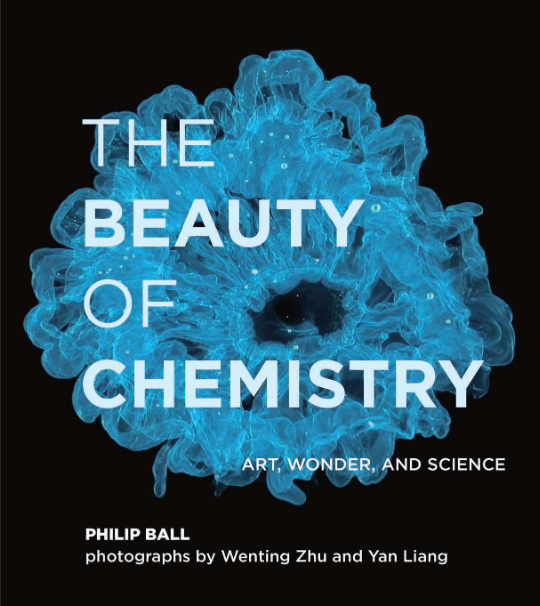
The Beauty of Chemistry book pdf download By Philip Ball

Chemistry is not just about microscopic atoms doing inscrutable things; it is the process that makes flowers and galaxies. We rely on it for bread-baking, vegetable-growing, and producing the materials of daily life. In stunning images and illuminating text, this book captures chemistry as it unfolds. Using such techniques as microphotography, time-lapse photography, and infrared thermal imaging, The Beauty of Chemistry shows us how chemistry underpins the formation of snowflakes, the science of champagne, the colors of flowers, and other wonders of nature and technology. We see the marvelous configurations of chemical gardens; the amazing transformations of evaporation, distillation, and precipitation; heat made visible; and more.

Download PDF of The Beauty of Chemistry book pdf download By Philip Ball
-Adrian Agency Library

Download Now

The Elements: A Visual History of Their Discovery book pdf download

Section : chemistry
Size of file : 47.9MB
Language : English
Department : Natural Science
Number of Pages : 225
book quality : Excellent
Auther : Philip Ball
Date of Coming : 2022-08-10

Author: Philip Ball

About the Author: Philip Ball is a freelance science writer. He worked previously at Nature for over 20 years, first as an editor for physical sciences (for which his brief extended from biochemistry to quantum physics and materials science) and then as a Consultant Editor. His writings on science for the popular press have covered topical issues ranging from cosmology to the future of molecular biology. Philip is the author of many popular books on science, including works on the nature of water, pattern formation in the natural world, colour in art, the science of social and political philosophy, the cognition of music, and physics in Nazi Germany. He has written widely on the interactions between art and science, and has delivered lectures to scientific and general audiences at venues ranging from the Victoria and Albert Museum (London) to the NASA Ames Research Center, London’s National Theatre and the London School of Economics. Philip continues to write regularly for Nature. He has contributed to publications ranging from New Scientist to the New York Times, the Guardian, the Financial Times and New Statesman. He is a contributing editor of Prospect magazine (for which he writes a science blog), and also a columnist for Chemistry World, Nature Materials, and the Italian science magazine Sapere. He has broadcast on many occasions on radio and TV, and is a presenter of “Science Stories” on BBC Radio 4. He is a Fellow of the Royal Society of Chemistry, sits on the editorial board of Chemistry World and Interdiscipinary Science Reviews, and is a board member of the RESOLV network on solvation science at the Ruhr University of Bochum. Philip has a BA in Chemistry from the University of Oxford and a PhD in Physics from the University of Bristol. Philip Ball is a writer. Most of his books are concerned with science in some form or another: its history, its interactions with the arts and society, its achievements, delights and detours. He is a regular columnist for several magazines and an occasional radio presenter and broadcaster. He was an editor of Nature for many years, and long ago, a chemist and physicist of sorts.

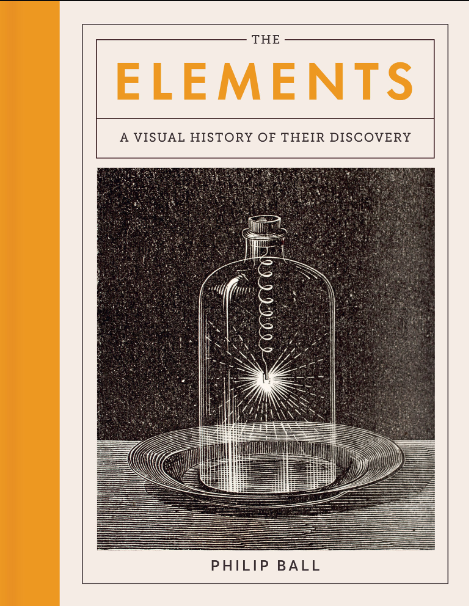
The Elements: A Visual History of Their Discovery book pdf download By Philip Ball

From water, air, and fire to tennessine and oganesson, celebrated science writer Philip Ball leads us through the full sweep of the field of chemistry in this exquisitely illustrated history of the elements. The Elements is a stunning visual journey through the discovery of the chemical building blocks of our universe. By piecing together the history of the periodic table, Ball explores not only how we have come to understand what everything is made of, but also how chemistry developed into a modern science. Ball groups the elements into chronological eras of discovery, covering seven millennia from the first known to the last named. As he moves from prehistory and classical antiquity to the age of atomic bombs and particle accelerators, Ball highlights images and stories from around the world and sheds needed light on those who struggled for their ideas to gain inclusion. By also featuring some elements that aren’t true elements but were long thought to be–from the foundational prote hyle and heavenly aetherof the ancient Greeks to more recent false elements like phlogiston and caloric–The Elements boldly tells the full history of the central science of chemistry.

Download PDF of The Elements: A Visual History of Their Discovery book pdf download By Philip Ball
-Adrian Agency Library

Download Now

Physical Chemistry for the Life Sciences book pdf download

Department : Natural Science
Section : chemistry
Number of Pages : 209
Size of file : 3.08MB
Language : English
Auther : Peter William Atkins
Date of Coming : 2022-08-10
book quality : Excellent

Author: Peter William Atkins

About the Author: Peter William Atkins (born 10 August 1940) is an English chemist and former Professor of Chemistry at the University of Oxford and a Fellow of Lincoln College. He is a prolific writer of popular chemistry textbooks, including Physical Chemistry, Inorganic Chemistry, and Molecular Quantum Mechanics.

Physical Chemistry for the Life Sciences book pdf download By Peter William Atkins

With its flexible organization, Physical Chemistry for the Life Sciences is the perfect fit for today’s life science students, allowing the instructors to present material from either a biochemistry or physical chemistry perspective, depending on the goals of their course.

Download PDF of Physical Chemistry for the Life Sciences book pdf download By Peter William Atkins
-Adrian Agency Library

Download Now

Elements of Physical Chemistry book pdf download

Language : English
Section : chemistry
Size of file : 26.2MB
Date of Coming : 2022-08-10
Number of Pages : 50
Department : Natural Science
Auther : Peter William Atkins
book quality : Excellent

Author: Peter William Atkins

About the Author: Peter William Atkins (born 10 August 1940) is an English chemist and former Professor of Chemistry at the University of Oxford and a Fellow of Lincoln College. He is a prolific writer of popular chemistry textbooks, including Physical Chemistry, Inorganic Chemistry, and Molecular Quantum Mechanics.

Elements of Physical Chemistry book pdf download By Peter William Atkins

With its emphasis on physical principles, careful exposition of essential mathematics, and helpful pedagogy, Elements of Physical Chemistry is the ideal text for the one-semester physical chemistry course. The new edition offers even more student and instructor support, now in a beautiful full-color presentation.

Download PDF of Elements of Physical Chemistry book pdf download By Peter William Atkins
-Adrian Agency Library

Download Now

Shriver & Atkins’ Inorganic Chemistry book pdf download

Section : chemistry
Date of Coming : 2022-08-10
Department : Natural Science
book quality : Excellent
Size of file : 30.6MB
Auther : Peter William Atkins
Number of Pages : 50
Language : English

Author: Peter William Atkins

About the Author: Peter William Atkins (born 10 August 1940) is an English chemist and former Professor of Chemistry at the University of Oxford and a Fellow of Lincoln College. He is a prolific writer of popular chemistry textbooks, including Physical Chemistry, Inorganic Chemistry, and Molecular Quantum Mechanics.

Shriver & Atkins’ Inorganic Chemistry book pdf download By Peter William Atkins

This edition represents an integral part of a student’s chemistry education. Its unique ‘Frontiers’ chapters cover materials science, nanotechnology, catalysis, and biological inorganic chemistry, and have been fully updated to reflect advances in these key areas of contemporary research and industrial application.

Download PDF of Shriver & Atkins’ Inorganic Chemistry book pdf download By Peter William Atkins
-Adrian Agency Library

Download Now