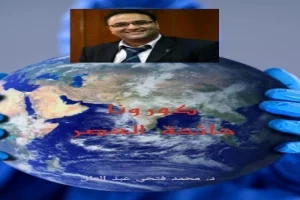
جائحة العصر book pdf download

Number of Pages : 45
book quality : Good
Size of file : 0.67MB
Section : General Medicine
Date of Coming : 2022-08-10
Auther : Mohamed Fathy Abdel Aal
Department : Medicine
Language : Arabic

Author: Mohamed Fathy Abdel Aal

About the Author: Egyptian writer and researcher Pharmacist and MSc in Biochemistry, Postgraduate Diploma from the Higher Institute of Islamic Studies, Diploma in Total Quality Management.

جائحة العصر book pdf download By Mohamed Fathy Abdel Aal

تحميل كتاب جائحة العصر

Download PDF of جائحة العصر book pdf download By Mohamed Fathy Abdel Aal
-Adrian Agency Library

Download Now

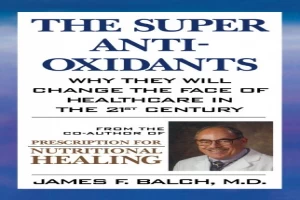
The Super Anti-Oxidants book pdf download

Number of Pages : 342
Date of Coming : 2022-08-10
book quality : Good
Size of file : 2.23MB
Auther : James F. Balch
Section : General Medicine
Department : Medicine
Language : English

Author: James F. Balch

About the Author: A physician of 30 years, James Balch, MD, is the author of The Super Antioxidants and co-author of the best-selling Prescription for Nutritional Healing and Prescription for Dietary Wellness. Balch is a member of the American Medical Association and a fellow of the American College of Surgeons.

The Super Anti-Oxidants book pdf download By James F. Balch

This book provides detailed information about various illnesses and how they can be prevented or cured through the use of anti-oxidants.

Download PDF of The Super Anti-Oxidants book pdf download By James F. Balch
-Adrian Agency Library

Download Now

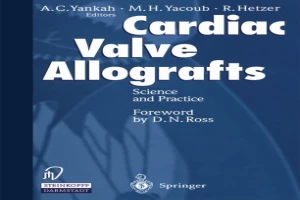
Cardiac Valve Allografts: Science and Practice book pdf download

Language : English
Section : General Medicine
Auther : Magdi Yacoub
Number of Pages : 378
Date of Coming : 2022-08-10
Size of file : 14.7MB
book quality : Good
Department : Medicine

Author: Magdi Yacoub

About the Author: Sir Magdi Habib Yacoub (born 16 November 1935) is an Egyptian-British professor and eminent cardiac surgeon. She was born in Belbeis, Sharkia Governorate, Egypt, to a Coptic Orthodox family, and her origins are from Minya. He studied medicine at Cairo University, educated in Chicago, then moved to Britain in 1962 to work at Chest Hospital in London, then became a specialist in heart and lung surgery at Harfield Hospital (from 1969 to 2001), and director of the Department of Scientific Research and Education (since 1992). He was appointed professor at the National Heart and Lung Institute in 1986, and has been developing heart transplant techniques since 1967. In 1980 he performed a heart transplant on Drake Morris, who became the longest-lived European heart transplant patient until his death in July 2005. Among the The celebrity who underwent his operations was the British comedian Eric Morecambe, who was knighted by Queen Elizabeth II in 1966, and he is called in the British media the title of “King of Hearts”. In 2001, at the age of 65, he retired from surgery and continued as a consultant and theorist for organ transplants. In 2006, Dr. Magdi Yacoub cut his retirement from operations to lead a complex operation that required the removal of a transplanted heart in a patient after her natural heart was healed, as the normal heart of the sick child was still removed during the previous transplant, which was carried out by Sir Magdi Yacoub. He received the fellowship of the Royal College of Surgeons in London, and received titles and decorations from the largest universities around the world, such as: Brunel University, Cardiff University, Loughborough University, Middlesex University (British universities), as well as from Lund University in Sweden. He has honorary chairs at the University of Lahore, Pakistan, and the University of Siena, Italy.

Cardiac Valve Allografts: Science and Practice book pdf download By Magdi Yacoub

CARDIAC VALVE ALLOGRAFTS (HOMOGRAFTS) highlights the current controversy about freehand subcoronary aortic valve and rootreplacement with regard to postoperative morbidity and long term durability. It discusses particular implantation techniques of preference in young patients and in different root pathology. Other chapters address intermediate- and long-term results on cardiac valve and vascular homografts for treating complicating cardiac valve and aortic infections. The chapter on basic science additionally makes this book a highly authoritative reference source for cardiac surgeons, physicians and scientists.

Download PDF of Cardiac Valve Allografts: Science and Practice book pdf download By Magdi Yacoub
-Adrian Agency Library

Download Now

Lung Transplantation book pdf download

Language : English
Date of Coming : 2022-08-10
Department : Medicine
Size of file : 15.8MB
Auther : Magdi Yacoub
book quality : Good
Section : General Medicine
Number of Pages : 50

Author: Magdi Yacoub

About the Author: Sir Magdi Habib Yacoub (born 16 November 1935) is an Egyptian-British professor and eminent cardiac surgeon. She was born in Belbeis, Sharkia Governorate, Egypt, to a Coptic Orthodox family, and her origins are from Minya. He studied medicine at Cairo University, educated in Chicago, then moved to Britain in 1962 to work at Chest Hospital in London, then became a specialist in heart and lung surgery at Harfield Hospital (from 1969 to 2001), and director of the Department of Scientific Research and Education (since 1992). He was appointed professor at the National Heart and Lung Institute in 1986, and has been developing heart transplant techniques since 1967. In 1980 he performed a heart transplant on Drake Morris, who became the longest-lived European heart transplant patient until his death in July 2005. Among the The celebrity who underwent his operations was the British comedian Eric Morecambe, who was knighted by Queen Elizabeth II in 1966, and he is called in the British media the title of “King of Hearts”. In 2001, at the age of 65, he retired from surgery and continued as a consultant and theorist for organ transplants. In 2006, Dr. Magdi Yacoub cut his retirement from operations to lead a complex operation that required the removal of a transplanted heart in a patient after her natural heart was healed, as the normal heart of the sick child was still removed during the previous transplant, which was carried out by Sir Magdi Yacoub. He received the fellowship of the Royal College of Surgeons in London, and received titles and decorations from the largest universities around the world, such as: Brunel University, Cardiff University, Loughborough University, Middlesex University (British universities), as well as from Lund University in Sweden. He has honorary chairs at the University of Lahore, Pakistan, and the University of Siena, Italy.

Lung Transplantation book pdf download By Magdi Yacoub

vides a detailed account of the principles and practice of contemporary lung transplantation. An accomplished, international team of contributing authors have combined their expertise to provide scientific developments and clinical knowledge based on their extensive experience. The book covers pulmonary vascular and parenchymal lung disease, which necessitate transplantation, together with all aspects of the multidisciplinary management of lung transplant patients. It concludes by looking at future developments in the treatment of advanced respiratory failure. This multidisciplinary approach makes the publication suitable for several subspecialities in addition to pulmonary medicine and lung transplantation, including haematology, radiology and clinical psychology. It will serve as a valuable source of reference and practical information for medical specialists in transplantation and all those working in thoracic organ transplant units.

Download PDF of Lung Transplantation book pdf download By Magdi Yacoub
-Adrian Agency Library

Download Now

Lung Biology in Health & Disease Volume 170 Disease Markers in Exhaled Breath book pdf download

Auther : Magdi Yacoub
book quality : Good
Language : English
Number of Pages : 545
Section : General Medicine
Department : Medicine
Date of Coming : 2022-08-10
Size of file : 2.69MB

Author: Magdi Yacoub

About the Author: Sir Magdi Habib Yacoub (born 16 November 1935) is an Egyptian-British professor and eminent cardiac surgeon. She was born in Belbeis, Sharkia Governorate, Egypt, to a Coptic Orthodox family, and her origins are from Minya. He studied medicine at Cairo University, educated in Chicago, then moved to Britain in 1962 to work at Chest Hospital in London, then became a specialist in heart and lung surgery at Harfield Hospital (from 1969 to 2001), and director of the Department of Scientific Research and Education (since 1992). He was appointed professor at the National Heart and Lung Institute in 1986, and has been developing heart transplant techniques since 1967. In 1980 he performed a heart transplant on Drake Morris, who became the longest-lived European heart transplant patient until his death in July 2005. Among the The celebrity who underwent his operations was the British comedian Eric Morecambe, who was knighted by Queen Elizabeth II in 1966, and he is called in the British media the title of “King of Hearts”. In 2001, at the age of 65, he retired from surgery and continued as a consultant and theorist for organ transplants. In 2006, Dr. Magdi Yacoub cut his retirement from operations to lead a complex operation that required the removal of a transplanted heart in a patient after her natural heart was healed, as the normal heart of the sick child was still removed during the previous transplant, which was carried out by Sir Magdi Yacoub. He received the fellowship of the Royal College of Surgeons in London, and received titles and decorations from the largest universities around the world, such as: Brunel University, Cardiff University, Loughborough University, Middlesex University (British universities), as well as from Lund University in Sweden. He has honorary chairs at the University of Lahore, Pakistan, and the University of Siena, Italy.

Lung Biology in Health & Disease Volume 170 Disease Markers in Exhaled Breath book pdf download By Magdi Yacoub

With nearly 1700 references, Disease Markers in Exhaled Breath is essential reading for pulmonologists; anesthesiologists; physiologists; chest, pulmonary, thoracic, and cardiovascular physicians and surgeons; asthmologists; and upper-level undergraduate, graduate, and medical school students in these disciplines. It discusses the potential diagnostic value of markers in several disorders including cancer, asthma, transplant rejection, and heart disease.

Download PDF of Lung Biology in Health & Disease Volume 170 Disease Markers in Exhaled Breath book pdf download By Magdi Yacoub
-Adrian Agency Library

Download Now

Cardiac Valve Allografts 1962–1987: Current Concepts on the Use of Aortic and Pulmonary Allografts for Heart Valve Subsitutes book pdf download

Section : General Medicine
Department : Medicine
Language : English
Number of Pages : 385
book quality : Good
Size of file : 24.5MB
Auther : Magdi Yacoub
Date of Coming : 2022-08-10

Author: Magdi Yacoub

About the Author: Sir Magdi Habib Yacoub (born 16 November 1935) is an Egyptian-British professor and eminent cardiac surgeon. She was born in Belbeis, Sharkia Governorate, Egypt, to a Coptic Orthodox family, and her origins are from Minya. He studied medicine at Cairo University, educated in Chicago, then moved to Britain in 1962 to work at Chest Hospital in London, then became a specialist in heart and lung surgery at Harfield Hospital (from 1969 to 2001), and director of the Department of Scientific Research and Education (since 1992). He was appointed professor at the National Heart and Lung Institute in 1986, and has been developing heart transplant techniques since 1967. In 1980 he performed a heart transplant on Drake Morris, who became the longest-lived European heart transplant patient until his death in July 2005. Among the The celebrity who underwent his operations was the British comedian Eric Morecambe, who was knighted by Queen Elizabeth II in 1966, and he is called in the British media the title of “King of Hearts”. In 2001, at the age of 65, he retired from surgery and continued as a consultant and theorist for organ transplants. In 2006, Dr. Magdi Yacoub cut his retirement from operations to lead a complex operation that required the removal of a transplanted heart in a patient after her natural heart was healed, as the normal heart of the sick child was still removed during the previous transplant, which was carried out by Sir Magdi Yacoub. He received the fellowship of the Royal College of Surgeons in London, and received titles and decorations from the largest universities around the world, such as: Brunel University, Cardiff University, Loughborough University, Middlesex University (British universities), as well as from Lund University in Sweden. He has honorary chairs at the University of Lahore, Pakistan, and the University of Siena, Italy.

Cardiac Valve Allografts 1962–1987: Current Concepts on the Use of Aortic and Pulmonary Allografts for Heart Valve Subsitutes book pdf download By Magdi Yacoub

It was the genius of Gordon Murray in Toronto that introduced the use of allografts into cardiac surgery in the 1950s. Soon after this on opposite sides ofthe world, Sir Brian Barratt-Boyes in Auckland, New Zealand, and Mr. Donald Ross in London, undertook to use allografts for the replacement of diseased aortic valves. Since that time the global interest in allografts has been patchy, episodic, and without a con­ sensus. Nonetheless, for the last 20 years at least three groups in the world have steadfastly pursued the development of new and relevant information concerning the use of allograft valves in humans. These are the centres of Sir Brian Barratt­ Boyes, Mr. Donald Ross, and Mark O’Brien in Brisbane. More recently, talented investigators, including Drs. Yankah, Yacoub, and others, have been developing information concerning the immunological aspects of the use of allografts, as well as their clinical use. No doubt, at present, cardiac valve allografts of one sort or another are the devices of choice for conduits and have an important place in the surgery of aortic valve replacement. Even so, in the mind of this writer at least, the future usefulness of allografts for the replacement of diseased cardiac valves and conduits between a ventricle and the pulmonary artery, remains problematic, and depends upon improvements in other devices for this purpose and upon improve­ ments that may be made in preparing and using allografts.

Download PDF of Cardiac Valve Allografts 1962–1987: Current Concepts on the Use of Aortic and Pulmonary Allografts for Heart Valve Subsitutes book pdf download By Magdi Yacoub
-Adrian Agency Library

Download Now

السرطان: مقدمة قصيرة جدًّا book pdf download

Section : General Medicine
Number of Pages : 142
book quality : Good
Size of file : 10.8MB
Date of Coming : 2022-08-10
Auther : Nick James
Department : Medicine
Language : Arabic

Author: Nick James

About the Author: Professor of Oncology at the University of Birmingham, UK and Queen Elizabeth Hospital in Birmingham, and is currently working on an important study examining the importance of using hormone therapy for prostate cancer. Professor James holds degrees in Medicine and Immunology from University College London and a Ph.D. from Imperial College in Cell Cycle Biology. He received postgraduate training in London, Brussels and Tokyo and is a Fellow of the Royal Colleges of Radiologists and Physicians. His work focuses on evaluating and improving clinical trials to achieve better patient outcomes. It evaluates new treatment approaches for both bladder and prostate cancer through large, multicenter clinical trials and actively collaborates with laboratory groups to explore the underlying mechanisms at play in trials. Clinical trials are the ultimate means of translating scientific advances into real gains in patient survival, or improvements in related outcomes such as prevention of unpleasant complications. It requires the cooperation of many (often thousands) of participants, both as patients and in the clinical teams that recruit and run the studies. Thus, good design is the key to optimizing the conduct of experiments to increase the return on investment.

السرطان: مقدمة قصيرة جدًّا book pdf download By Nick James

يصاب عشرة ملايين شخص في العالم كل عام بالسرطان … ومن بين هؤلاء يلقى ٨٠ بالمائة حتفهم من جراء المرض، وهي النسبة التي تمثل ١ من بين كل ٦ وفيات في العالم. وبالرغم مما تقدمه الأبحاث في هذا المجال من تطور هائل في نطاق الخيارات المتاحة أمام مرضى السرطان، فسبل العلاج الجديدة التي تتمخض عنها جهود الباحثين تفرض تحديات جِسامًا على نظم الرعاية الصحية بشأن توفير مبالغ هائلة من الأموال لتغطية النفقات اللازمة لأعداد المرضى. وفي هذه «المقدمة القصيرة جدًّا»، يتناول نيكولاس جيمس الحقائق وراء هذه المشكلات المادية، عارضًا الأساليب المُتبَعة في تشخيص المرض، والتحسينات المستمرة التي تشهدها تقنيات العلاج وتؤدي إلى تحسين معدلات الشفاء وتحسين جودة الحياة لمن يعانون منه. يعرض الكتاب أيضًا القضايا المتعلقة بالتكاليف الباهظة لتطوير العقاقير، ملقيًا بالضوء على ما يمكن فعله للحد من احتمالات الإصابة بالسرطان، فضلًا عن عرض لدور الطب البديل والتكميلي في الأمر.

Download PDF of السرطان: مقدمة قصيرة جدًّا book pdf download By Nick James
-Adrian Agency Library

Download Now

Cancer book pdf download

Department : Medicine
Auther : Nick James
Language : English
Section : General Medicine
book quality : Good
Size of file : 1.34MB
Date of Coming : 2022-08-10
Number of Pages : 177

Author: Nick James

About the Author: Professor of Oncology at the University of Birmingham, UK and Queen Elizabeth Hospital in Birmingham, and is currently working on an important study examining the importance of using hormone therapy for prostate cancer. Professor James holds degrees in Medicine and Immunology from University College London and a Ph.D. from Imperial College in Cell Cycle Biology. He received postgraduate training in London, Brussels and Tokyo and is a Fellow of the Royal Colleges of Radiologists and Physicians. His work focuses on evaluating and improving clinical trials to achieve better patient outcomes. It evaluates new treatment approaches for both bladder and prostate cancer through large, multicenter clinical trials and actively collaborates with laboratory groups to explore the underlying mechanisms at play in trials. Clinical trials are the ultimate means of translating scientific advances into real gains in patient survival, or improvements in related outcomes such as prevention of unpleasant complications. It requires the cooperation of many (often thousands) of participants, both as patients and in the clinical teams that recruit and run the studies. Thus, good design is the key to optimizing the conduct of experiments to increase the return on investment.

Cancer book pdf download By Nick James

Cancer is a problem that touches virtually everyone either directly or indirectly. As one of the biggest killers in the Western world it is feared by many people. In this Very Short Introduction, Nick James examines the trends and treatment of cancer, looking at efforts to develop treatments, research into cures, and the future of cancer care.

Download PDF of Cancer book pdf download By Nick James
-Adrian Agency Library

Download Now

Methods in Mind book pdf download

Auther : Michael Gazzaniga
Section : General Medicine
Department : Medicine
Size of file : 3.36MB
Number of Pages : 395
Date of Coming : 2022-08-10
book quality : Good
Language : English

Author: Michael Gazzaniga

About the Author: Michael S. Gazzaniga (born December 12, 1939) is a professor of psychology at the University of California, Santa Barbara in the USA, where he heads the new SAGE Center for the Study of the Mind. He is one of the leading researchers in cognitive neuroscience, the study of the neural basis of mind. He is a member of the American Academy of Arts & Sciences, the Institute of Medicine, and the National Academy of Sciences.

Methods in Mind book pdf download By Michael Gazzaniga

The evolution of cognitive neuroscience has been spurred by the development of increasingly sophisticated investigative techniques to study human cognition. In Methods in Mind , experts examine the wide variety of tools available to cognitive neuroscientists, paying particular attention to the ways in which different methods can be integrated to strengthen empirical findings and how innovative uses for established techniques can be developed. The book will be a uniquely valuable resource for the researcher seeking to expand his or her repertoire of investigative techniques. Each chapter explores a different approach. These include transcranial magnetic stimulation, cognitive neuropsychiatry, lesion studies in nonhuman primates, computational modeling, psychophysiology, single neurons and primate behavior, grid computing, eye movements, fMRI, electroencephalography, imaging genetics, magnetoencephalography, neuropharmacology, and neuroendocrinology. As mandated, authors focus on convergence and innovation in their fields; chapters highlight such cross-method innovations as the use of the fMRI signal to constrain magnetoencephalography, the use of electroencephalography (EEG) to guide rapid transcranial magnetic stimulation at a specific frequency, and the successful integration of neuroimaging and genetic analysis. Computational approaches depend on increased computing power, and one chapter describes the use of distributed or grid computing to analyze massive datasets in cyberspace. Each chapter author is a leading authority in the technique discussed. Contributors: Peyman Adjamian, Peter A. Bandettini, Mark Baxter, Anthony S. David, James Dobson, Ian Foster, Michael Gazzaniga, Dietmar G. Heinke, Stephen Hall, John M. Henderson, Glyn W. Humphreys, Andreas Meyer-Lindenburg, Venkata Mattay, Elisabeth A. Murray, Gina Rippon, Tamara Russell, Carl Senior, Philip Shaw, Krish D. Singh, Marc A. Sommer, Lauren Stewart, John D. Van Horn, Jens Voeckler, Vincent Walsh, Daniel R. Weinberger, Michael Wilde, Jeffrey Woodward, Robert H. Wurtz, Eun Young Yoon, Yong Zhao

Download PDF of Methods in Mind book pdf download By Michael Gazzaniga
-Adrian Agency Library

Download Now

Human: The Science Behind What Makes Us Unique book pdf download

Department : Medicine
Language : English
Size of file : 5.00MB
Number of Pages : 460
book quality : Good
Date of Coming : 2022-08-10
Auther : Michael Gazzaniga
Section : General Medicine

Author: Michael Gazzaniga

About the Author: Michael S. Gazzaniga (born December 12, 1939) is a professor of psychology at the University of California, Santa Barbara in the USA, where he heads the new SAGE Center for the Study of the Mind. He is one of the leading researchers in cognitive neuroscience, the study of the neural basis of mind. He is a member of the American Academy of Arts & Sciences, the Institute of Medicine, and the National Academy of Sciences.

Human: The Science Behind What Makes Us Unique book pdf download By Michael Gazzaniga

In Human, Dr. Michael S. Gazzaniga provides us with a detailed (almost to a fault at times) examination of the human brain. Although I wouldn’t recommend it for anyone without at least rudimentary knowledge of brain anatomy and function, it provides an enlightening and humbling look at just what exists inside our heads that makes us so dramatically different from every other species on Earth. My tendency to devour science fiction books while pretty much ignoring the world of non-fiction had me apprehensive about reading such a lengthy and in depth work of legitimate science, but I found myself pleasantly surprised (and at times enthralled) by the many facets of this book and how well they blend together. Gazzaniga has mastered the art of keeping lengthy anatomical dissertations interesting by linking them with thought-provoking experiments and case-studies, all the while inserting chuckle-inducing one-liners and quips. The book is laid out in four parts, with each part being around 100 pages long and consisting of two to three chapters apiece. Within the chapters are titled subsections that help keep the countless ideas and transitions neatly organized. Footnotes and citations abound throughout the book, and the last fifty or so pages consist of bibliographical notes and an index. The first of the four parts is called The Basics of Human Life, which begins with Chapter 1: Are Human Brains Unique? In this chapter, Gazzaniga begins with a discussion of the basic anatomy of the brain, including size, regions and structures. He explains lateralization and cortical columns in a fair amount of detail, and begins showing how the human brain is physically different from the brains of other primates. This chapter may seem boring for readers, but it provides a good introduction to the human brain which is necessary for understanding the later observations of the book. The next chapter begs the question of whether a chimp would be a good date, and it begins to delve deeper into the mental capacity and characteristics exhibited by humans and other primates. Gazzaniga immediately discusses the tendency of humans to personify other animals, and cautions against using that tendency to interpret the actions of chimpanzees and other animals in lieu of a purely scientific approach. He briefly touches on the genomic differences between humans and chimps before beginning a discussion on the physical similarities and differences between the two species, and how each species came to evolve these characteristics. The discussion soon leads to mental differences, including the use of language and theory of mind. Gazzaniga describes the areas of the brain responsible for these characteristics, and how the relative size of these regions differs greatly between the two species. Gazzaniga concludes that “a day spent with [a chimpanzee] would be very interesting,” but he would “prefer more culture” (75). Part 2 – Navigating the Social World – begins with a chapter called Big Brains and Expanding Social Relationships. In this chapter, Gazzaniga discusses the evolutionary origins and positive selection of social groups. The discussions regarding the evolutionary benefits and origins of gossip and intentional lying were particularly interesting and humorous. The next chapter highlights the presence of morals in human culture and how our brain incorporates both moral inclinations and rational thought into the decision making process. An in depth illustration of the evolutionary development and advantages of the five “moral modules” – reciprocity, suffering, hierarchy, coalition, and purity – explains that all human virtues originated from one or more of these five modules (132). The chapter closes by mentioning that the rational and emotional parts of our minds often conflict with one another, but unconscious mental processes influence our decisions also. The fifth chapter, called I Feel Your Pain, illustrates many examples of subconscious imitation and mimicry between humans, such as wincing when seeing another human in pain. Discussions of mirror neurons and their involvement in unconscious empathetic responses were very illuminating. The chapter continues on to mention conscious displays or suppression of emotion, and ends by touching on self-awareness and its importance in filtering automatic empathetic responses to distinguish between experienced and observed harm. Part three (The Glory of Being Human) begins with the sixth chapter, entitled What’s Up with the Arts. This chapter details the evolutionary roots and fitness benefits of art and music, which I found to be quite interesting. In addition to art and music, aesthetics and human ideals of beauty are shown to have fitness benefits that are purely biological, including sexual preferences for symmetry, which subconsciously suggests physical fitness. Chapter seven examines the tendency of humans to emphasize the belief of duality of mind and body. This section struck me as unnecessarily lengthy and philosophical, though not without a few interesting points, such as the power of human intuition with regards to physics and the benefits and fallacies humans owe to their theory of mind. The eight chapter, Is Anybody There, discusses in depth the specific regions and characteristics of the brain that allow humans to experience consciousness and self awareness. This chapter has a great deal of information about people whose brains have been injured and the effects of such injuries on their personalities or mental/physical functioning. Gazzaniga concludes with the statement that “consciousness is an emergent property and not a process in and of itself” (320). As a fanatical science fiction reader and biomedical engineer, the last chapter (Who Needs Flesh) was the most interesting in the book. It describes the advances being made in neuroscience and what we have to look forward to from the future. Discussions of brain-computer interfacing, AI development, genetic modification, and medical device implantation were very in-depth and interesting. Detailed explanations of recent scientific advances should leave any reader anticipating the near future with optimism and excitement. All in all, I’d say that Human is a very enlightening read for anyone interested in neuroscience or human evolution. It has definitely given me a new respect for the human brain, and maybe even an idea or two for a new science fiction story.

Download PDF of Human: The Science Behind What Makes Us Unique book pdf download By Michael Gazzaniga
-Adrian Agency Library

Download Now