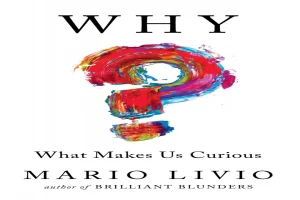
Why: What Makes Us Curious book pdf download

book quality : Excellent
Section : Think and Culture
Department : literature
Language : English
Auther : Mario Livio
Size of file : 23.4MB
Number of Pages : 253
Date of Coming : 2022-08-10

Author: Mario Livio

About the Author: Mario Livio was born June 19, 1945 who an Israeli-American astrophysicist and an author of works that popularize science and mathematics. For 24 years (1991-2015) he was an astrophysicist at the Space Telescope Science Institute, which operates the Hubble Space Telescope. He has published more than 400 scientific articles on topics including cosmology, supernova explosions, black holes, extrasolar planets, and the emergence of life in the universe.[1] His book on the irrational number phi, The Golden Ratio: The Story of Phi, the World’s Most Astonishing Number (2002), won the Peano Prize and the International Pythagoras Prize for popular books on mathematics.

Why: What Makes Us Curious book pdf download By Mario Livio

Astrophysicist and author Mario Livio investigates perhaps the most human of all our characteristics—curiosity—in this “lively, expert, and definitely not dumbed-down account” (Kirkus Reviews) as he explores our innate desire to know why. Experiments demonstrate that people are more distracted when they overhear a phone conversation—where they can know only one side of the dialogue—than when they overhear two people talking and know both sides. Why does half a conversation make us more curious than a whole conversation? “Have you ever wondered why we wonder why? Mario Livio has, and he takes you on a fascinating quest to understand the origin and mechanisms of our curiosity. I thoroughly recommend it.” (Adam Riess, Nobel Prize Winner in Physics, 2011). Curiosity is not only at the heart of mystery and suspense novels, it is also essential to other creative endeavors, from painting to sculpture to music.

Download PDF of Why: What Makes Us Curious book pdf download By Mario Livio
-Adrian Agency Library

Download Now

فقر الفكر وفكر الفقر book pdf download

Section : Think and Culture
Size of file : 8.79MB
Department : literature
Number of Pages : 246
book quality : Excellent
Language : Arabic
Date of Coming : 2022-08-10
Auther : Youssef Idris

Author: Youssef Idris

About the Author: Youssef Idris Ali (May 19, 1927 – August 1, 1991), an Egyptian short story writer, playwright, and novelist, born in 1927 in Al-Bayrum, Faqous Center, Egypt, and died on August 1, 1991, at the age of 64. He obtained his MBBS in 1947 and in 1951 he specialized in psychiatry. His life Youssef Idris was born on May 19, 1927. His father was a specialist in land reclamation, so he was affected by his father’s frequent movement and lived far from the city. He sent his eldest son (Youssef) to live with his grandmother in the village. As chemistry and science attracted Joseph, he wanted to be a doctor. During his medical school years, he participated in many demonstrations against the British colonialists and the regime of King Farouk. In 1951, he became the Executive Secretary of the Students’ Defense Committee, then the Secretary of the Students’ Committee. In this capacity he published revolutionary magazines and was imprisoned and suspended for several months. While studying medicine, he tried to write his first short story, which was very popular among his colleagues. He worked as a doctor at Al-Qasr Al-Aini from 1951-1960; He tried to practice psychiatry in 1956, health inspector, then journalist editor in the Republic, 1960, writer for Al-Ahram newspaper, 1973 until 1982. He traveled several times to most of the Arab world and visited (between 1953 and 1980) France, England, America, Japan, Thailand, Singapore and other countries. Southeast Asia. Member of the Story Club, Writers Association, Writers Union, and International PEN Club.

فقر الفكر وفكر الفقر book pdf download By Youssef Idris

«إنَّ الفَقرَ ليسَ وضْعًا اقتِصاديًّا فقَط، إنَّه وَضعٌ مِن أَوْضاعِ البَشَر؛ وضْعٌ عَام، يَتصرَّفُ فِيهِ الإِنْسانُ بفَقْر، ويُفكِّرُ بفَقْر.» كتَبَ يوسف إدريس هَذا الكِتابَ عَلى غَيرِ تَرتِيبٍ مِنْه؛ فقَدْ كانَ خَواطِرَ ومُذكِّراتٍ دَوَّنَ فِيها انْطِباعاتِه وتَصوُّراتِه حَولَ مُشكِلةِ الفَقْر؛ أَخْرَجَها لِتَكُونَ مَشْروعًا يُحلِّلُ فِيهِ ظاهِرةَ فَقْرِ الأَفْكارِ المُؤَدِّيةَ إِلى فَقْرِ الإِنْتاج. ولَمْ يُرِدْ بالفَقْرِ تِلْكَ الحَالةَ المادِّيَّةَ الَّتي يَكُونُ فِيها الإِنْسانُ تَحتَ وَطْأةِ العَوَزِ والحاجَة، وَإنَّما أَرادَ بِهِ المَعنَى الأَوسَعَ وَالأَشمَلَ لِلَفْظةِ «فَقْر»، وربَطَ بَينَ بَوَارِ الأَفْكارِ والفَقرِ فِي الإِنْتاجِ الاقتِصادِي، فجَعَلَهُما وكَأنَّهما يَدُورانِ فِي دائِرةٍ مُفرَغةٍ لا يُعلَمُ لَها بِدَايةٌ مِن نِهايَة. أَرادَ بكُلِّ هَذا تَشخِيصَ المُشكِلةِ وَتَعرِيَتَها مِن كافَّةِ الظَّواهِرِ الاجتِماعيَّةِ لتَبدُوَ واضِحةً لمَنْ أَرادَ أَنْ يُعالِجَ أَحدَ أَكبَرِ الأَخْطارِ الَّتي تُواجِهُ العالَمَ الثَّالِث.

Download PDF of فقر الفكر وفكر الفقر book pdf download By Youssef Idris
-Adrian Agency Library

Download Now

مطالعات علمية book pdf download

book quality : Excellent
Number of Pages : 148
Size of file : 12.1MB
Date of Coming : 2022-08-10
Section : Think and Culture
Auther : Ali Mustafa
Language : Arabic
Department : literature

Author: Ali Mustafa

مطالعات علمية book pdf download By Ali Mustafa

يضم هذا الكتابُ مجموعةً من المقالات العلمية كتَبها العالِمُ المصري الفَذ الدكتور «علي مصطفى مشرفة» بلغةٍ بسيطة يَسهُل على القارئ فَهمُها، تأخذنا في رحلةٍ معرفيةٍ مُشوِّقة؛ لتُوضِّح لنا بعضَ الحقائق عن الأرض التي نعيش عليها وكيفية نشأتها وتكوينها، وعن ذلك التصميم المُعجِز للكون، وما يَتألَّف منه من مواد، وتُطلِعنا على كيفية نشأة ضوء الشمس وتكوينه، وعلى طاقة الشمس الهائلة، وتأخذنا في رحلةٍ إلى داخل ذلك الجسم المتناهي الصِّغَر المسمَّى بالذرة، وما تمتلكه تلك الذرةُ من طاقةٍ هائلة يَصعُب تخيُّلها، كما تُحدِّثنا عن السُّدُم وتكوينها، وعن تلك الحرب المُسماة بحرب الأثير وملامحها، وعن حقيقةِ أن العِلم بماديَّته لا ينفصل عن الفلسفة الصوفية بمعنويَّتها، ثم تُحدِّثنا عن العلم ومُستقبَليَّة تطوُّره.

Download PDF of مطالعات علمية book pdf download By Ali Mustafa
-Adrian Agency Library

Download Now

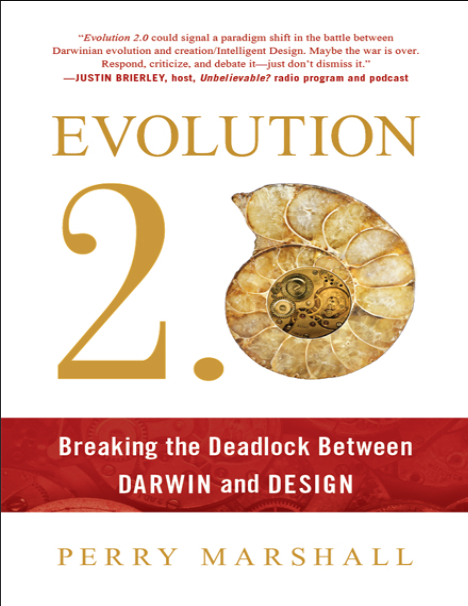
Evolution 2.0: Breaking the Deadlock Between Darwin and Design book pdf download

Department : literature
book quality : Excellent
Size of file : 6.61MB
Date of Coming : 2022-08-10
Language : English
Auther : Perry Marshall
Number of Pages : 549
Section : Think and Culture

Author: Perry Marshall

About the Author: Perry Marshall is one of the most expensive business strategists in the world. He is endorsed in FORBES and INC Magazine and has worked with clients such as FanDuel, InfusionSoft, and LoanBuilder. He founded the $10 million Evolution 2.0 Prize, with judges from Harvard, Oxford and MIT. Launched at the Royal Society in London, it’s the world’s largest science research award. NASA’s Jet Propulsion Labs uses his 80/20 Curve as a productivity tool. His reinvention of the Pareto Principle is published in Harvard Business Review. His Google book laid the foundations for the $100 billion Pay Per Click industry, and Ultimate Guide to Google Ads is the world’s best selling book on internet advertising.

Evolution 2.0: Breaking the Deadlock Between Darwin and Design book pdf download By Perry Marshall

The Miracle of Evolution…and the Story Neither Side Wants You to Hear Mired in politics and religion, Darwinists and Design advocates alike have missed the most amazing story in the history of science. Battles rage between the two extremes. The truth is out there, but it is ignored. Why is no one talking about this? Evolution 2.0 presents evidence that’s exhaustively documented, yet rarely mentioned in debates about evolution. Evolution 2.0 chronicles bestselling author Perry Marshall’s 10-year quest. This journey led him to a startling and remarkable discovery: a network of adaptive living systems—a “Swiss Army Knife” with five blades. That is, there are five amazing tools organisms use to alter their own genetic destiny. The author pinpoints the central mystery of biology, offering a minimum $1 Million Technology Prize to the first person who can solve it. Why Almost Everyone Is Wrong about Evolution (and It’s Not Why You Think) In one corner: Atheists like Richard Dawkins, Daniel Dennett, and Jerry Coyne. They insist evolution happens by blind random accident. Their devout adherence to Neo-Darwinism omits the latest science, glossing over crucial questions and fascinating details. In the other corner: Intelligent Design advocates like William Dembski, Stephen Meyer, and Michael Behe. Most defy scientific consensus, maintaining that evolution is a fraud. There is a third way. Evolution 2.0 reveals experiments which prove that, while evolution is not a hoax, neither is it random nor accidental. Changes are targeted, adaptive, and aware. You’ll discover: *How organisms re-engineer their genetic destiny in real time *Amazing systems living things use to re-design themselves *Every cell is armed with machinery for editing its own DNA *An award offer for answering the greatest question in all biology: Where does genetic information come from? *70 years of scientific discoveries—of which the public has heard nothing! This book will open your eyes and transform your thinking about life, evolution, and God. You’ll gain a deeper appreciation for our place in the universe. You’ll see the hand at the end of your arm as you’ve never seen it before.

Download PDF of Evolution 2.0: Breaking the Deadlock Between Darwin and Design book pdf download By Perry Marshall
-Adrian Agency Library

Download Now

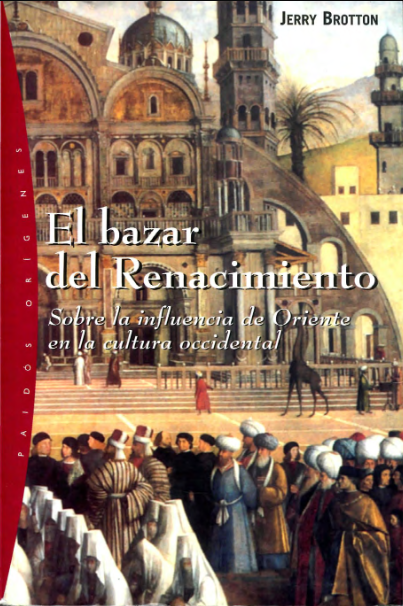
El bazar del Renacimiento Sobre la influencia de Oriente en la cultura occidental book pdf download

Auther : Jerry Broughton
Section : Think and Culture
Date of Coming : 2022-08-10
Department : literature
Size of file : 16.1MB
book quality : Excellent
Language : Spanish
Number of Pages : 110

Author: Jerry Broughton

El bazar del Renacimiento Sobre la influencia de Oriente en la cultura occidental book pdf download By Jerry Broughton

El Renacimiento fue uno de los momentos culminantes de la historia universal. En esa época Oriente y Occidente empezaron a darse cuenta de sus semejanzas, tanto en el ámbito político como en el cultural. En este amplio estudio, Jerry Brottons sostiene que entre 1400 y 1600 Europa se definió a sí misma gracias al comercio y a la competencia con sus vecinos islámicos, africanos y asiáticos. La obra nos cuenta la historia de este intenso intercambio de ideas, objetos y técnicas que configuraron el Renacimiento europeo. También nos muestra la estrecha vinculación existente entre los progresos tecnológicos y comerciales -como la imprenta, la banca o los avances cartográficos- y las grandes obras del arte, la literatura, la ciencia y los descubrimientos que caracterizaron este periodo. Este apasionante e innovador enfoque nos describe el Renacimiento como un fenómeno global cuyo influjo se hizo sentir en Oriente, África y las Américas, aunque a su vez nos dejó un triste legado de esclavitud, colonización e intolerancia religiosa cuya huella aún pervive en el mundo contemporáneo. Se trata, en suma, de un texto actual y polémico que desmitifica la idea según la cual el Renacimiento es la época en la que se fraguó la superioridad de la cultura occidental.

Download PDF of El bazar del Renacimiento Sobre la influencia de Oriente en la cultura occidental book pdf download By Jerry Broughton
-Adrian Agency Library

Download Now

Curiosity: How Science Became Interested in Everything book pdf download

Number of Pages : 474
Section : Think and Culture
Auther : Philip Ball
Language : English
Size of file : 25.0MB
Date of Coming : 2022-08-10
Department : literature
book quality : Excellent

Author: Philip Ball

About the Author: Philip Ball is a freelance science writer. He worked previously at Nature for over 20 years, first as an editor for physical sciences (for which his brief extended from biochemistry to quantum physics and materials science) and then as a Consultant Editor. His writings on science for the popular press have covered topical issues ranging from cosmology to the future of molecular biology. Philip is the author of many popular books on science, including works on the nature of water, pattern formation in the natural world, colour in art, the science of social and political philosophy, the cognition of music, and physics in Nazi Germany. He has written widely on the interactions between art and science, and has delivered lectures to scientific and general audiences at venues ranging from the Victoria and Albert Museum (London) to the NASA Ames Research Center, London’s National Theatre and the London School of Economics. Philip continues to write regularly for Nature. He has contributed to publications ranging from New Scientist to the New York Times, the Guardian, the Financial Times and New Statesman. He is a contributing editor of Prospect magazine (for which he writes a science blog), and also a columnist for Chemistry World, Nature Materials, and the Italian science magazine Sapere. He has broadcast on many occasions on radio and TV, and is a presenter of “Science Stories” on BBC Radio 4. He is a Fellow of the Royal Society of Chemistry, sits on the editorial board of Chemistry World and Interdiscipinary Science Reviews, and is a board member of the RESOLV network on solvation science at the Ruhr University of Bochum. Philip has a BA in Chemistry from the University of Oxford and a PhD in Physics from the University of Bristol. Philip Ball is a writer. Most of his books are concerned with science in some form or another: its history, its interactions with the arts and society, its achievements, delights and detours. He is a regular columnist for several magazines and an occasional radio presenter and broadcaster. He was an editor of Nature for many years, and long ago, a chemist and physicist of sorts.

Curiosity: How Science Became Interested in Everything book pdf download By Philip Ball

With the recent landing of the Mars rover Curiosity, it seems safe to assume that the idea of being curious is alive and well in modern science—that it’s not merely encouraged but is seen as an essential component of the scientific mission. Yet there was a time when curiosity was condemned. Neither Pandora nor Eve could resist the dangerous allure of unanswered questions, and all knowledge wasn’t equal—for millennia it was believed that there were some things we should not try to know. In the late sixteenth century this attitude began to change dramatically, and in Curiosity: How Science Became Interested in Everything, Philip Ball investigates how curiosity first became sanctioned—when it changed from a vice to a virtue and how it became permissible to ask any and every question about the world. Looking closely at the sixteenth through eighteenth centuries, Ball vividly brings to life the age when modern science began, a time that spans the lives of Galileo and Isaac Newton. In this entertaining and illuminating account of the rise of science as we know it, Ball tells of scientists both legendary and lesser known, from Copernicus and Kepler to Robert Boyle, as well as the inventions and technologies that were inspired by curiosity itself, such as the telescope and the microscope. The so-called Scientific Revolution is often told as a story of great geniuses illuminating the world with flashes of inspiration. But Curiosity reveals a more complex story, in which the liberation—and subsequent taming—of curiosity was linked to magic, religion, literature, travel, trade, and empire. Ball also asks what has become of curiosity today: how it functions in science, how it is spun and packaged for consumption, how well it is being sustained, and how the changing shape of science influences the kinds of questions it may continue to ask. Though proverbial wisdom tell us that it was through curiosity that our innocence was lost, that has not deterred us. Instead, it has been completely the contrary: today we spend vast sums trying to reconstruct the first instants of creation in particle accelerators, out of a pure desire to know. Ball refuses to let us take this desire for granted, and this book is a perfect homage to such an inquisitive attitude.

Download PDF of Curiosity: How Science Became Interested in Everything book pdf download By Philip Ball
-Adrian Agency Library


Download Now

The devil’s doctor book pdf download

Language : English
Size of file : 5.38MB
Auther : Philip Ball
book quality : Excellent
Number of Pages : 665
Date of Coming : 2022-08-10
Section : Think and Culture
Department : literature

Author: Philip Ball

About the Author: Philip Ball is a freelance science writer. He worked previously at Nature for over 20 years, first as an editor for physical sciences (for which his brief extended from biochemistry to quantum physics and materials science) and then as a Consultant Editor. His writings on science for the popular press have covered topical issues ranging from cosmology to the future of molecular biology. Philip is the author of many popular books on science, including works on the nature of water, pattern formation in the natural world, colour in art, the science of social and political philosophy, the cognition of music, and physics in Nazi Germany. He has written widely on the interactions between art and science, and has delivered lectures to scientific and general audiences at venues ranging from the Victoria and Albert Museum (London) to the NASA Ames Research Center, London’s National Theatre and the London School of Economics. Philip continues to write regularly for Nature. He has contributed to publications ranging from New Scientist to the New York Times, the Guardian, the Financial Times and New Statesman. He is a contributing editor of Prospect magazine (for which he writes a science blog), and also a columnist for Chemistry World, Nature Materials, and the Italian science magazine Sapere. He has broadcast on many occasions on radio and TV, and is a presenter of “Science Stories” on BBC Radio 4. He is a Fellow of the Royal Society of Chemistry, sits on the editorial board of Chemistry World and Interdiscipinary Science Reviews, and is a board member of the RESOLV network on solvation science at the Ruhr University of Bochum. Philip has a BA in Chemistry from the University of Oxford and a PhD in Physics from the University of Bristol. Philip Ball is a writer. Most of his books are concerned with science in some form or another: its history, its interactions with the arts and society, its achievements, delights and detours. He is a regular columnist for several magazines and an occasional radio presenter and broadcaster. He was an editor of Nature for many years, and long ago, a chemist and physicist of sorts.

The devil’s doctor book pdf download By Philip Ball

Philippus Aureolus Theophrastus Bombast von Hohenheim, who called himself Paracelsus, stands at the cusp of medieval and modern times. A contemporary of Luther, an enemy of the medical establishment, a scourge of the universities, an alchemist, an army surgeon, and a radical theologian, he attracted myths even before he died. His fantastic journeys across Europe and beyond were said to be made on a magical white horse, and he was rumored to carry the elixir of life in the pommel of his great broadsword. His name was linked with Faust, who bargained with the devil. Who was the man behind these stories’ Some have accused him of being a charlatan, a windbag who filled his books with wild speculations and invented words. Others claim him as the father of modern medicine. Philip Ball exposes a more complex truth in The Devil’s Doctor’one that emerges only by entering into Paracelsus’s time. He explores the intellectual, political, and religious undercurrents of the sixteenth century and looks at how doctors really practiced, at how people traveled, and at how wars were fought. For Paracelsus was a product of an age of change and strife, of renaissance and reformation. And yet by uniting the diverse disciplines of medicine, biology, and alchemy, he assisted, almost in spite of himself, in the birth of science and the emergence of the age of rationalism.;Black madonna: a country doctor — The metal makers: learning the arts — The universal scholar: a Renaissance education — The staff and the snake: healing in the early renaissance — Intellectual vagabonds: walking the pages of the book of nature — A new religion: the trials of reformation — Revolution under the sign of the shoe: sedition in Salzburg — Transmutation at Ingolstadt: making gold — Elixir and quintessence: a chemical medicine — Bitter medicine: Paracelsus among the humanists — The battle of Basle: how Paracelsus left town — Against the grain: quicksilver and wood — The alchemist inside: an hermetic biology — Beyond wonders: the matrix of the world — Star and ascendant: a science of prophesy — Demons of the mind: invisible diseases — The little man: animating the earth — The white horse: death in Salzburg — Work with fire: the chemical legacy of Paracelsus — Philosopher’s gold: the last of the chemical magicians.

Download PDF of The devil’s doctor book pdf download By Philip Ball
-Adrian Agency Library

Download Now

Modern Culture book pdf download

Number of Pages : 229
Department : literature
Auther : Roger Scruton
Section : Think and Culture
Language : English
Size of file : 1.43MB
book quality : Excellent
Date of Coming : 2022-08-10

Author: Roger Scruton

About the Author: Roger Scruton who has died of lung cancer aged 75, was a philosopher and a controversial public intellectual. Active in the fields of aesthetics, art, music, political philosophy and architecture, both inside and outside the academic world, he dedicated himself to nurturing beauty, “re-enchanting the world” and giving intellectual rigour to conservatism. He wrote more than 50 books, including perceptive works on Spinoza, Kant, Wittgenstein and the history of philosophy, and four novels, as well as columns on wine, hunting and current affairs, and was a talented pianist and composer. A member of the traditionalist-conservative Salisbury Group, he helped found the Salisbury Review, which he edited from 1982 to 2001. This quarterly, which was circulated in the Soviet bloc, often in samizdat form, was criticised in Britain for having retrograde attitudes. In 1984 it defended Ray Honeyford, the Bradford headteacher who had disputed the value of multicultural education. Consequent hostility from colleagues prompted Scruton to abandon in 1992 his professorship in aesthetics at what is now Birkbeck, University of London, where he had started as a lecturer in 1971. Though he felt this had scuppered his academic career, in the event it freed him for activities and adventures on a wider stage.

Modern Culture book pdf download By Roger Scruton

What do we mean by ‘culture’? This word, purloined by journalists to denote every kind of collective habit, lies at the centre of contemporary debates about the past and future of society. In this thought-provoking book, Roger Scruton argues for the religious origin of culture in all its forms, and mounts a defence of the ‘high culture’ of our civilization against its radical and ‘deconstructionist’ critics. He offers a theory of pop culture, a panegyric to Baudelaire, a few reasons why Wagner is just as great as his critics fear him to be, and a raspberry to Cool Britannia. A must for all people who are fed up to their tightly clenched front teeth with Derrida, Foucault, Oasis and Richard Rogers.

Download PDF of Modern Culture book pdf download By Roger Scruton
-Adrian Agency Library
Download Now

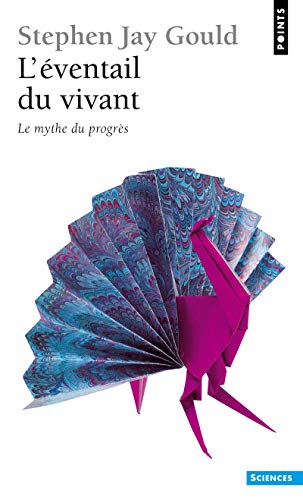
L’Éventail du vivant book pdf download

Section : Think and Culture
Size of file : 4.25MB
Number of Pages : 362
book quality : Excellent
Language : French
Auther : Stephen Jay Gould
Department : literature
Date of Coming : 2022-08-10

Author: Stephen Jay Gould

About the Author: Stephen Jay Gould was an American paleontologist, evolutionary biologist, and historian of science. He was one of the most influential and widely read authors of popular science of his generation. Gould spent most of his career teaching at Harvard University and working at the American Museum of Natural History in New York. In 1996, Gould was hired as the Vincent Astor Visiting Research Professor of Biology at New York University, after which he divided his time teaching between there and Harvard. Gould’s most significant contribution to evolutionary biology was the theory of punctuated equilibrium developed with Niles Eldredge in 1972. The theory proposes that most evolution is characterized by long periods of evolutionary stability, infrequently punctuated by swift periods of branching speciation. The theory was contrasted against phyletic gradualism, the popular idea that evolutionary change is marked by a pattern of smooth and continuous change in the fossil record. Most of Gould’s empirical research was based on the land snail genera Poecilozonites and Cerion. He also made important contributions to evolutionary developmental biology, receiving broad professional recognition for his book Ontogeny and Phylogeny.[5] In evolutionary theory he opposed strict selectionism, sociobiology as applied to humans, and evolutionary psychology. He campaigned against creationism and proposed that science and religion should be considered two distinct fields (or “non-overlapping magisteria”) whose authorities do not overlap. Gould was known by the general public mainly for his 300 popular essays in Natural History magazine, and his numerous books written for both the specialist and non-specialist. In April 2000, the US Library of Congress named him a “Living Legend”

L’Éventail du vivant book pdf download By Stephen Jay Gould

Un livre dérangeant ! Ne respectant décidément aucune idée reçue, Gould s’en prend ici à notre image d’une nature dont l’histoire serait régie par une logique de progrès. L’évolution, montre-t-il, n’est pas cette inéluctable marche vers une complexité et une subtilité croissantes qui, partant des formes les plus simples, culminerait triomphalement par l’apparition de ce chef-d’œuvre, l’Homme. C’est en vérité la notion de progrès dans toute sa généralité qui est mise à l’épreuve par cet essai original, certainement l’une des œuvres majeures de l’auteur et une importante contribution à la culture contemporaine. À l’aide d’exemples tirés des sciences naturelles (grandeur et décadence des chevaux), de son expérience personnelle (sa lutte victorieuse contre une maladie grave) et de l’histoire sportive (la prétendue baisse de niveau du base-ball), Gould nous montre l’impossibilité d’interpréter correctement l’évolution de tout phénomène si l’on ne prend en compte tout l’éventail de ses variations. Ainsi, réduire l’histoire de la vie à celle des organismes les plus complexes est gravement méconnaître la nature même de la théorie de l’évolution, et la portée radicale de la vision darwinienne.

Download PDF of L’Éventail du vivant book pdf download By Stephen Jay Gould
-Adrian Agency Library

Download Now

Instruções para os criados book pdf download

Language : Portuguese
Number of Pages : 115
Section : Think and Culture
Department : literature
book quality : Excellent
Date of Coming : 2022-09-11
Auther : Jonathan Swift
Size of file : 1.11MB

Author: Jonathan Swift

About the Author: Jonathan Swift is an Irish writer, political critic, and clergyman. He published many books and literature, the most important and most famous of which was “Gulliver’s Travels”, which includes four parts.
Jonathan Swift, one of the first critics of the English language, was a noted political writer, poet, and clergyman. He was born in Ireland and lost his father at an early age to be taken care of by his uncle.
With the beginnings of the glorious revolution in Ireland he was forced to emigrate to England, where he worked with Sir William Temple and got to experience a life of luxury and power. At a young age, he often moved between Ireland and England, and Swift entered the Church of Ireland at the same time as his poor cousin in the Church of England.
When he returned to Ireland he held the position of Dean of Saints at Patrick’s Cathedral and continued to do so until his death. As a writer, he wrote most of his works under pseudonyms, and today we mention his best satirical prose work, Gulliver’s Travels.
Gulliver’s Travels, his most famous work, was first published on September 28, 1726 and modified in 1735, and it is considered a classic English literature, and many were mistaken in thinking that it was a children’s book and in fact it was satirical prose. He mocks not only British policy against the Irish but also the oppression of the poor.|Swift lived for a long time in Trim, and a frequent satirical festival called the Trim Swift Festival was held.

Instruções para os criados book pdf download By Jonathan Swift

Em Instruções para os Criados, escrito em 1731, Jonathan Swift detalha o relacionamento dos criados com seus senhores num dos melhores exemplos do seu talento como satirista. Engraçado e cínico, cada conselho provoca reflexões preciosas sobre o cotidiano do início do século XVIII e sobre a natureza humana.

Seu sarcasmo faz dessa paródia um relato imperdível da vida dos criados e dos seus dilemas, sobretudo em relação aos senhores. Com recomendações individuais para a conduta de cada criado, do mordomo ao cocheiro, suas hilárias sugestões às vezes beiram o absurdo. Aos lacaios, por exemplo, recomenda que não usem meias durante os jantares, em nome da saúde das senhoras presentes, pois o odor dos dedos dos pés é um bom remédio para melancolia. Insolentes e preguiçosos, os criados de Swift são um ótimo exemplo da perspicácia e do humor cáustico do autor, que, neste breve ensaio, um dos seus últimos trabalhos, desconstrói e satiriza o sistema social da época de maneira jocosa e cínica.

Download PDF of Instruções para os criados book pdf download By Jonathan Swift
-Adrian Agency Library
Download Now