The UN Security Council and the Politics of International Authority book pdf download

Date of Coming : 2022-08-10
Number of Pages : 260
Language : English
Department : fields
Section : Politics
Size of file : 1.39MB
Auther : Ian Hurd
book quality : Excellent

Author: Ian Hurd

About the Author: Ian Hurd is Professor of Political Science at Northwestern University in Evanston, Illinois, and Director of the Weinberg College Center for International and Area Studies. He writes about international politics and law. He is the author of the popular textbook International Organizations: Politics, Law, Practice (2017) which introduces the main international organizations and covers both international law and international relations. His most recent book is How to Do Things with International Law (2017). His book After Anarchy: Legitimacy and Power in the UN Security Council won the Chadwick Alger prize from the International Studies Association and the Myres McDougal prize of the Policy Sciences Society in 2008. He is also an editor of the Oxford Handbook of International Organizations.

The UN Security Council and the Politics of International Authority book pdf download By Ian Hurd

Observes how the growth of the political authority of the Council challenges the basic idea that states have legal autonomy over their domestic affairs. The individual essays survey the implications that flow from these developments in the crucial policy areas of: terrorism; economic sanctions; the prosecution of war crimes; human rights; humanitarian intervention; and the use of force. In each of these areas, the evidence shows a complex and fluid relation between state sovereignty, the power of the United Nations, and the politics of international legitimation. Demonstrating how world politics has come to accommodate the contradictory institutions of international authority and international anarchy, this book makes an important contribution to how we understand and study international organizations and international law. Written by leading experts in the field, this volume will be of strong interest to students and scholars of international relations, international organizations, international law and global governance.

Download PDF of The UN Security Council and the Politics of International Authority book pdf download By Ian Hurd
-Adrian Agency Library

Download Now

The German Ideology, including Theses on Feuerbach book pdf download

book quality : Excellent
Size of file : 0.25MB
Auther : Karl Marx
Date of Coming : 2022-08-10
Department : fields
Language : English
Number of Pages : 75
Section : Politics

Author: Karl Marx

About the Author: Karl Heinrich Marx was a German philosopher, economist, sociologist, historian, journalist and revolutionary socialist (5 May 1818 – 14 March 1883). His ideas played an important role in the foundation of sociology and in the development of socialist movements. Marx was considered one of the greatest economists in history. He published several books during his lifetime, the most important of which are The Manifesto of the Communist Party (1848) and Das Kapital (1867–1894). Born into a wealthy middle-class family in Trier in the Prussian Rhineland, Marx studied at the University of Bonn and the University of Berlin, where he became interested in the philosophical ideas of the Young Hegelians. He was associated with Jenny von Westphalen in 1836 AD, and married her in 1843 AD after his studies. He wrote for a radical newspaper in Cologne, and began to develop his theory of dialectical materialism. After moving to Paris in 1843, he began writing for other radical newspapers.

The German Ideology, including Theses on Feuerbach book pdf download By Karl Marx

Nearly two years before his powerful Communist Manifesto, Marx (1818-1883) co-wrote “The German Ideology” in 1845 with friend and collaborator Friedrich Engels expounding a new political worldview, including positions on materialism, labour, production, alienation, the expansion of capitalism, class conflict, revolution, and eventually communism. They chart the course of ‘true’ socialism based on Hegel’s dialectic, while criticising the ideas of Bruno Bauer, Max Stirner and Ludwig Feuerbach. Marx expanded his criticism of the latter in his now famous Theses on Feuerbach, found after Marx’s death and published by Engels in 1888. “Introduction to the Critique of Political Economy”, also found among the posthumous papers of Marx, is a fragment of an introduction to his main works. Combining these three works, this volume is essential for an understanding of Marxism.

Download PDF of The German Ideology, including Theses on Feuerbach book pdf download By Karl Marx
-Adrian Agency Library

Download Now

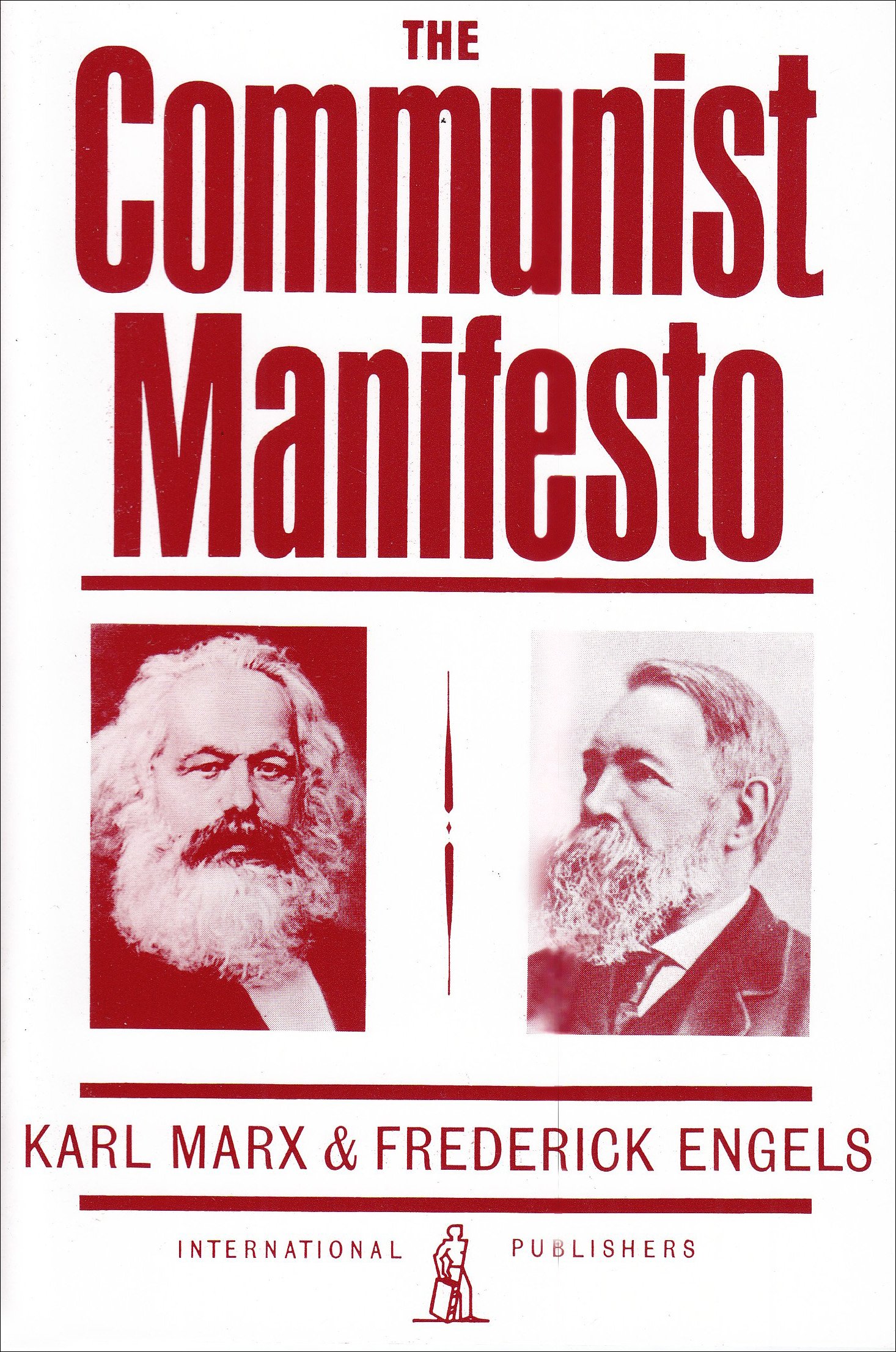
The Communist Manifesto book pdf download

book quality : Excellent
Auther : Karl Marx
Department : fields
Size of file : 0.54MB
Date of Coming : 2022-08-10
Language : English
Number of Pages : 44
Section : Politics

Author: Karl Marx

About the Author: Karl Heinrich Marx was a German philosopher, economist, sociologist, historian, journalist and revolutionary socialist (5 May 1818 – 14 March 1883). His ideas played an important role in the foundation of sociology and in the development of socialist movements. Marx was considered one of the greatest economists in history. He published several books during his lifetime, the most important of which are The Manifesto of the Communist Party (1848) and Das Kapital (1867–1894). Born into a wealthy middle-class family in Trier in the Prussian Rhineland, Marx studied at the University of Bonn and the University of Berlin, where he became interested in the philosophical ideas of the Young Hegelians. He was associated with Jenny von Westphalen in 1836 AD, and married her in 1843 AD after his studies. He wrote for a radical newspaper in Cologne, and began to develop his theory of dialectical materialism. After moving to Paris in 1843, he began writing for other radical newspapers.

The Communist Manifesto book pdf download By Karl Marx

In the 150 years since its publication, no other treatise has inspired such a dividing and violent debate, and after the recent collapse of several regimes which had initially embraced it, a retrospective interpretation of the essential ideas it advocates is presented in this comprehensive volume. This edition of Karl Marx’s philosophy is the authorized English translation of 1888, edited and annotated by Friedrich Engels, and includes prefaces to the several editions published between 1872 and 1888.

Download PDF of The Communist Manifesto book pdf download By Karl Marx
-Adrian Agency Library

Download Now

Renaissance Military Memoirs: War, History and Identity, 1450-1600 book pdf download

Date of Coming : 2022-08-25
Department : fields
Language : English
Auther : Yuval Noah Harari
Section : Politics
Number of Pages : 241
Size of file : 0.75MB
book quality : Excellent

Author: Yuval Noah Harari

About the Author: Professor Harari was born in Haifa, Israel, to Lebanese parents in 1976. He received his Ph.D. from the University of Oxford in 2002, and is now a lecturer at the Department of History, the Hebrew University of Jerusalem.
He specialized in World History, medieval history and military history. His current research focuses on macro-historical questions: What is the relation between history and biology? What is the essential difference between Homo sapiens and other animals? Is there justice in history? Does history have a direction? Did people become happier as history unfolded?
Prof. Harari also teaches a MOOC (Massive Open Online Course) titled A Brief History of Humankind.
Prof. Harari twice won the Polonsky Prize for Creativity and Originality, in 2009 and 2012. In 2011 he won the Society for Military History’s Moncado Award for outstanding articles in military history.

Renaissance Military Memoirs: War, History and Identity, 1450-1600 book pdf download By Yuval Noah Harari

This is a study of autobiographical writings of Renaissance soldiers. It outlines the ways in which they reflect Renaissance cultural, political and historical consciousness, with a particular focus on conceptions of war, history, selfhood and identity. A vivid picture of Renaissance military life and military mentality emerges, which sheds light on the attitude of Renaissance soldiers both towards contemporary historical developments such as the rise of the modern state, and towards such issues as comradeship, women, honor, violence, and death. Comparison with similar medieval and twentieth-century material highlights the differences in the Renaissance soldier’s understanding of war and of human experience.

Download PDF of Renaissance Military Memoirs: War, History and Identity, 1450-1600 book pdf download By Yuval Noah Harari
-Adrian Agency Library

Download Now

International Relations : A Very Short Introduction book pdf download

Auther : Paul Wilkinson
Section : Politics
Size of file : 2.45MB
Date of Coming : 2022-08-30
Language : English
Department : fields
Number of Pages : 159
book quality : Excellent

Author: Paul Wilkinson

About the Author: Professor  Paul Wilkinson, a world authority in International Relations and a pioneer of the study of terrorism and political violence.
Professor Wilkinson came to the University of St Andrews in 1989 to take up the first chair in International Relations. He was co-founder of the University’s Centre for the Study of Terrorism and Political Violence.
Paul Wilkinson was born on 9 May 1937 in Harrow, Middlesex.  Educated at John Lyon School in Harrow, he gained a BA in Modern History and Politics at University College, Swansea, followed by an MA.
After six years’ service as a regular Royal Air Force officer, Paul started his academic career in 1966 at the University of Wales, Cardiff, as Assistant Lecturer in Politics. He became Senior Lecturer and then Reader in Politics at Cardiff before being appointed to the first Chair in International Relations at the University of Aberdeen in 1979. His first book on terrorism, Political Terrorism, was published in 1974.
In 1989 Paul was appointed to the first Chair in International Relations at the University of St Andrews and in 1990 was made the first Head of the new Department of International Relations. In 1994 he co-founded, with its first director Bruce Hoffman, the unique research centre, CSTPV (Centre for the Study of Terrorism and Political Violence).
The Centre has since become one of the most respected and well known in its field.  From 1989 to 1994 he was director of the Research Institute for the Study of Conflict and Terrorism.
During Professor Wilkinson’s time at St Andrews, the School of International Relations experienced a huge expansion in staff and student numbers, and Paul played a significant role in this. He was a popular teacher and mentor, and was highly instrumental in the development of the CSTPV.
Professor Wilkinson was co-founder and co-editor of the academic journal Terrorism and Political Violence from 1989 – 2006, and directed a research project funded by the ESRC, on the preparedness of the UK for future terrorist attack. He also served as Adviser to Lord Lloyd of Berwick’s Inquiry into Legislation Against Terrorism, and authored vol. two, the Research Report for the Inquiry (1996). During the 1997-8 academic year Professor Wilkinson was a Visiting Fellow at Trinity College, Cambridge.
Throughout his career, Professor Wilkinson was a strong opponent of terrorism of all kinds. In his publications and contributions to the media he consistently argued that the democratic response to both domestic and international terrorism should always be guided by the Rule of Law.
He publicly opposed attempts to increase the period permitted to detain terrorism suspects without trial in the UK and condemned the Guantanamo project and other measures by the administration of President George W. Bush which departed from basic Rule of Law Principles.
Speaking in 2006 he said, “I have discovered that, contrary to so much received opinion, it is possible for democracies to respond effectively to contemporary terrorism without undermining basic civil liberties and the rule of law, and that the protection of human rights, far from being an obstacle to effective counter-terrorism is a vital part of an effective long-term democratic response.”
Professor Wilkinson was the sole author of fifteen books on the subject of terrorism, including Lessons of Lockerbie (1989), and joint author of a further ten, including 2007’s Homeland Security in the UK: Future Preparedness for Terrorist Attacks since 9/11.
He retired from his position as Chairman of the Advisory Board for the Centre for the Study of Terrorism and Political Violence in August 2007 and was appointed Emeritus Professor of International Relations.  Paul was not just a familiar face around St Andrews but in living rooms around the globe as a well-known commentator on the scourge of terrorism.  A widely quoted expert in the media in the aftermath of the September 11, 2001 attacks in the U.S, he was still providing expert comment to the media following the Norway atrocities last month.
In 2009, Professor Wilkinson was appointed Commander of the Order of the British Empire (CBE) in the New Year Honours list in recognition of distinguished public service.
While nominally retired, Paul remained indefatigable in recent years speaking to the media and policy makers, organising and attending conferences, engaging with CSTPV, continuing to teach and writing. At the time of his death he was working on a new book due to be published next year.
He was a close friend of St Andrews Principal and Vice-Chancellor Professor Louise Richardson, with whom he shared academic and research interests.

International Relations : A Very Short Introduction book pdf download By Paul Wilkinson

Of undoubtable relevance today, in a post-9-11 world of growing political tension and unease, this Very Short Introduction covers the topics essential to an understanding of modern international relations. Paul Wilkinson explains the theories and the practice that underlie the subject, and investigates issues ranging from foreign policy, arms control, and terrorism, to the environment and world poverty. He examines the role of organizations such as the United Nations and the European Union, as well as the influence of ethnic and religious movements and terrorist groups which also play a role in shaping the way states and governments interact. This up-to-date book is required reading for those seeking a new perspective to help untangle and decipher international events.

Download PDF of International Relations : A Very Short Introduction book pdf download By Paul Wilkinson
-Adrian Agency Library

Download Now

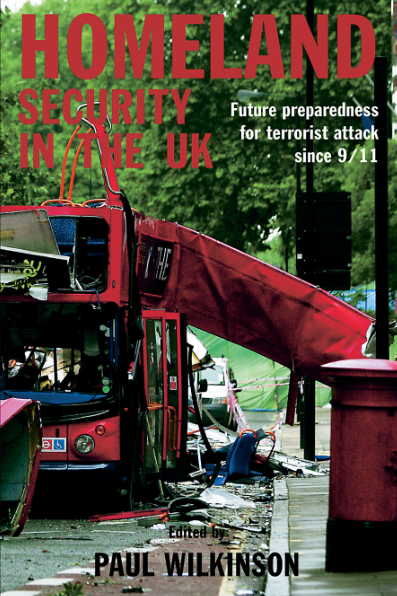
Homeland Security in the UK: Government Preparations for Terrorist Attack since 9-11 book pdf download

Department : fields
Date of Coming : 2022-08-30
book quality : Excellent
Size of file : 5.25MB
Section : Politics
Number of Pages : 865
Language : English
Auther : Paul Wilkinson

Author: Paul Wilkinson

About the Author: Professor  Paul Wilkinson, a world authority in International Relations and a pioneer of the study of terrorism and political violence.
Professor Wilkinson came to the University of St Andrews in 1989 to take up the first chair in International Relations. He was co-founder of the University’s Centre for the Study of Terrorism and Political Violence.
Paul Wilkinson was born on 9 May 1937 in Harrow, Middlesex.  Educated at John Lyon School in Harrow, he gained a BA in Modern History and Politics at University College, Swansea, followed by an MA.
After six years’ service as a regular Royal Air Force officer, Paul started his academic career in 1966 at the University of Wales, Cardiff, as Assistant Lecturer in Politics. He became Senior Lecturer and then Reader in Politics at Cardiff before being appointed to the first Chair in International Relations at the University of Aberdeen in 1979. His first book on terrorism, Political Terrorism, was published in 1974.
In 1989 Paul was appointed to the first Chair in International Relations at the University of St Andrews and in 1990 was made the first Head of the new Department of International Relations. In 1994 he co-founded, with its first director Bruce Hoffman, the unique research centre, CSTPV (Centre for the Study of Terrorism and Political Violence).
The Centre has since become one of the most respected and well known in its field.  From 1989 to 1994 he was director of the Research Institute for the Study of Conflict and Terrorism.
During Professor Wilkinson’s time at St Andrews, the School of International Relations experienced a huge expansion in staff and student numbers, and Paul played a significant role in this. He was a popular teacher and mentor, and was highly instrumental in the development of the CSTPV.
Professor Wilkinson was co-founder and co-editor of the academic journal Terrorism and Political Violence from 1989 – 2006, and directed a research project funded by the ESRC, on the preparedness of the UK for future terrorist attack. He also served as Adviser to Lord Lloyd of Berwick’s Inquiry into Legislation Against Terrorism, and authored vol. two, the Research Report for the Inquiry (1996). During the 1997-8 academic year Professor Wilkinson was a Visiting Fellow at Trinity College, Cambridge.
Throughout his career, Professor Wilkinson was a strong opponent of terrorism of all kinds. In his publications and contributions to the media he consistently argued that the democratic response to both domestic and international terrorism should always be guided by the Rule of Law.
He publicly opposed attempts to increase the period permitted to detain terrorism suspects without trial in the UK and condemned the Guantanamo project and other measures by the administration of President George W. Bush which departed from basic Rule of Law Principles.
Speaking in 2006 he said, “I have discovered that, contrary to so much received opinion, it is possible for democracies to respond effectively to contemporary terrorism without undermining basic civil liberties and the rule of law, and that the protection of human rights, far from being an obstacle to effective counter-terrorism is a vital part of an effective long-term democratic response.”
Professor Wilkinson was the sole author of fifteen books on the subject of terrorism, including Lessons of Lockerbie (1989), and joint author of a further ten, including 2007’s Homeland Security in the UK: Future Preparedness for Terrorist Attacks since 9/11.
He retired from his position as Chairman of the Advisory Board for the Centre for the Study of Terrorism and Political Violence in August 2007 and was appointed Emeritus Professor of International Relations.  Paul was not just a familiar face around St Andrews but in living rooms around the globe as a well-known commentator on the scourge of terrorism.  A widely quoted expert in the media in the aftermath of the September 11, 2001 attacks in the U.S, he was still providing expert comment to the media following the Norway atrocities last month.
In 2009, Professor Wilkinson was appointed Commander of the Order of the British Empire (CBE) in the New Year Honours list in recognition of distinguished public service.
While nominally retired, Paul remained indefatigable in recent years speaking to the media and policy makers, organising and attending conferences, engaging with CSTPV, continuing to teach and writing. At the time of his death he was working on a new book due to be published next year.
He was a close friend of St Andrews Principal and Vice-Chancellor Professor Louise Richardson, with whom he shared academic and research interests.

Homeland Security in the UK: Government Preparations for Terrorist Attack since 9-11 book pdf download By Paul Wilkinson

A primary goal of this book is to examine, especially in the UK context, whether the responses that are now evolving are getting this balance right and how such a balance can continue to be struck or perhaps enhanced in the future. As a consequence, the book will investigate three aspects of this context. It will seek to assess the nature of responses by key public and private sector bodies in the UK post September 11 for preventing, pre-empting, countering and managing terrorist attack. It will assess the quality of response against a matrix of other factors (types of terrorist networks, tactics and targets of groups etc). And it will compare and contrast the UK’s response with cognate states elsewhere (USA/EU).

Download PDF of Homeland Security in the UK: Government Preparations for Terrorist Attack since 9-11 book pdf download By Paul Wilkinson
-Adrian Agency Library

Download Now

Construction Collaboration Technologies: An Extranet Evolution book pdf download

Language : English
book quality : Excellent
Department : fields
Section : Politics
Auther : Paul Wilkinson
Date of Coming : 2022-08-30
Size of file : 2.12MB
Number of Pages : 240

Author: Paul Wilkinson

About the Author: Professor  Paul Wilkinson, a world authority in International Relations and a pioneer of the study of terrorism and political violence.
Professor Wilkinson came to the University of St Andrews in 1989 to take up the first chair in International Relations. He was co-founder of the University’s Centre for the Study of Terrorism and Political Violence.
Paul Wilkinson was born on 9 May 1937 in Harrow, Middlesex.  Educated at John Lyon School in Harrow, he gained a BA in Modern History and Politics at University College, Swansea, followed by an MA.
After six years’ service as a regular Royal Air Force officer, Paul started his academic career in 1966 at the University of Wales, Cardiff, as Assistant Lecturer in Politics. He became Senior Lecturer and then Reader in Politics at Cardiff before being appointed to the first Chair in International Relations at the University of Aberdeen in 1979. His first book on terrorism, Political Terrorism, was published in 1974.
In 1989 Paul was appointed to the first Chair in International Relations at the University of St Andrews and in 1990 was made the first Head of the new Department of International Relations. In 1994 he co-founded, with its first director Bruce Hoffman, the unique research centre, CSTPV (Centre for the Study of Terrorism and Political Violence).
The Centre has since become one of the most respected and well known in its field.  From 1989 to 1994 he was director of the Research Institute for the Study of Conflict and Terrorism.
During Professor Wilkinson’s time at St Andrews, the School of International Relations experienced a huge expansion in staff and student numbers, and Paul played a significant role in this. He was a popular teacher and mentor, and was highly instrumental in the development of the CSTPV.
Professor Wilkinson was co-founder and co-editor of the academic journal Terrorism and Political Violence from 1989 – 2006, and directed a research project funded by the ESRC, on the preparedness of the UK for future terrorist attack. He also served as Adviser to Lord Lloyd of Berwick’s Inquiry into Legislation Against Terrorism, and authored vol. two, the Research Report for the Inquiry (1996). During the 1997-8 academic year Professor Wilkinson was a Visiting Fellow at Trinity College, Cambridge.
Throughout his career, Professor Wilkinson was a strong opponent of terrorism of all kinds. In his publications and contributions to the media he consistently argued that the democratic response to both domestic and international terrorism should always be guided by the Rule of Law.
He publicly opposed attempts to increase the period permitted to detain terrorism suspects without trial in the UK and condemned the Guantanamo project and other measures by the administration of President George W. Bush which departed from basic Rule of Law Principles.
Speaking in 2006 he said, “I have discovered that, contrary to so much received opinion, it is possible for democracies to respond effectively to contemporary terrorism without undermining basic civil liberties and the rule of law, and that the protection of human rights, far from being an obstacle to effective counter-terrorism is a vital part of an effective long-term democratic response.”
Professor Wilkinson was the sole author of fifteen books on the subject of terrorism, including Lessons of Lockerbie (1989), and joint author of a further ten, including 2007’s Homeland Security in the UK: Future Preparedness for Terrorist Attacks since 9/11.
He retired from his position as Chairman of the Advisory Board for the Centre for the Study of Terrorism and Political Violence in August 2007 and was appointed Emeritus Professor of International Relations.  Paul was not just a familiar face around St Andrews but in living rooms around the globe as a well-known commentator on the scourge of terrorism.  A widely quoted expert in the media in the aftermath of the September 11, 2001 attacks in the U.S, he was still providing expert comment to the media following the Norway atrocities last month.
In 2009, Professor Wilkinson was appointed Commander of the Order of the British Empire (CBE) in the New Year Honours list in recognition of distinguished public service.
While nominally retired, Paul remained indefatigable in recent years speaking to the media and policy makers, organising and attending conferences, engaging with CSTPV, continuing to teach and writing. At the time of his death he was working on a new book due to be published next year.
He was a close friend of St Andrews Principal and Vice-Chancellor Professor Louise Richardson, with whom he shared academic and research interests.

Construction Collaboration Technologies: An Extranet Evolution book pdf download By Paul Wilkinson

Since the late 1990s, web-based collaboration technologies (‘project extranets’) have become increasingly widely used within the UK construction industry and are now routinely deployed on the design and construction of thousands of projects.

The first book dedicated to the topic, this comprehensive guide will help current and future construction professionals understand, implement and use such systems more effectively. Cutting through the hype and jargon, it offers expert advice and guidance from an industry insider on choosing a software provider, key software features, hosting, legal issues, connectivity, achieving user buy-in and assessing the benefits.

Download PDF of Construction Collaboration Technologies: An Extranet Evolution book pdf download By Paul Wilkinson
-Adrian Agency Library


Download Now

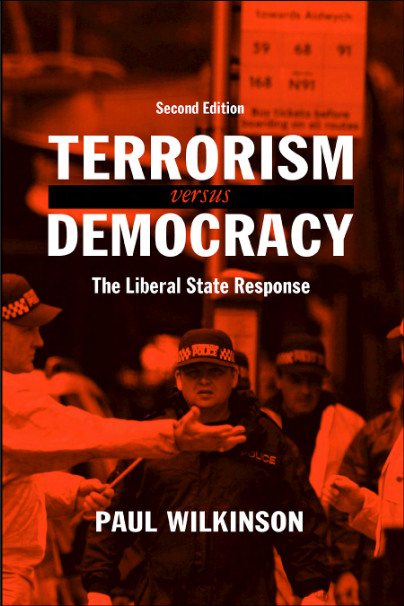
Terrorism Versus Democracy: The Liberal State Response book pdf download

Language : English
Number of Pages : 273
Auther : Paul Wilkinson
Size of file : 1.19MB
Section : Politics
Date of Coming : 2022-08-30
book quality : Excellent
Department : fields

Author: Paul Wilkinson

About the Author: Professor  Paul Wilkinson, a world authority in International Relations and a pioneer of the study of terrorism and political violence.
Professor Wilkinson came to the University of St Andrews in 1989 to take up the first chair in International Relations. He was co-founder of the University’s Centre for the Study of Terrorism and Political Violence.
Paul Wilkinson was born on 9 May 1937 in Harrow, Middlesex.  Educated at John Lyon School in Harrow, he gained a BA in Modern History and Politics at University College, Swansea, followed by an MA.
After six years’ service as a regular Royal Air Force officer, Paul started his academic career in 1966 at the University of Wales, Cardiff, as Assistant Lecturer in Politics. He became Senior Lecturer and then Reader in Politics at Cardiff before being appointed to the first Chair in International Relations at the University of Aberdeen in 1979. His first book on terrorism, Political Terrorism, was published in 1974.
In 1989 Paul was appointed to the first Chair in International Relations at the University of St Andrews and in 1990 was made the first Head of the new Department of International Relations. In 1994 he co-founded, with its first director Bruce Hoffman, the unique research centre, CSTPV (Centre for the Study of Terrorism and Political Violence).
The Centre has since become one of the most respected and well known in its field.  From 1989 to 1994 he was director of the Research Institute for the Study of Conflict and Terrorism.
During Professor Wilkinson’s time at St Andrews, the School of International Relations experienced a huge expansion in staff and student numbers, and Paul played a significant role in this. He was a popular teacher and mentor, and was highly instrumental in the development of the CSTPV.
Professor Wilkinson was co-founder and co-editor of the academic journal Terrorism and Political Violence from 1989 – 2006, and directed a research project funded by the ESRC, on the preparedness of the UK for future terrorist attack. He also served as Adviser to Lord Lloyd of Berwick’s Inquiry into Legislation Against Terrorism, and authored vol. two, the Research Report for the Inquiry (1996). During the 1997-8 academic year Professor Wilkinson was a Visiting Fellow at Trinity College, Cambridge.
Throughout his career, Professor Wilkinson was a strong opponent of terrorism of all kinds. In his publications and contributions to the media he consistently argued that the democratic response to both domestic and international terrorism should always be guided by the Rule of Law.
He publicly opposed attempts to increase the period permitted to detain terrorism suspects without trial in the UK and condemned the Guantanamo project and other measures by the administration of President George W. Bush which departed from basic Rule of Law Principles.
Speaking in 2006 he said, “I have discovered that, contrary to so much received opinion, it is possible for democracies to respond effectively to contemporary terrorism without undermining basic civil liberties and the rule of law, and that the protection of human rights, far from being an obstacle to effective counter-terrorism is a vital part of an effective long-term democratic response.”
Professor Wilkinson was the sole author of fifteen books on the subject of terrorism, including Lessons of Lockerbie (1989), and joint author of a further ten, including 2007’s Homeland Security in the UK: Future Preparedness for Terrorist Attacks since 9/11.
He retired from his position as Chairman of the Advisory Board for the Centre for the Study of Terrorism and Political Violence in August 2007 and was appointed Emeritus Professor of International Relations.  Paul was not just a familiar face around St Andrews but in living rooms around the globe as a well-known commentator on the scourge of terrorism.  A widely quoted expert in the media in the aftermath of the September 11, 2001 attacks in the U.S, he was still providing expert comment to the media following the Norway atrocities last month.
In 2009, Professor Wilkinson was appointed Commander of the Order of the British Empire (CBE) in the New Year Honours list in recognition of distinguished public service.
While nominally retired, Paul remained indefatigable in recent years speaking to the media and policy makers, organising and attending conferences, engaging with CSTPV, continuing to teach and writing. At the time of his death he was working on a new book due to be published next year.
He was a close friend of St Andrews Principal and Vice-Chancellor Professor Louise Richardson, with whom he shared academic and research interests.

Terrorism Versus Democracy: The Liberal State Response book pdf download By Paul Wilkinson

‘No one understands terrorism better than Paul Wilkinson…if policy makers read this book they will understand the problems better. If terrorists read it they will understand themselves a lot better.’ – Michael Clarke, King’s College London, University of London, UK This acclaimed study examines both the new terror networks and those that have been around for decades. This new edition brings it up-to-date with the dramatic opening of the twenty-first century, with new chapters on the 9/11 attacks, the growth of international terrorism, the Al Qaeda network and the War on Terror. This text provides us with some much needed criteria for distinguishing between terrorists and freedom fighters and an explanation of the uses of terrorism as a political, social, religious and criminal weapon. Wilkinson also links the use of terrorism to a wider repertoire of struggle. He proposes a variety of possible counter-measures and valuable principles carefully distilled from the recent past to help design a response that is compatible with democratic principles, the rule of law and respect for human rights. This book is essential reading for undergraduate and postgraduate students of terrorism studies, political science and international relations, as well as for policy makers and journalists.

Download PDF of Terrorism Versus Democracy: The Liberal State Response book pdf download By Paul Wilkinson
-Adrian Agency Library

Download Now

Social Movement book pdf download

Auther : Paul Wilkinson
book quality : Excellent
Language : English
Number of Pages : 176
Department : fields
Section : Politics
Date of Coming : 2022-08-30
Size of file : 19.0MB

Author: Paul Wilkinson

About the Author: Professor  Paul Wilkinson, a world authority in International Relations and a pioneer of the study of terrorism and political violence.
Professor Wilkinson came to the University of St Andrews in 1989 to take up the first chair in International Relations. He was co-founder of the University’s Centre for the Study of Terrorism and Political Violence.
Paul Wilkinson was born on 9 May 1937 in Harrow, Middlesex.  Educated at John Lyon School in Harrow, he gained a BA in Modern History and Politics at University College, Swansea, followed by an MA.
After six years’ service as a regular Royal Air Force officer, Paul started his academic career in 1966 at the University of Wales, Cardiff, as Assistant Lecturer in Politics. He became Senior Lecturer and then Reader in Politics at Cardiff before being appointed to the first Chair in International Relations at the University of Aberdeen in 1979. His first book on terrorism, Political Terrorism, was published in 1974.
In 1989 Paul was appointed to the first Chair in International Relations at the University of St Andrews and in 1990 was made the first Head of the new Department of International Relations. In 1994 he co-founded, with its first director Bruce Hoffman, the unique research centre, CSTPV (Centre for the Study of Terrorism and Political Violence).
The Centre has since become one of the most respected and well known in its field.  From 1989 to 1994 he was director of the Research Institute for the Study of Conflict and Terrorism.
During Professor Wilkinson’s time at St Andrews, the School of International Relations experienced a huge expansion in staff and student numbers, and Paul played a significant role in this. He was a popular teacher and mentor, and was highly instrumental in the development of the CSTPV.
Professor Wilkinson was co-founder and co-editor of the academic journal Terrorism and Political Violence from 1989 – 2006, and directed a research project funded by the ESRC, on the preparedness of the UK for future terrorist attack. He also served as Adviser to Lord Lloyd of Berwick’s Inquiry into Legislation Against Terrorism, and authored vol. two, the Research Report for the Inquiry (1996). During the 1997-8 academic year Professor Wilkinson was a Visiting Fellow at Trinity College, Cambridge.
Throughout his career, Professor Wilkinson was a strong opponent of terrorism of all kinds. In his publications and contributions to the media he consistently argued that the democratic response to both domestic and international terrorism should always be guided by the Rule of Law.
He publicly opposed attempts to increase the period permitted to detain terrorism suspects without trial in the UK and condemned the Guantanamo project and other measures by the administration of President George W. Bush which departed from basic Rule of Law Principles.
Speaking in 2006 he said, “I have discovered that, contrary to so much received opinion, it is possible for democracies to respond effectively to contemporary terrorism without undermining basic civil liberties and the rule of law, and that the protection of human rights, far from being an obstacle to effective counter-terrorism is a vital part of an effective long-term democratic response.”
Professor Wilkinson was the sole author of fifteen books on the subject of terrorism, including Lessons of Lockerbie (1989), and joint author of a further ten, including 2007’s Homeland Security in the UK: Future Preparedness for Terrorist Attacks since 9/11.
He retired from his position as Chairman of the Advisory Board for the Centre for the Study of Terrorism and Political Violence in August 2007 and was appointed Emeritus Professor of International Relations.  Paul was not just a familiar face around St Andrews but in living rooms around the globe as a well-known commentator on the scourge of terrorism.  A widely quoted expert in the media in the aftermath of the September 11, 2001 attacks in the U.S, he was still providing expert comment to the media following the Norway atrocities last month.
In 2009, Professor Wilkinson was appointed Commander of the Order of the British Empire (CBE) in the New Year Honours list in recognition of distinguished public service.
While nominally retired, Paul remained indefatigable in recent years speaking to the media and policy makers, organising and attending conferences, engaging with CSTPV, continuing to teach and writing. At the time of his death he was working on a new book due to be published next year.
He was a close friend of St Andrews Principal and Vice-Chancellor Professor Louise Richardson, with whom he shared academic and research interests.

Social Movement book pdf download By Paul Wilkinson

Contents
‘Key Concepts’
an Introductory Note 7
Acknowledgement 9
1/Concepts of Social Movement 11
Concepts 15
A working concept? 26
2/Rousseau, Marx and Movement 33
3/Typology and Politicization 46
4/Religious Movement, Sect, Millenarism 55
Charisma 60
Theories of religious development 63
Millenarism 70
Political relevance 75
5/People, Nation, Race and Empire 80
Rural and urban movements 80
Nationalist movements 88
Major forms of nationalist movements 91
Race movements 95
Overt imperialism 102
6/Reform and Moral Crusade 104
Normative interpretative problems 104
Organization and politicization 106
Pluralism and mass society 109
Reform agitations 114
Pressure group campaigns 116
Moral crusade and moral protest 117
7/Class and Revolution
Working-class action and mass parties
Revolutionary and totalitarian movements
Conclusion: Moral Dilemmas
of Social Movement

Download PDF of Social Movement book pdf download By Paul Wilkinson
-Adrian Agency Library
Download Now

Political Terrorism book pdf download

Language : English
Size of file : 16.4MB
Date of Coming : 2022-08-30
book quality : Excellent
Auther : Paul Wilkinson
Number of Pages : 158
Section : Politics
Department : fields

Author: Paul Wilkinson

About the Author: Professor  Paul Wilkinson, a world authority in International Relations and a pioneer of the study of terrorism and political violence.
Professor Wilkinson came to the University of St Andrews in 1989 to take up the first chair in International Relations. He was co-founder of the University’s Centre for the Study of Terrorism and Political Violence.
Paul Wilkinson was born on 9 May 1937 in Harrow, Middlesex.  Educated at John Lyon School in Harrow, he gained a BA in Modern History and Politics at University College, Swansea, followed by an MA.
After six years’ service as a regular Royal Air Force officer, Paul started his academic career in 1966 at the University of Wales, Cardiff, as Assistant Lecturer in Politics. He became Senior Lecturer and then Reader in Politics at Cardiff before being appointed to the first Chair in International Relations at the University of Aberdeen in 1979. His first book on terrorism, Political Terrorism, was published in 1974.
In 1989 Paul was appointed to the first Chair in International Relations at the University of St Andrews and in 1990 was made the first Head of the new Department of International Relations. In 1994 he co-founded, with its first director Bruce Hoffman, the unique research centre, CSTPV (Centre for the Study of Terrorism and Political Violence).
The Centre has since become one of the most respected and well known in its field.  From 1989 to 1994 he was director of the Research Institute for the Study of Conflict and Terrorism.
During Professor Wilkinson’s time at St Andrews, the School of International Relations experienced a huge expansion in staff and student numbers, and Paul played a significant role in this. He was a popular teacher and mentor, and was highly instrumental in the development of the CSTPV.
Professor Wilkinson was co-founder and co-editor of the academic journal Terrorism and Political Violence from 1989 – 2006, and directed a research project funded by the ESRC, on the preparedness of the UK for future terrorist attack. He also served as Adviser to Lord Lloyd of Berwick’s Inquiry into Legislation Against Terrorism, and authored vol. two, the Research Report for the Inquiry (1996). During the 1997-8 academic year Professor Wilkinson was a Visiting Fellow at Trinity College, Cambridge.
Throughout his career, Professor Wilkinson was a strong opponent of terrorism of all kinds. In his publications and contributions to the media he consistently argued that the democratic response to both domestic and international terrorism should always be guided by the Rule of Law.
He publicly opposed attempts to increase the period permitted to detain terrorism suspects without trial in the UK and condemned the Guantanamo project and other measures by the administration of President George W. Bush which departed from basic Rule of Law Principles.
Speaking in 2006 he said, “I have discovered that, contrary to so much received opinion, it is possible for democracies to respond effectively to contemporary terrorism without undermining basic civil liberties and the rule of law, and that the protection of human rights, far from being an obstacle to effective counter-terrorism is a vital part of an effective long-term democratic response.”
Professor Wilkinson was the sole author of fifteen books on the subject of terrorism, including Lessons of Lockerbie (1989), and joint author of a further ten, including 2007’s Homeland Security in the UK: Future Preparedness for Terrorist Attacks since 9/11.
He retired from his position as Chairman of the Advisory Board for the Centre for the Study of Terrorism and Political Violence in August 2007 and was appointed Emeritus Professor of International Relations.  Paul was not just a familiar face around St Andrews but in living rooms around the globe as a well-known commentator on the scourge of terrorism.  A widely quoted expert in the media in the aftermath of the September 11, 2001 attacks in the U.S, he was still providing expert comment to the media following the Norway atrocities last month.
In 2009, Professor Wilkinson was appointed Commander of the Order of the British Empire (CBE) in the New Year Honours list in recognition of distinguished public service.
While nominally retired, Paul remained indefatigable in recent years speaking to the media and policy makers, organising and attending conferences, engaging with CSTPV, continuing to teach and writing. At the time of his death he was working on a new book due to be published next year.
He was a close friend of St Andrews Principal and Vice-Chancellor Professor Louise Richardson, with whom he shared academic and research interests.

Political Terrorism book pdf download By Paul Wilkinson

Contents
Preface 7
1 Concepts of Terror and Terrorism 9
2 An Elementary Typology of Political Terrorism 32
3 Revolutionary and Sub-revolutionary Terrorism 45
A. The righteous assassins 45
B. Terror against indigenous autocracy 55
C. Liberation from foreign rule 74
D. Resistance against totalitarianism 107
E. Terror against liberal democracies 109
F. International and sub-revolutionary terrorism 120
G. Pathology and Theory 125
4 Counter-measures 136
Bibliography 152

Download PDF of Political Terrorism book pdf download By Paul Wilkinson
-Adrian Agency Library

Download Now