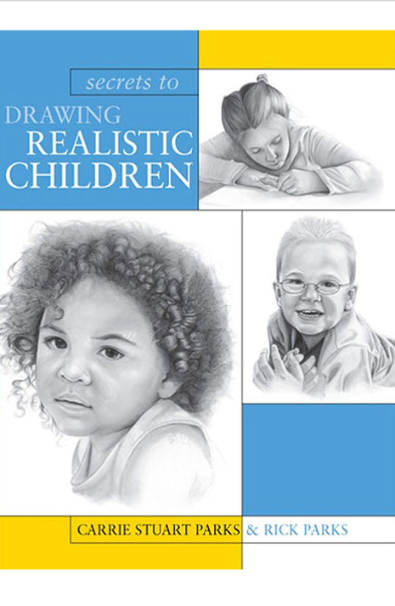
Secrets to Drawing Realistic Children book pdf download

book quality : Excellent
Auther : Carrie Stuart Parks
Date of Coming : 2022-08-10
Size of file : 32.0MB
Section : Drawing
Number of Pages : 118
Department : Arts and sports
Language : English

Author: Carrie Stuart Parks

About the Author: Carrie Stuart Parks is an award winning artist, writer, speaker, and law enforcement instructor. A Certified Forensic Artist, she met her husband, Rick, in the romantic hallways of the FBI Academy in Quantico, Virginia. Together they formed a dynamic and successful team in their fine and forensic art, working on major national and international cases and creating exquisite watercolors and stone carvings. They travel internationally, teaching forensic art to a variety of participants: from the Secret Service to the FBI, from large law enforcement agencies to the smallest two-man departments in their one-week classes. They are the largest instructors of forensic art in the world. Carrie has won numerous awards for her innovative teaching methods and general career excellence and is a signature member of the Idaho Watercolor Society. Carrie’s Gwen Marcey series chronicles a forensic artist from Montana and is loosely based on Carrie’s forensic cases.She began her fiction writing career while battling breast cancer. Mentored by NY Times bestselling author, Frank Peretti, Carrie’s debut novel, along with her subsequent novels, have been met with critical acclaim, including: 2021 Kudos Award Winner: fiction (Relative Silence) 2020 Golden Scroll Winner: mystery/suspense/thriller (Fragments of Fear) 2019 Daphne du Maurier finalist: mainstream mystery suspense (Formula of Deception) 2019 Cascade Award finalist: (Formula of Deception) 2018 Carol Award Winner: mystery/suspense/thriller (Portrait of Vengeance) 2018 Inspy Award Winner: mystery/suspense/thriller (Portrait of Vengeance) 2018 Maxwell Award Winner: Fiction (Portrait of Vengeance) 2018 Wright Award Winner: Fiction (Portrait of Vengeance) 2018 RT Reviews Finalist 2017 Christy Winner: mystery/suspense (When Death Draws Near) 2017 Carol Winner: mystery/suspense (When Death Draws Near) 2017 RT Reviewer’s Choice Best Book Awards for 2016 finalist (When Death Draws Near) 2017 Christian Retailing Best Finalist:mystery/suspense (When Death Draws Near) 2017 Inspy Award Finalist (When Death Draws Near) 2016 Idaho Author Awards: winner: mystery/suspense (When Death Draws Near) 2016 INSPY winner: mystery/suspense (The Bones Will Speak) 2016 Christy Award Finalist: suspense/mystery (The Bones Will Speak) 2016 Christian Retailing Best Finalist: mystery/suspense (The Bones Will Speak) 2016 Family Fiction Readers Choice: 15 Best Books of 2015 (The Bones Will Speak) 2016 Idaho Author Awards Finalist: mystery/suspense (The Bones Will Speak) 2015 Carol Award Winner: mystery/suspense/thriller (A Cry From the Dust) 2015 Christy Award finalist: mystery/suspense/thriller (A Cry From the Dust) 2015 Selah Award finalist: mystery/suspense/thriller (A Cry From the Dust)

Secrets to Drawing Realistic Children book pdf download By Carrie Stuart Parks

Maybe you cant stop your favorite child from growing up, but you can create timeless memories with pencil, paper and some simple drawing skills. Now you can capture your most cherished moments in a way no ordinary photograph can.

Download PDF of Secrets to Drawing Realistic Children book pdf download By Carrie Stuart Parks
-Adrian Agency Library

Download Now

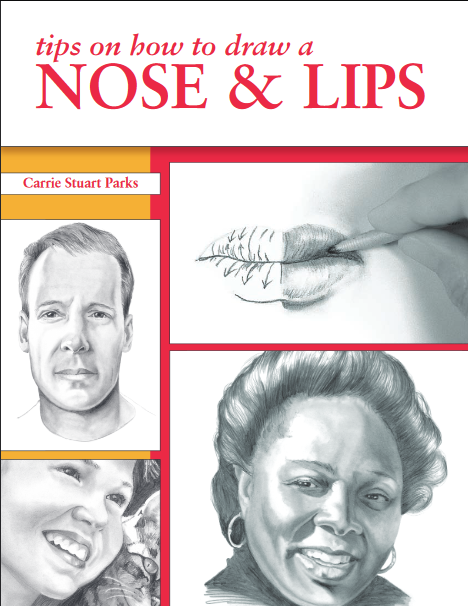
Tips on how to draw a Nose & Lips book pdf download

Department : Arts and sports
Date of Coming : 2022-08-10
Number of Pages : 24
Auther : Carrie Stuart Parks
Size of file : 10.4MB
Section : Drawing
book quality : Excellent
Language : English

Author: Carrie Stuart Parks

About the Author: Carrie Stuart Parks is an award winning artist, writer, speaker, and law enforcement instructor. A Certified Forensic Artist, she met her husband, Rick, in the romantic hallways of the FBI Academy in Quantico, Virginia. Together they formed a dynamic and successful team in their fine and forensic art, working on major national and international cases and creating exquisite watercolors and stone carvings. They travel internationally, teaching forensic art to a variety of participants: from the Secret Service to the FBI, from large law enforcement agencies to the smallest two-man departments in their one-week classes. They are the largest instructors of forensic art in the world. Carrie has won numerous awards for her innovative teaching methods and general career excellence and is a signature member of the Idaho Watercolor Society. Carrie’s Gwen Marcey series chronicles a forensic artist from Montana and is loosely based on Carrie’s forensic cases.She began her fiction writing career while battling breast cancer. Mentored by NY Times bestselling author, Frank Peretti, Carrie’s debut novel, along with her subsequent novels, have been met with critical acclaim, including: 2021 Kudos Award Winner: fiction (Relative Silence) 2020 Golden Scroll Winner: mystery/suspense/thriller (Fragments of Fear) 2019 Daphne du Maurier finalist: mainstream mystery suspense (Formula of Deception) 2019 Cascade Award finalist: (Formula of Deception) 2018 Carol Award Winner: mystery/suspense/thriller (Portrait of Vengeance) 2018 Inspy Award Winner: mystery/suspense/thriller (Portrait of Vengeance) 2018 Maxwell Award Winner: Fiction (Portrait of Vengeance) 2018 Wright Award Winner: Fiction (Portrait of Vengeance) 2018 RT Reviews Finalist 2017 Christy Winner: mystery/suspense (When Death Draws Near) 2017 Carol Winner: mystery/suspense (When Death Draws Near) 2017 RT Reviewer’s Choice Best Book Awards for 2016 finalist (When Death Draws Near) 2017 Christian Retailing Best Finalist:mystery/suspense (When Death Draws Near) 2017 Inspy Award Finalist (When Death Draws Near) 2016 Idaho Author Awards: winner: mystery/suspense (When Death Draws Near) 2016 INSPY winner: mystery/suspense (The Bones Will Speak) 2016 Christy Award Finalist: suspense/mystery (The Bones Will Speak) 2016 Christian Retailing Best Finalist: mystery/suspense (The Bones Will Speak) 2016 Family Fiction Readers Choice: 15 Best Books of 2015 (The Bones Will Speak) 2016 Idaho Author Awards Finalist: mystery/suspense (The Bones Will Speak) 2015 Carol Award Winner: mystery/suspense/thriller (A Cry From the Dust) 2015 Christy Award finalist: mystery/suspense/thriller (A Cry From the Dust) 2015 Selah Award finalist: mystery/suspense/thriller (A Cry From the Dust)

Tips on how to draw a Nose & Lips book pdf download By Carrie Stuart Parks

Drawing faces is a common desire for artists, and beginners must start somewhere. That’s why lessons on specific features, such as how draw a nose or how to draw lips, are a great way to focus on the parts that make up the whole. FBI-trained artist Carrie Stuart Parks teaches you these things on how to draw a face and more in her books, including Secrets to Drawing Realistic Faces. Learning to recognize shapes in a photograph or image takes training, she writes. You need to train your mind what to look for. Once you become aware of something, it’s easier to see it. For example, when you’re buying a new car you spend time studying the cars on the market. You then go to a dealer and look over the selection. You might fall in lust with a particular model and color. Afterwards, it seems like everybody has the car you were looking at. Did everyone suddenly go out and buy the same car? No, you have simply become aware of the shape and color of that particular car, and you now recognize it among all the other cars on the road. The same thing happens with the shapes in facial features.

Download PDF of Tips on how to draw a Nose & Lips book pdf download By Carrie Stuart Parks
-Adrian Agency Library
Download Now

The Elements of Drawing book pdf download

Auther : John Ruskin
Number of Pages : 346
Department : Arts and sports
Section : Drawing
Size of file : 26.7MB
book quality : Good
Language : English
Date of Coming : 2022-08-10

Author: John Ruskin

About the Author: John Ruskin (8 February 1819 – 20 January 1900) was an English writer, philosopher, art critic and polymath of the Victorian era. He wrote on subjects as varied as geology, architecture, myth, ornithology, literature, education, botany and political economy. Ruskin’s writing styles and literary forms were equally varied. He wrote essays and treatises, poetry and lectures, travel guides and manuals, letters and even a fairy tale. He also made detailed sketches and paintings of rocks, plants, birds, landscapes, architectural structures and ornamentation. The elaborate style that characterised his earliest writing on art gave way in time to plainer language designed to communicate his ideas more effectively. In all of his writing, he emphasised the connections between nature, art and society. Ruskin was hugely influential in the latter half of the 19th century and up to the First World War. After a period of relative decline, his reputation has steadily improved since the 1960s with the publication of numerous academic studies of his work. Today, his ideas and concerns are widely recognised as having anticipated interest in environmentalism, sustainability and craft. Ruskin first came to widespread attention with the first volume of Modern Painters (1843), an extended essay in defence of the work of J. M. W. Turner in which he argued that the principal role of the artist is “truth to nature”. From the 1850s, he championed the Pre-Raphaelites, who were influenced by his ideas. His work increasingly focused on social and political issues. Unto This Last (1860, 1862) marked the shift in emphasis. In 1869, Ruskin became the first Slade Professor of Fine Art at the University of Oxford, where he established the Ruskin School of Drawing. In 1871, he began his monthly “letters to the workmen and labourers of Great Britain”, published under the title Fors Clavigera (1871–1884). In the course of this complex and deeply personal work, he developed the principles underlying his ideal society. As a result, he founded the Guild of St George, an organisation that endures today.

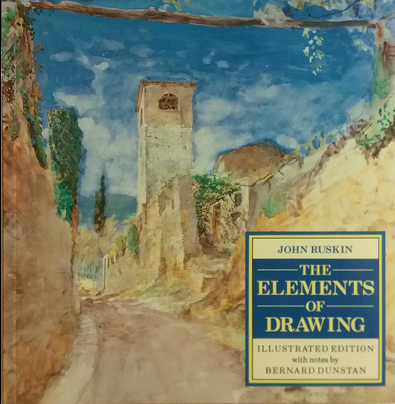
The Elements of Drawing book pdf download By John Ruskin

Can drawing — sound, honest representation of the world as the eye sees it, not tricks with the pencil or a few effects — be learned from a book? One of the most gifted draftsmen, who is also one of the greatest art critics and theorists of all time, answers that question with a decided Yes. He is John Ruskin, the author of this book, a classic in art education as well as a highly effective text for the student and amateur today. The work is in three parts, cast in the form of letters to a student, successively covering First Practice, Sketching from Nature, and Colour and Composition. Starting with the bare fundamentals (what kind of drawing pen to buy; shading a square evenly), and using the extremely practical method of exercises which the student performs from the very first, Ruskin instructs, advises, guides, counsels, and anticipates problems with sensitivity. The exercises become more difficult, developing greater and greater skills until Ruskin feels his reader is ready for watercolors and finally composition, which he treats in detail as to the laws of principality, repetition, continuity, curvature, radiation, contrast, interchange, consistency, and harmony. All along the way, Ruskin explains, in plain, clear language, the artistic and craftsmanlike reasons behind his practical advice — underlying which, of course, is Ruskin’s brilliant philosophy of honest, naturally observed art which has so much affected our aesthetic. Three full-page plates and 48 woodcuts and diagrams (the latter from drawings by the author) show the student what the text describes. An appendix devotes many pages to the art works which may be studied with profit.

Download PDF of The Elements of Drawing book pdf download By John Ruskin
-Adrian Agency Library

Download Now

The Storm-Cloud of the Nineteenth Century book pdf download

Section : Drawing
Number of Pages : 73
Size of file : 0.41MB
Auther : John Ruskin
Date of Coming : 2022-08-10
book quality : Excellent
Language : English
Department : Arts and sports

Author: John Ruskin

About the Author: John Ruskin (8 February 1819 – 20 January 1900) was an English writer, philosopher, art critic and polymath of the Victorian era. He wrote on subjects as varied as geology, architecture, myth, ornithology, literature, education, botany and political economy. Ruskin’s writing styles and literary forms were equally varied. He wrote essays and treatises, poetry and lectures, travel guides and manuals, letters and even a fairy tale. He also made detailed sketches and paintings of rocks, plants, birds, landscapes, architectural structures and ornamentation. The elaborate style that characterised his earliest writing on art gave way in time to plainer language designed to communicate his ideas more effectively. In all of his writing, he emphasised the connections between nature, art and society. Ruskin was hugely influential in the latter half of the 19th century and up to the First World War. After a period of relative decline, his reputation has steadily improved since the 1960s with the publication of numerous academic studies of his work. Today, his ideas and concerns are widely recognised as having anticipated interest in environmentalism, sustainability and craft. Ruskin first came to widespread attention with the first volume of Modern Painters (1843), an extended essay in defence of the work of J. M. W. Turner in which he argued that the principal role of the artist is “truth to nature”. From the 1850s, he championed the Pre-Raphaelites, who were influenced by his ideas. His work increasingly focused on social and political issues. Unto This Last (1860, 1862) marked the shift in emphasis. In 1869, Ruskin became the first Slade Professor of Fine Art at the University of Oxford, where he established the Ruskin School of Drawing. In 1871, he began his monthly “letters to the workmen and labourers of Great Britain”, published under the title Fors Clavigera (1871–1884). In the course of this complex and deeply personal work, he developed the principles underlying his ideal society. As a result, he founded the Guild of St George, an organisation that endures today.

The Storm-Cloud of the Nineteenth Century book pdf download By John Ruskin

This work has been selected by scholars as being culturally important, and is part of the knowledge base of civilization as we know it. This work was reproduced from the original artifact, and remains as true to the original work as possible. Therefore, you will see the original copyright references, library stamps (as most of these works have been housed in our most important libraries around the world), and other notations in the work. This work is in the public domain in the United States of America, and possibly other nations. Within the United States, you may freely copy and distribute this work, as no entity (individual or corporate) has a copyright on the body of the work. As a reproduction of a historical artifact, this work may contain missing or blurred pages, poor pictures, errant marks, etc. Scholars believe, and we concur, that this work is important enough to be preserved, reproduced, and made generally available to the public. We appreciate your support of the preservation process, and thank you for being an important part of keeping this knowledge alive and relevant.

Download PDF of The Storm-Cloud of the Nineteenth Century book pdf download By John Ruskin
-Adrian Agency Library

Download Now

The Two Paths book pdf download

Section : Drawing
Department : Arts and sports
Auther : John Ruskin
book quality : Excellent
Size of file : 0.54MB
Language : English
Date of Coming : 2022-08-10
Number of Pages : 130

Author: John Ruskin

About the Author: John Ruskin (8 February 1819 – 20 January 1900) was an English writer, philosopher, art critic and polymath of the Victorian era. He wrote on subjects as varied as geology, architecture, myth, ornithology, literature, education, botany and political economy. Ruskin’s writing styles and literary forms were equally varied. He wrote essays and treatises, poetry and lectures, travel guides and manuals, letters and even a fairy tale. He also made detailed sketches and paintings of rocks, plants, birds, landscapes, architectural structures and ornamentation. The elaborate style that characterised his earliest writing on art gave way in time to plainer language designed to communicate his ideas more effectively. In all of his writing, he emphasised the connections between nature, art and society. Ruskin was hugely influential in the latter half of the 19th century and up to the First World War. After a period of relative decline, his reputation has steadily improved since the 1960s with the publication of numerous academic studies of his work. Today, his ideas and concerns are widely recognised as having anticipated interest in environmentalism, sustainability and craft. Ruskin first came to widespread attention with the first volume of Modern Painters (1843), an extended essay in defence of the work of J. M. W. Turner in which he argued that the principal role of the artist is “truth to nature”. From the 1850s, he championed the Pre-Raphaelites, who were influenced by his ideas. His work increasingly focused on social and political issues. Unto This Last (1860, 1862) marked the shift in emphasis. In 1869, Ruskin became the first Slade Professor of Fine Art at the University of Oxford, where he established the Ruskin School of Drawing. In 1871, he began his monthly “letters to the workmen and labourers of Great Britain”, published under the title Fors Clavigera (1871–1884). In the course of this complex and deeply personal work, he developed the principles underlying his ideal society. As a result, he founded the Guild of St George, an organisation that endures today.

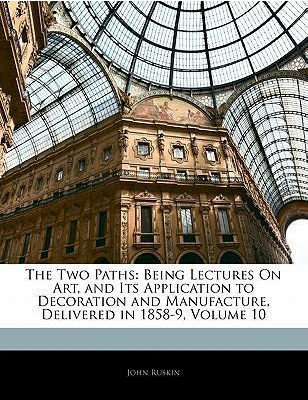
The Two Paths book pdf download By John Ruskin

In The Two Paths, Ruskin connects his theories of art with economic and practical life. The central theme of Ruskin’s theories of art was that contented individuals-working within a just society and striving to capture the essence of nature-produce fine and noble art, while corrupt and despondent individuals-working within an unjust society and relying on the tools of the machine age-produce inferior art. Ruskin’s essays anticipate and complement theoretical approaches by critics such as Walter Benjamin, Theodor Adorno, and Max Horkheimer. Offering a reconsideration of the rhetorical tradition from a visual perspective, this Prospects in Visual Rhetoric Critical Edition is the only edition of The Two Paths currently in print. The introductions and annotations were designed to facilitate critical discussions of Ruskin’s theories of art, his role as a social reformer, his visual rhetoric, and the historical/political contexts of his work. The editor’s notes define names and cultural allusions in the text, which also includes all appendices and Ruskin’s own introduction and illustrations. About the Author John Ruskin (1819-1900), best known for his studies of design and its social and historical implications, is perhaps the greatest critic of culture and art in English history. About the Editor Christine Roth is assistant professor of English at the University of Wisconsin – Oshkosh, where she teaches and writes about nineteenth-century British literature and the Pre-Raphaelite movement.

Download PDF of The Two Paths book pdf download By John Ruskin
-Adrian Agency Library

Download Now

Bright Earth: the Invention of Colour book pdf download

Number of Pages : 536
Size of file : 6.34MB
Department : Arts and sports
Date of Coming : 2022-08-10
book quality : Excellent
Section : Drawing
Auther : Philip Ball
Language : English

Author: Philip Ball

About the Author: Philip Ball is a freelance science writer. He worked previously at Nature for over 20 years, first as an editor for physical sciences (for which his brief extended from biochemistry to quantum physics and materials science) and then as a Consultant Editor. His writings on science for the popular press have covered topical issues ranging from cosmology to the future of molecular biology. Philip is the author of many popular books on science, including works on the nature of water, pattern formation in the natural world, colour in art, the science of social and political philosophy, the cognition of music, and physics in Nazi Germany. He has written widely on the interactions between art and science, and has delivered lectures to scientific and general audiences at venues ranging from the Victoria and Albert Museum (London) to the NASA Ames Research Center, London’s National Theatre and the London School of Economics. Philip continues to write regularly for Nature. He has contributed to publications ranging from New Scientist to the New York Times, the Guardian, the Financial Times and New Statesman. He is a contributing editor of Prospect magazine (for which he writes a science blog), and also a columnist for Chemistry World, Nature Materials, and the Italian science magazine Sapere. He has broadcast on many occasions on radio and TV, and is a presenter of “Science Stories” on BBC Radio 4. He is a Fellow of the Royal Society of Chemistry, sits on the editorial board of Chemistry World and Interdiscipinary Science Reviews, and is a board member of the RESOLV network on solvation science at the Ruhr University of Bochum. Philip has a BA in Chemistry from the University of Oxford and a PhD in Physics from the University of Bristol. Philip Ball is a writer. Most of his books are concerned with science in some form or another: its history, its interactions with the arts and society, its achievements, delights and detours. He is a regular columnist for several magazines and an occasional radio presenter and broadcaster. He was an editor of Nature for many years, and long ago, a chemist and physicist of sorts.

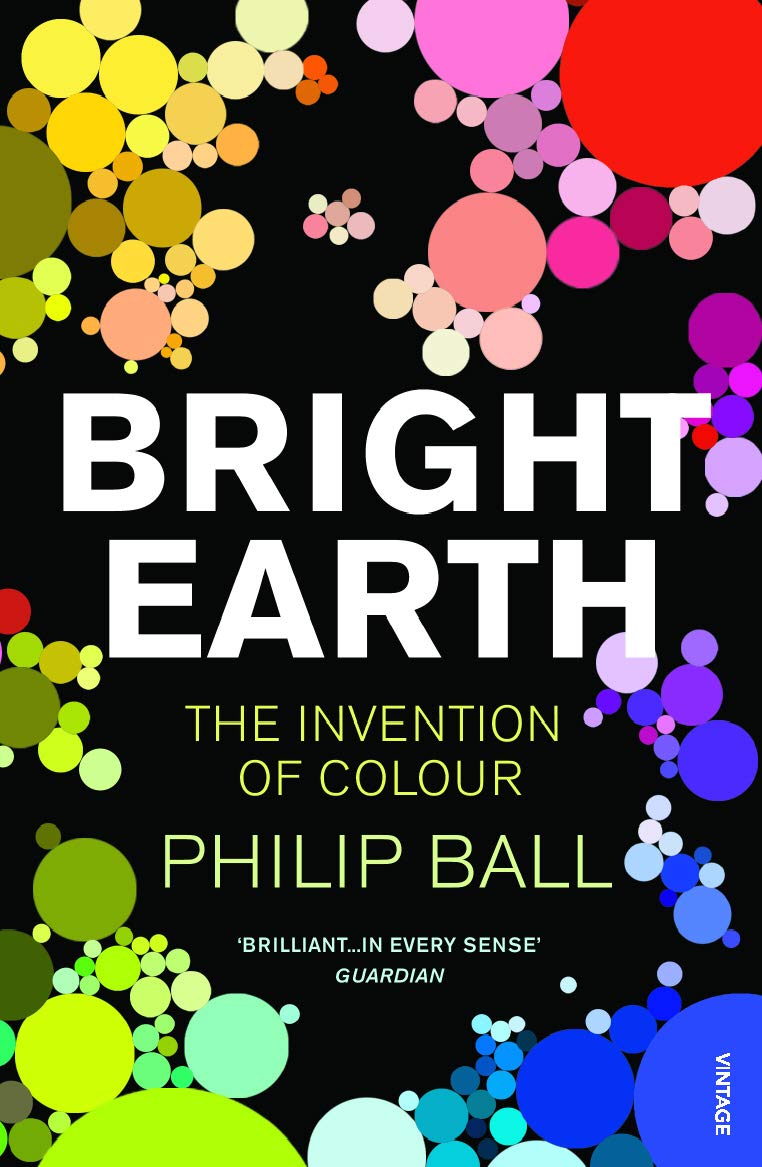
Bright Earth: the Invention of Colour book pdf download By Philip Ball

Colour in art – as in life – is both inspiring and uplifting, but where does it come from? How have artists found new hues, and how have these influenced their work? Beginning with the ancients – when just a handful of pigments made up the artist’s palette – and charting the discoveries and developments that have led to the many splendoured rainbow of modern paints, Bright Earth brings the story of colour spectacularly alive. Packed with anecdotes about lucky accidents and hapless misfortunes in the quests for new colours, it provides an entertaining and fascinating new perspective on the science of art.

Download PDF of Bright Earth: the Invention of Colour book pdf download By Philip Ball
-Adrian Agency Library

Download Now

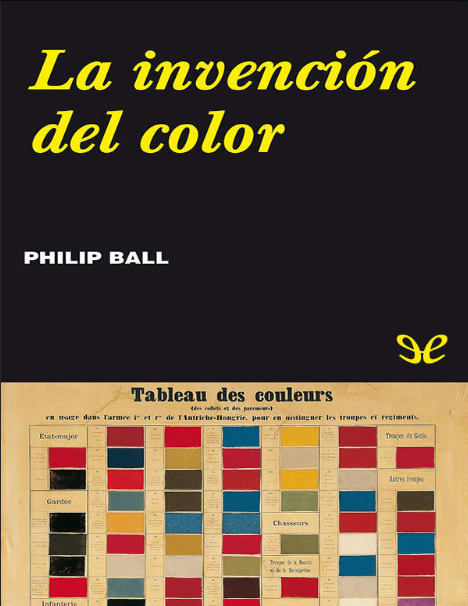
La invención del color book pdf download

Number of Pages : 863
Department : Arts and sports
Auther : Philip Ball
book quality : Excellent
Date of Coming : 2022-08-10
Section : Drawing
Size of file : 6.51MB
Language : Spanish

Author: Philip Ball

About the Author: Philip Ball is a freelance science writer. He worked previously at Nature for over 20 years, first as an editor for physical sciences (for which his brief extended from biochemistry to quantum physics and materials science) and then as a Consultant Editor. His writings on science for the popular press have covered topical issues ranging from cosmology to the future of molecular biology. Philip is the author of many popular books on science, including works on the nature of water, pattern formation in the natural world, colour in art, the science of social and political philosophy, the cognition of music, and physics in Nazi Germany. He has written widely on the interactions between art and science, and has delivered lectures to scientific and general audiences at venues ranging from the Victoria and Albert Museum (London) to the NASA Ames Research Center, London’s National Theatre and the London School of Economics. Philip continues to write regularly for Nature. He has contributed to publications ranging from New Scientist to the New York Times, the Guardian, the Financial Times and New Statesman. He is a contributing editor of Prospect magazine (for which he writes a science blog), and also a columnist for Chemistry World, Nature Materials, and the Italian science magazine Sapere. He has broadcast on many occasions on radio and TV, and is a presenter of “Science Stories” on BBC Radio 4. He is a Fellow of the Royal Society of Chemistry, sits on the editorial board of Chemistry World and Interdiscipinary Science Reviews, and is a board member of the RESOLV network on solvation science at the Ruhr University of Bochum. Philip has a BA in Chemistry from the University of Oxford and a PhD in Physics from the University of Bristol. Philip Ball is a writer. Most of his books are concerned with science in some form or another: its history, its interactions with the arts and society, its achievements, delights and detours. He is a regular columnist for several magazines and an occasional radio presenter and broadcaster. He was an editor of Nature for many years, and long ago, a chemist and physicist of sorts.

La invención del color book pdf download By Philip Ball

De dónde viene el color? ¿Cómo encuentran los pintores nuevas tonalidades y de qué manera influyen éstas en su obra? Desde la austera paleta de los griegos y la costosa pasión por el púrpura de los romanos hasta la gloriosa profusión del arte renacentista y la sobriedad cromática de Velázquez y Rembrandt; desde las tempranas incursiones de los pintores románticos en el laboratorio del químico al matrimonio, en ocasiones fallido y en otras espectacularmente exitoso, entre arte y ciencia en el siglo XX, la química y el uso artístico del color han existido siempre en una simbiótica relación que ha determinado sus respectivas evoluciones. La historia de la pintura ha estado influida por la disponibilidad o no de determinados pigmentos, y los descubrimientos científicos se han reflejado directamente en la paleta del artista. Lleno de anécdotas y apuntes etimológicos, La invención del color es una historia luminosa de la magia escondida en el lienzo del pintor.

Download PDF of La invención del color book pdf download By Philip Ball
-Adrian Agency Library

Download Now