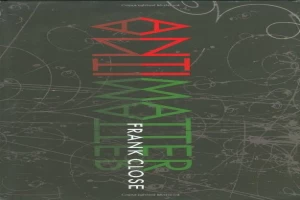
Antimatter book pdf download

Department : Natural Science
Auther :
Section : modern physics
Number of Pages : 177
book quality : Good
Language : English
Date of Coming : 2022-08-10
Size of file : 0.62MB

Author: Frank Close

About the Author: Frank Close was born in 1945 AD in Peterborough, he was awarded the OBE, and he is Professor of Physics at the University of Oxford, and a Fellow of Exeter College. He is the author of several bestselling books such as: The Lucifer Legacy, Particle Physics: A Very Short Introduction, The New Cosmic Onion, The Particle Explosion, The End, Extremely Thorny, and “The Particle Saga” and “Antimatter”. He made several achievements, including: – Order of the British Empire at the rank of officer. Fellowship of the Institute of Physics in 1991. Kelvin Prize in 1996. – Vice-President of the British Association for the Advancement of Science 1993-99. – Head of the British team in the International Physics Olympiad since 2003. – Michael Faraday Award in 2013.

Antimatter book pdf download By Frank Close

Of all the mind-bending discoveries of physics–quarks, black holes, strange attractors, curved space–the existence of antimatter is one of the most bizarre. It is also one of the most difficult, literally and figuratively, to grasp. Antimatter explores this strange mirror world, where particles have identical yet opposite properties to those that make up the familiar matter we encounter everyday, where left becomes right, positive becomes negative, and where–should matter and antimatter meet–the resulting flash of blinding energy would make even thermonuclear explosions look feeble by comparison. Antimatter is an idea long beloved of science-fiction writers–but here, renowned science writer Frank Close shows that the reality of antimatter is even more intriguing than the fiction. We know that at one time antimatter and matter existed in perfect counterbalance, and that antimatter then perpetrated a vanishing act on a cosmic scale that remains one of the great mysteries of the universe. Today, antimatter does not exist normally, at least on Earth, but we know that it is real, as scientists are now able to make small pieces of it in particle accelerators, such as that at CERN in Geneva. Looking at the remarkable prediction of antimatter and how it grew from the meeting point of relativity and quantum theory in the early 20th century, at the discovery of the first antiparticles, at cosmic rays, annihilation, antimatter bombs, and antiworlds, Close separates the facts from the fiction about antimatter, and explains how its existence can give us profound clues about the origins and structure of the universe. For all those wishing to take a closer look at the flip side of the visible world, this lucidly written book shines a bright light into a truly strange realm.

Download PDF of Antimatter book pdf download By Frank Close
-Adrian Agency Library

Download Now

The void book pdf download

Section : modern physics
Date of Coming : 2022-08-10
Size of file : 0.97MB
book quality : Good
Auther :
Number of Pages : 177
Language : English
Department : Natural Science

Author: Frank Close

About the Author: Frank Close was born in 1945 AD in Peterborough, he was awarded the OBE, and he is Professor of Physics at the University of Oxford, and a Fellow of Exeter College. He is the author of several bestselling books such as: The Lucifer Legacy, Particle Physics: A Very Short Introduction, The New Cosmic Onion, The Particle Explosion, The End, Extremely Thorny, and “The Particle Saga” and “Antimatter”. He made several achievements, including: – Order of the British Empire at the rank of officer. Fellowship of the Institute of Physics in 1991. Kelvin Prize in 1996. – Vice-President of the British Association for the Advancement of Science 1993-99. – Head of the British team in the International Physics Olympiad since 2003. – Michael Faraday Award in 2013.

The void book pdf download By Frank Close

What is the void? What remains when you take all the matter away? Can empty Space–nothing–exist? To answer these questions, eminent scientist Frank Close takes us on a lively and accessible journey that ranges from ancient ideas and cultural superstitions to the frontiers of current research, illuminating the story of how scientists have explored the void and the rich discoveries they have made there. Readers will find an enlightening history of the vacuum: how the efforts to make a better vacuum led to the discovery of the electron; the understanding that the vacuum is filled with fields; the ideas of Newton, Mach, and Einstein on the nature of space and time; the mysterious aether and how Einstein did away with it; and the latest ideas that the vacuum is filled with the Higgs field. The story ranges from the absolute zero of temperature and the seething vacuum of virtual particles and anti-particles that fills space, to the extreme heat and energy of the early universe. It compares the ways that substances change from gas to liquid and solid with the way that the vacuum of our universe has changed as the temperature dropped following the Big Bang. It covers modern ideas that there may be more dimensions to the void than those that we currently are aware of and even that our universe is but one in a multiverse. The Void takes us inside a field of science that may ultimately provide answers to some of cosmology’s most fundamental questions: what lies outside the universe, and, if there was once nothing, then how did the universe begin?

Download PDF of The void book pdf download By Frank Close
-Adrian Agency Library

Download Now

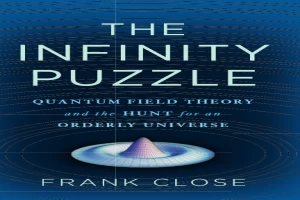
The Infinity Puzzle: Quantum Field Theory and the Hunt for an Orderly Universe book pdf download

Language : English
Department : Natural Science
Size of file : 5.11MB
Number of Pages : 449
Date of Coming : 2022-08-10
Auther :
Section : modern physics
book quality : Good

Author: Frank Close

About the Author: Frank Close was born in 1945 AD in Peterborough, he was awarded the OBE, and he is Professor of Physics at the University of Oxford, and a Fellow of Exeter College. He is the author of several bestselling books such as: The Lucifer Legacy, Particle Physics: A Very Short Introduction, The New Cosmic Onion, The Particle Explosion, The End, Extremely Thorny, and “The Particle Saga” and “Antimatter”. He made several achievements, including: – Order of the British Empire at the rank of officer. Fellowship of the Institute of Physics in 1991. Kelvin Prize in 1996. – Vice-President of the British Association for the Advancement of Science 1993-99. – Head of the British team in the International Physics Olympiad since 2003. – Michael Faraday Award in 2013.

The Infinity Puzzle: Quantum Field Theory and the Hunt for an Orderly Universe book pdf download By Frank Close

Speculation is rife that by 2012 the elusive Higgs boson will be found at the Large Hadron Collider. If found, the Higgs boson would help explain why everything has mass. But there’s more at stake—what we’re really testing is our capacity to make the universe reasonable. Our best understanding of physics is predicated on something known as quantum field theory. Unfortunately, in its raw form, it doesn’t make sense—its outputs are physically impossible infinite percentages when they should be something simpler, like the number 1. The kind of physics that the Higgs boson represents seeks to “renormalize” field theory, forcing equations to provide answers that match what we see in the real world. The Infinity Puzzle is the story of a wild idea on the road to acceptance. Only Close can tell it.

Download PDF of The Infinity Puzzle: Quantum Field Theory and the Hunt for an Orderly Universe book pdf download By Frank Close
-Adrian Agency Library

Download Now

Neutrino book pdf download

Date of Coming : 2022-08-10
Size of file : 1.01MB
Department : Natural Science
book quality : Good
Number of Pages : 182
Auther :
Language : English
Section : modern physics

Author: Frank Close

About the Author: Frank Close was born in 1945 AD in Peterborough, he was awarded the OBE, and he is Professor of Physics at the University of Oxford, and a Fellow of Exeter College. He is the author of several bestselling books such as: The Lucifer Legacy, Particle Physics: A Very Short Introduction, The New Cosmic Onion, The Particle Explosion, The End, Extremely Thorny, and “The Particle Saga” and “Antimatter”. He made several achievements, including: – Order of the British Empire at the rank of officer. Fellowship of the Institute of Physics in 1991. Kelvin Prize in 1996. – Vice-President of the British Association for the Advancement of Science 1993-99. – Head of the British team in the International Physics Olympiad since 2003. – Michael Faraday Award in 2013.

Neutrino book pdf download By Frank Close

Neutrinos are perhaps the most enigmatic particles in the universe. These tiny, ghostly particles are formed by the billions in stars and pass through us constantly, unseen, at almost the speed of light. Yet half a century after their discovery, we still know less about them than all the other varieties of matter that have ever been seen. In this engaging, concise volume, renowned scientist and popular writer Frank Close gives a vivid account of the discovery of neutrinos and our growing understanding of their significance, also touching on some speculative ideas concerning the possible uses of neutrinos and their role in the early universe. Close begins with the early history of the discovery of radioactivity by Henri Becquerel and Marie and Pierre Curie, the early model of the atom by Ernest Rutherford, and problems with these early atomic models, and Wolfgang Pauli’s solution to that problem by inventing the concept of neutrino (named by Enrico Fermi, “neutrino” being Italian for “little neutron”). The book describes how the confirmation of Pauli’s theory didn’t occur until 1956, when Clyde Cowan and Fred Reines detected neutrinos, and reveals that the first “natural” neutrinos were finally detected by Reines in 1965 (before that, they had only been detected in reactors or accelerators). Close takes us to research experiments miles underground that are able to track neutrinos’ fleeting impact as they pass through vast pools of cadmium chloride and he explains why they are becoming of such interest to cosmologists–if we can track where a neutrino originated we will be looking into the far distant reaches of the universe. In telling the story of the neutrino, Close offers a fascinating portrait of a strand of modern physics that shed light on everything from the workings of the atom and the power of the sun.

Download PDF of Neutrino book pdf download By Frank Close
-Adrian Agency Library

Download Now

The New Cosmic Onion: Quarks and the Nature of the Universe book pdf download

Language : English
book quality : Good
Department : Natural Science
Auther :
Size of file : 2.87MB
Date of Coming : 2022-08-10
Number of Pages : 234
Section : modern physics

Author: Frank Close

About the Author: Frank Close was born in 1945 AD in Peterborough, he was awarded the OBE, and he is Professor of Physics at the University of Oxford, and a Fellow of Exeter College. He is the author of several bestselling books such as: The Lucifer Legacy, Particle Physics: A Very Short Introduction, The New Cosmic Onion, The Particle Explosion, The End, Extremely Thorny, and “The Particle Saga” and “Antimatter”. He made several achievements, including: – Order of the British Empire at the rank of officer. Fellowship of the Institute of Physics in 1991. Kelvin Prize in 1996. – Vice-President of the British Association for the Advancement of Science 1993-99. – Head of the British team in the International Physics Olympiad since 2003. – Michael Faraday Award in 2013.

The New Cosmic Onion: Quarks and the Nature of the Universe book pdf download By Frank Close

Not since Newton’s apple has there been a physics phenomenon as deliciously appealing to the masses as Frank Close’s Cosmic Onion. Widely embraced by scientists and laypersons alike, the book quickly became an international bestseller, has been translated into seven languages, and propelled the author to become a recognized popular science celebrity around the world. Much has changed since the original publication in 1983, and The New Cosmic Onion was extensively revised and updated to reflect our new view of the universe. Keeping the best contents from the previous work, this new edition includes extensive new material explaining the scientific challenges at the start of this century.

Download PDF of The New Cosmic Onion: Quarks and the Nature of the Universe book pdf download By Frank Close
-Adrian Agency Library
Download Now

Atomic Force Microscopy book pdf download

Size of file : 7.17MB
Date of Coming : 2022-08-10
Department : Natural Science
book quality : Good
Auther :
Section : modern physics
Language : English
Number of Pages : 154

Author: Wesley C. Sanders

About the Author: Dr. Wesley C. Sanders is Associate Professor at Engineering Department on Salt Lake Community College.

Atomic Force Microscopy book pdf download By Wesley C. Sanders

This book focuses primarily on the atomic force microscope and serves as a reference for students, postdocs, and researchers using atomic force microscopes for the first time. In addition, this book can serve as the primary text for a semester-long introductory course in atomic force microscopy. There are a few algebra-based mathematical relationships included in the book that describe the mechanical properties, behaviors, and intermolecular forces associated with probes used in atomic force microscopy. Relevant figures, tables, and illustrations also appear in each chapter in an effort to provide additional information and points of interest. This book includes suggested laboratory investigations that provide opportunities to explore the versatility of the atomic force microscope. These laboratory exercises include opportunities for experimenters to explore force curves, surface roughness, friction loops, conductivity imaging, and phase imaging.

Download PDF of Atomic Force Microscopy book pdf download By Wesley C. Sanders
-Adrian Agency Library
Download Now

Nature’s patterns: A Tapestry in Three Parts book pdf download

Department : Natural Science
Auther :
book quality : Excellent
Date of Coming : 2022-08-10
Language : English
Section : modern physics
Number of Pages : 50
Size of file : 9.34MB

Author: Philip Ball

About the Author: Philip Ball is a freelance science writer. He worked previously at Nature for over 20 years, first as an editor for physical sciences (for which his brief extended from biochemistry to quantum physics and materials science) and then as a Consultant Editor. His writings on science for the popular press have covered topical issues ranging from cosmology to the future of molecular biology. Philip is the author of many popular books on science, including works on the nature of water, pattern formation in the natural world, colour in art, the science of social and political philosophy, the cognition of music, and physics in Nazi Germany. He has written widely on the interactions between art and science, and has delivered lectures to scientific and general audiences at venues ranging from the Victoria and Albert Museum (London) to the NASA Ames Research Center, London’s National Theatre and the London School of Economics. Philip continues to write regularly for Nature. He has contributed to publications ranging from New Scientist to the New York Times, the Guardian, the Financial Times and New Statesman. He is a contributing editor of Prospect magazine (for which he writes a science blog), and also a columnist for Chemistry World, Nature Materials, and the Italian science magazine Sapere. He has broadcast on many occasions on radio and TV, and is a presenter of “Science Stories” on BBC Radio 4. He is a Fellow of the Royal Society of Chemistry, sits on the editorial board of Chemistry World and Interdiscipinary Science Reviews, and is a board member of the RESOLV network on solvation science at the Ruhr University of Bochum. Philip has a BA in Chemistry from the University of Oxford and a PhD in Physics from the University of Bristol. Philip Ball is a writer. Most of his books are concerned with science in some form or another: its history, its interactions with the arts and society, its achievements, delights and detours. He is a regular columnist for several magazines and an occasional radio presenter and broadcaster. He was an editor of Nature for many years, and long ago, a chemist and physicist of sorts.

Nature’s patterns: A Tapestry in Three Parts book pdf download By Philip Ball

Patterns are everywhere in nature–in the ranks of clouds in the sky, the stripes of an angelfish, the arrangement of petals in flowers. Where does this order and regularity come from? As Philip Ball reveals in Nature’s Patterns: A Tapestry in Three Parts, this order creates itself. The patterns we see come from self-organization. Indeed, scientists have found that there is a pattern-forming tendency inherent in the basic structure and processes of nature, whether living or non-living, so that from a few simple themes, and the repetition of simple rules, endless beautiful variations can arise. Part of a trilogy of books exploring the science of patterns in nature, Shapes looks at how shapes form. From soap bubbles to honeycombs, delicate shell patterns, and even the developing body parts of a complex animal like ourselves, the author uncovers patterns in growth and form in all corners of the natural world, explains how these patterns are self-made, and describes why similar shapes and structures may be found in very different settings, orchestrated by nothing more than simple physical forces. This book will make you look at the world with fresh eyes, seeing order and form in places you’d least expect

Download PDF of Nature’s patterns: A Tapestry in Three Parts book pdf download By Philip Ball
-Adrian Agency Library

Download Now

Flow: Nature’s Patterns: A Tapestry in Three Parts book pdf download

Auther :
Language : English
Size of file : 6.02MB
Department : Natural Science
Number of Pages : 205
Section : modern physics
Date of Coming : 2022-08-10
book quality : Excellent

Author: Philip Ball

About the Author: Philip Ball is a freelance science writer. He worked previously at Nature for over 20 years, first as an editor for physical sciences (for which his brief extended from biochemistry to quantum physics and materials science) and then as a Consultant Editor. His writings on science for the popular press have covered topical issues ranging from cosmology to the future of molecular biology. Philip is the author of many popular books on science, including works on the nature of water, pattern formation in the natural world, colour in art, the science of social and political philosophy, the cognition of music, and physics in Nazi Germany. He has written widely on the interactions between art and science, and has delivered lectures to scientific and general audiences at venues ranging from the Victoria and Albert Museum (London) to the NASA Ames Research Center, London’s National Theatre and the London School of Economics. Philip continues to write regularly for Nature. He has contributed to publications ranging from New Scientist to the New York Times, the Guardian, the Financial Times and New Statesman. He is a contributing editor of Prospect magazine (for which he writes a science blog), and also a columnist for Chemistry World, Nature Materials, and the Italian science magazine Sapere. He has broadcast on many occasions on radio and TV, and is a presenter of “Science Stories” on BBC Radio 4. He is a Fellow of the Royal Society of Chemistry, sits on the editorial board of Chemistry World and Interdiscipinary Science Reviews, and is a board member of the RESOLV network on solvation science at the Ruhr University of Bochum. Philip has a BA in Chemistry from the University of Oxford and a PhD in Physics from the University of Bristol. Philip Ball is a writer. Most of his books are concerned with science in some form or another: its history, its interactions with the arts and society, its achievements, delights and detours. He is a regular columnist for several magazines and an occasional radio presenter and broadcaster. He was an editor of Nature for many years, and long ago, a chemist and physicist of sorts.

Flow: Nature’s Patterns: A Tapestry in Three Parts book pdf download By Philip Ball

From the swirl of a wisp of smoke to eddies in rivers, and the huge persistent storm system that is the Great Spot on Jupiter, we see similar forms and patterns wherever there is flow – whether the movement of wind, water, sand, or flocks of birds. It is the complex dynamics of flow that structures our atmosphere, land, and oceans.Part of a trilogy of books exploring the science of patterns in nature by acclaimed science writer Philip Ball, this volume explores the elusive rules that govern flow – the science of chaotic behavior.

Download PDF of Flow: Nature’s Patterns: A Tapestry in Three Parts book pdf download By Philip Ball
-Adrian Agency Library
Download Now

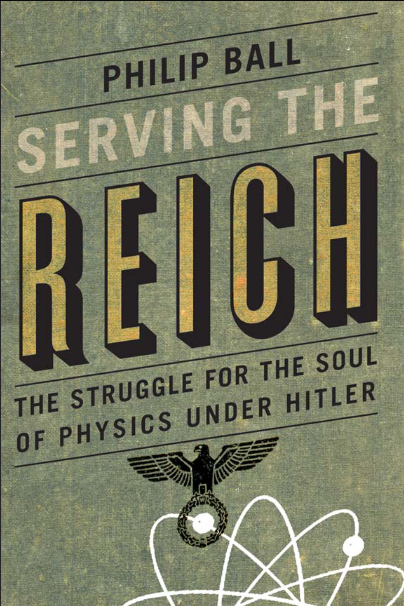
Serving the Reich: The Struggle for the Soul of Physics under Hitler book pdf download

Department : Natural Science
book quality : Excellent
Language : English
Number of Pages : 314
Section : modern physics
Auther :
Size of file : 1.13MB
Date of Coming : 2022-08-10

Author: Philip Ball

About the Author: Philip Ball is a freelance science writer. He worked previously at Nature for over 20 years, first as an editor for physical sciences (for which his brief extended from biochemistry to quantum physics and materials science) and then as a Consultant Editor. His writings on science for the popular press have covered topical issues ranging from cosmology to the future of molecular biology. Philip is the author of many popular books on science, including works on the nature of water, pattern formation in the natural world, colour in art, the science of social and political philosophy, the cognition of music, and physics in Nazi Germany. He has written widely on the interactions between art and science, and has delivered lectures to scientific and general audiences at venues ranging from the Victoria and Albert Museum (London) to the NASA Ames Research Center, London’s National Theatre and the London School of Economics. Philip continues to write regularly for Nature. He has contributed to publications ranging from New Scientist to the New York Times, the Guardian, the Financial Times and New Statesman. He is a contributing editor of Prospect magazine (for which he writes a science blog), and also a columnist for Chemistry World, Nature Materials, and the Italian science magazine Sapere. He has broadcast on many occasions on radio and TV, and is a presenter of “Science Stories” on BBC Radio 4. He is a Fellow of the Royal Society of Chemistry, sits on the editorial board of Chemistry World and Interdiscipinary Science Reviews, and is a board member of the RESOLV network on solvation science at the Ruhr University of Bochum. Philip has a BA in Chemistry from the University of Oxford and a PhD in Physics from the University of Bristol. Philip Ball is a writer. Most of his books are concerned with science in some form or another: its history, its interactions with the arts and society, its achievements, delights and detours. He is a regular columnist for several magazines and an occasional radio presenter and broadcaster. He was an editor of Nature for many years, and long ago, a chemist and physicist of sorts.

Serving the Reich: The Struggle for the Soul of Physics under Hitler book pdf download By Philip Ball

After World War II, most scientists in Germany maintained that they had been apolitical or actively resisted the Nazi regime, but the true story is much more complicated. In Serving the Reich, Philip Ball takes a fresh look at that controversial history, contrasting the career of Peter Debye, director of the Kaiser Wilhelm Institute for Physics in Berlin, with those of two other leading physicists in Germany during the Third Reich: Max Planck, the elder statesman of physics after whom Germany’s premier scientific society is now named, and Werner Heisenberg, who succeeded Debye as director of the institute when it became focused on the development of nuclear power and weapons. Mixing history, science, and biography, Ball’s gripping exploration of the lives of scientists under Nazism offers a powerful portrait of moral choice and personal responsibility, as scientists navigated “the grey zone between complicity and resistance.” Ball’s account of the different choices these three men and their colleagues made shows how there can be no clear-cut answers or judgement of their conduct. Yet, despite these ambiguities, Ball makes it undeniable that the German scientific establishment as a whole mounted no serious resistance to the Nazis, and in many ways acted as a willing instrument of the state. Serving the Reich considers what this problematic history can tell us about the relationship of science and politics today. Ultimately, Ball argues, a determination to present science as an abstract inquiry into nature that is “above politics” can leave science and scientists dangerously compromised and vulnerable to political manipulation.

Download PDF of Serving the Reich: The Struggle for the Soul of Physics under Hitler book pdf download By Philip Ball
-Adrian Agency Library

Download Now

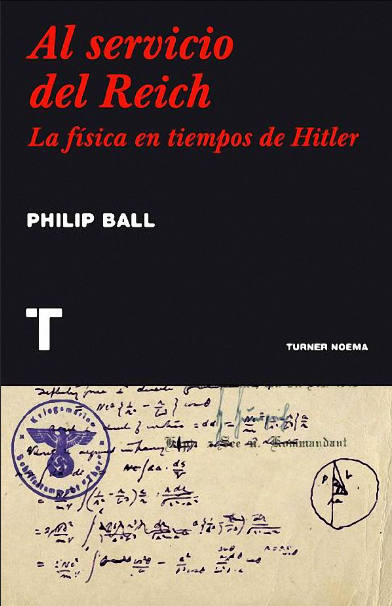
Al servicio del Reich. La física en tiempos de Hitler book pdf download

Language : English
Section : modern physics
Size of file : 2.24MB
Number of Pages : 418
book quality : Excellent
Auther :
Date of Coming : 2022-08-10
Department : Natural Science

Author: Philip Ball

About the Author: Philip Ball is a freelance science writer. He worked previously at Nature for over 20 years, first as an editor for physical sciences (for which his brief extended from biochemistry to quantum physics and materials science) and then as a Consultant Editor. His writings on science for the popular press have covered topical issues ranging from cosmology to the future of molecular biology. Philip is the author of many popular books on science, including works on the nature of water, pattern formation in the natural world, colour in art, the science of social and political philosophy, the cognition of music, and physics in Nazi Germany. He has written widely on the interactions between art and science, and has delivered lectures to scientific and general audiences at venues ranging from the Victoria and Albert Museum (London) to the NASA Ames Research Center, London’s National Theatre and the London School of Economics. Philip continues to write regularly for Nature. He has contributed to publications ranging from New Scientist to the New York Times, the Guardian, the Financial Times and New Statesman. He is a contributing editor of Prospect magazine (for which he writes a science blog), and also a columnist for Chemistry World, Nature Materials, and the Italian science magazine Sapere. He has broadcast on many occasions on radio and TV, and is a presenter of “Science Stories” on BBC Radio 4. He is a Fellow of the Royal Society of Chemistry, sits on the editorial board of Chemistry World and Interdiscipinary Science Reviews, and is a board member of the RESOLV network on solvation science at the Ruhr University of Bochum. Philip has a BA in Chemistry from the University of Oxford and a PhD in Physics from the University of Bristol. Philip Ball is a writer. Most of his books are concerned with science in some form or another: its history, its interactions with the arts and society, its achievements, delights and detours. He is a regular columnist for several magazines and an occasional radio presenter and broadcaster. He was an editor of Nature for many years, and long ago, a chemist and physicist of sorts.

Al servicio del Reich. La física en tiempos de Hitler book pdf download By Philip Ball

Los primeros científicos que experimentaron con la física atómica tuvieron la «suerte» de vivir unos tiempos interesantes. En plena Segunda Guerra Mundial, la ciencia alemana se convirtió en un asunto político: Heisenberg, Planck, Einstein y Debye, entre muchos otros, tuvieron que definirse. Como científicos y como personas. Y, para algunos de ellos, la definición no fue la misma. «Un libro que plantea preguntas importantes, que no afectan solo al mundo científico alemán del siglo XX, sino a la misma naturaleza de la ciencia y a cómo responden sus profesionales ante el mundo político bajo el que viven». Times Higher Education «Ball nos hace un gran servicio recordándonos la fuerza y, en ocasiones, la capacidad de confusión, que tienen las presiones, y lo muy improbable que resulta pensar que los científicos pueden y deben situarse “por encima de la política” […] Lleno de momentos dramáticos, conmovedores, y en ocasiones divertidos». Nature «Este libro de Ball muestra lo que puede suceder cuando se valoran la inteligencia y los descubrimentos por encima de todo lo demás». New Statesman «Un gran libro». Times Literary Supplement

Download PDF of Al servicio del Reich. La física en tiempos de Hitler book pdf download By Philip Ball
-Adrian Agency Library

Download Now